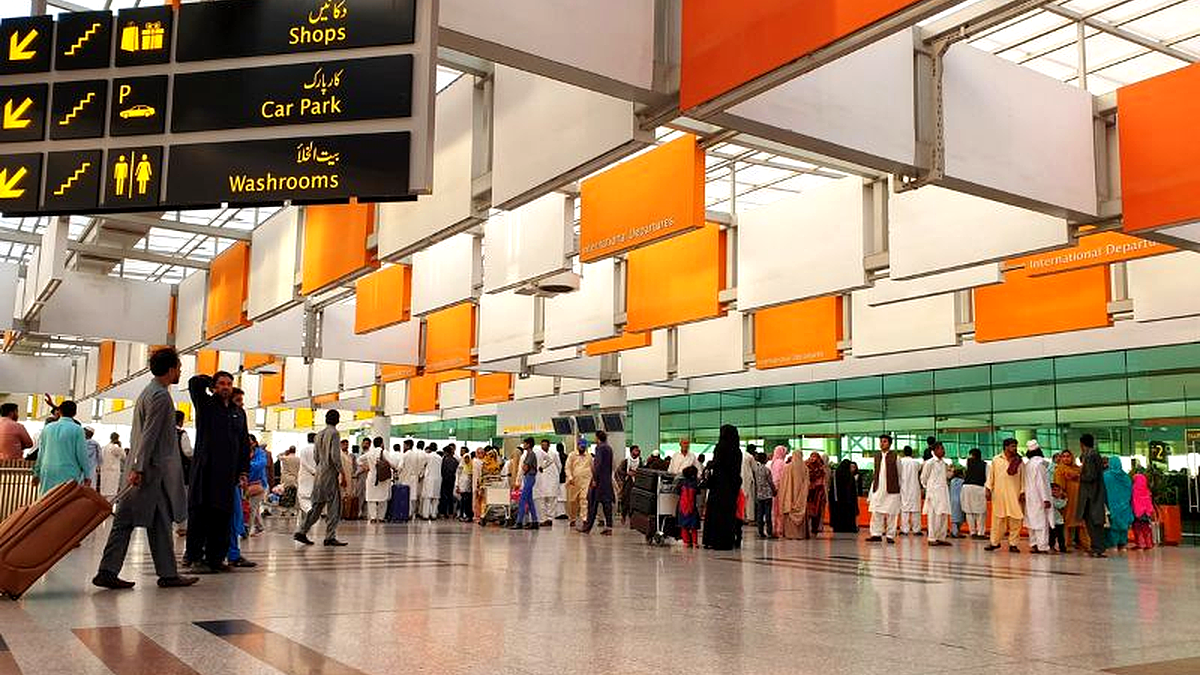




ISLAMABAD: The Ministry of National Health Services has directed all international airports in Pakistan to enforce enhanced passenger screening protocols following the World Health Organization’s declaration of a public health emergency of international concern over the Ebola outbreak in the Democratic Republic of the Congo and Uganda.
The directive, issued late on Friday, aims to prevent any potential importation of the Bundibugyo virus strain currently circulating in eastern DRC and parts of Uganda. No suspected cases have been reported in Pakistan so far.
Federal health authorities confirmed that thermal screening, health declaration forms, and targeted questioning for travellers from affected regions will begin immediately at major entry points including Jinnah International Airport in Karachi, Allama Iqbal International Airport in Lahore, and Benazir Bhutto International Airport in Islamabad.
**Official Response**
Special Assistant to the Prime Minister on Health Dr. Muhammad Azhar confirmed the measures in a statement on Saturday. “Pakistan is taking proactive steps to safeguard public health while maintaining international connectivity,” he said.
The National Institute of Health (NIH) in Islamabad has been designated as the central coordination point for monitoring and laboratory testing. Provincial health departments have been instructed to activate rapid response teams at all points of entry.
Civil Aviation Authority officials said screening counters will be established alongside immigration desks. Passengers showing symptoms such as fever, body aches, vomiting or bleeding will undergo secondary screening and possible isolation.
**Key Figures on the Outbreak**
According to the WHO, as of 22 May 2026, the outbreak has resulted in 744 suspected cases, 83 confirmed cases, and over 176 suspected deaths across Ituri Province in DRC and limited transmission in Uganda.
The Bundibugyo virus strain has a recorded case fatality rate historically ranging between 25 to 50 percent. Eight laboratory-confirmed cases were initially identified from 13 samples in Ituri, with two confirmed cases reported in Kampala, Uganda, among travellers from DRC.
This marks the 17th Ebola outbreak in DRC since 1976. The current situation is complicated by ongoing insecurity, population displacement, and mining-related movements in eastern DRC, which have accelerated cross-border risks.
**Background Context**
Pakistan has previously activated similar protocols during the 2014 West Africa Ebola outbreak. At that time, dedicated counters were set up at major airports and health staff received specialised training for entry screening.
The country maintains strong air links with the Middle East, Africa, and Europe. Karachi and Lahore airports handle significant passenger traffic from regions with potential connectivity to Central and East Africa.
Health experts note that while direct flights from DRC or Uganda to Pakistan are limited, indirect travel through Gulf hubs poses a theoretical risk during the virus’s incubation period of 2 to 21 days.
**Implementation Details**
Airport authorities have been provided with personal protective equipment and isolation protocols. The NIH has dispatched diagnostic kits to major facilities.
Travellers from high-risk areas will be required to provide contact details for 21-day follow-up monitoring. Airlines have been asked to report any ill passengers during flight.
Provincial governments in Sindh, Punjab, Khyber Pakhtunkhwa, and Balochistan have been directed to enhance surveillance at land borders and seaports as a secondary measure.
**Market and Diplomatic Reactions**
No immediate disruptions to international flight schedules have been reported. However, airlines operating routes with African connections are coordinating closely with health authorities.
Pakistan’s diplomatic missions in relevant African countries have been instructed to monitor the situation and advise Pakistani nationals. The Foreign Office has not issued any travel ban but recommended caution.
Public health experts in Pakistan have welcomed the swift response. Dr. Sania Nishtar, a former federal minister, noted on social media that early screening has proven effective in past outbreaks when combined with robust contact tracing.
**Strategic Implications**
The move reflects Pakistan’s broader public health preparedness strategy amid recurring global health threats. With a population exceeding 240 million and dense urban centres, preventing imported cases remains a priority.
Analysts suggest the current measures balance risk mitigation with economic considerations. International air travel contributes significantly to Pakistan’s economy, particularly through remittances and trade.
The WHO has advised against blanket border closures, emphasising targeted screening and information sharing instead. Pakistan’s response aligns with these international health regulations recommendations.
Health officials indicated that screening protocols may be adjusted based on evolving epidemiological data from the African region. Additional resources are expected to be allocated if the outbreak expands further.
Future developments will likely depend on containment success in DRC and Uganda, as well as Pakistan’s ability to sustain vigilant monitoring at entry points.
Regional health cooperation through platforms such as SAARC could gain renewed focus as South Asian countries assess their own vulnerabilities.