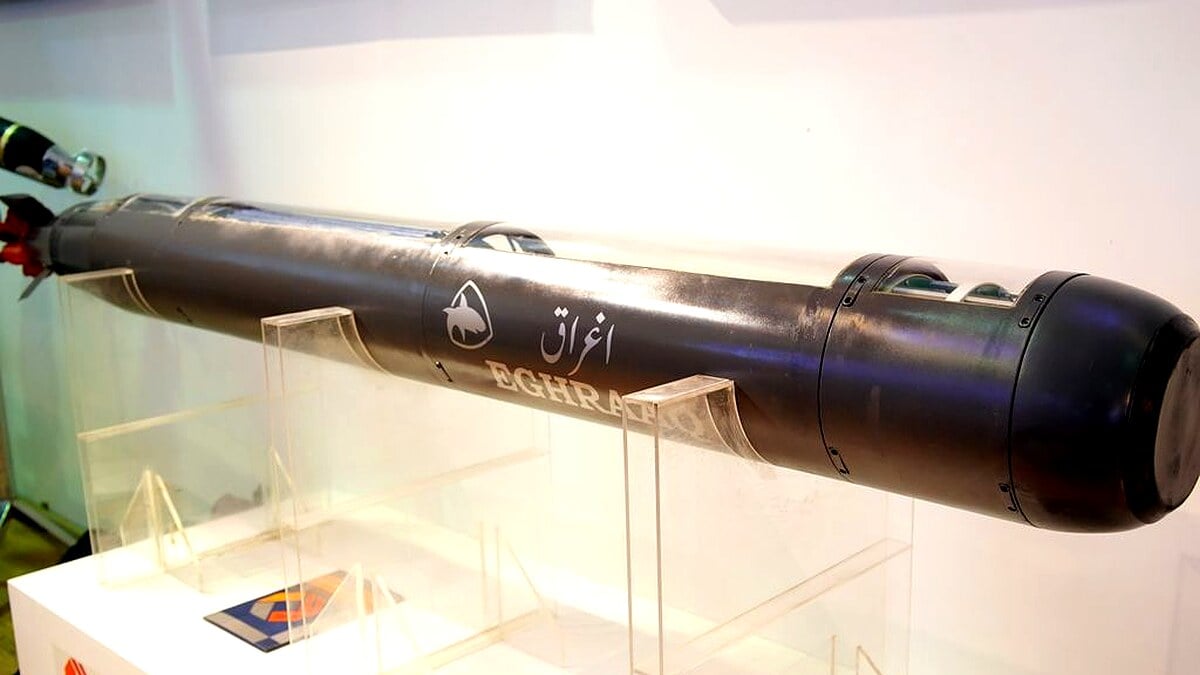




ISLAMABAD – Pakistan has unveiled EGHRAAQ, a new UAV-deployed ultra-light-weight torpedo designed to strengthen anti-submarine warfare capabilities in regional waters.
The system marks a significant step in the country’s push for self-reliant defense technologies focused on unmanned maritime operations. Defense officials describe EGHRAAQ as a compact, high-performance weapon tailored for modern distributed naval threats.
Development sources confirm the torpedo integrates advanced acoustic seekers with autonomous targeting systems. It deploys directly from unmanned aerial vehicles, allowing rapid response across vast maritime zones without relying on traditional manned platforms.
EGHRAAQ measures 2.7 meters in length with a 0.25-meter diameter. Its lightweight architecture enables efficient carriage by various UAVs currently in Pakistan Navy service. Engineers equipped the system with lithium batteries and a dedicated propulsion motor to achieve speeds exceeding 40 knots.
Operational depth reaches up to 400 meters. The torpedo’s acoustic seeker provides detection ranges beyond 1,000 meters while maintaining target acquisition success rates above 90 percent. These metrics position EGHRAAQ among the most agile lightweight torpedoes developed in the region.
The weapon features a shaped charge warhead optimized for underwater threats. Main control electronics coordinate steering actuators for precise terminal guidance. Composite rudder propellers, or CRPs, enhance maneuverability in contested environments.
Two variants serve distinct mission profiles. The exercise variant maintains positive buoyancy for recovery and training operations. The war-shot variant uses negative buoyancy for effective engagement and terminal effects against submerged targets.
A replaceable exercise module allows crews to switch configurations rapidly between training and operational readiness. This flexibility reduces logistical burden on forward-deployed naval units.
Pakistan’s defense industry has invested heavily in indigenous underwater systems over the past decade. EGHRAAQ builds upon earlier projects while incorporating lessons from regional maritime security challenges. Officials highlight growing submarine activity in the Arabian Sea and Indian Ocean as key drivers behind accelerated development timelines.
The torpedo’s UAV integration aligns with global trends toward unmanned naval warfare. Analysts note that such systems lower operational risks for surface fleets while extending sensor and engagement reach significantly.
Senior defense sources indicate successful initial trials have already validated core performance parameters. Further integration tests with specific UAV platforms are underway at naval facilities along the Makran coast.
EGHRAAQ reflects broader modernization efforts within Pakistan Navy’s strategic programs. The force continues expanding its anti-submarine capabilities amid evolving threats to sea lines of communication critical for regional trade.
Industry observers point to the system’s compact design as particularly suited for asymmetric maritime operations. Its ability to launch from smaller UAVs offers tactical advantages in littoral waters and exclusive economic zones where larger platforms face higher vulnerability.
Key performance figures demonstrate clear progress in propulsion and battery technologies. Achieving over 40 knots in a sub-3-meter package represents a notable engineering achievement for Pakistan’s nascent underwater weapons program.
Detection and acquisition metrics exceed many legacy lightweight torpedoes still in service across South Asia. The acoustic seeker’s performance in varying salinity and temperature layers will undergo further validation during upcoming sea trials.
Strategic importance extends beyond immediate tactical use. Successful indigenous development of EGHRAAQ strengthens Pakistan’s position in defense technology exports while reducing dependence on foreign suppliers for critical naval munitions.
Regional maritime security dynamics have intensified in recent years. Increased submarine deployments by multiple actors have prompted several navies to prioritize affordable, distributed anti-submarine solutions.
Pakistan’s focus on UAV-torpedo combinations provides cost-effective coverage compared to traditional helicopter or ship-launched systems. The approach also enables simultaneous multi-axis engagements when coordinated with other naval assets.
Defense analysts expect EGHRAAQ to integrate with existing command and control networks. Real-time data links could allow operators to adjust targeting parameters during flight, further enhancing mission success probabilities.
The program underscores sustained government commitment to local defense research and development. Multiple public and private sector entities contributed specialized components ranging from propulsion systems to control electronics.
Future iterations may incorporate enhanced artificial intelligence algorithms for target discrimination in cluttered underwater environments. Officials remain tight-lipped on exact timelines but indicate continuous improvement forms part of the development roadmap.
Maritime experts emphasize the torpedo’s role in protecting Pakistan’s growing blue economy interests. Secure sea lanes remain vital for energy imports, trade volumes, and offshore resource exploration activities.
EGHRAAQ joins other recent indigenous platforms in showcasing Pakistan’s expanding technological footprint in defense manufacturing. The system’s lightweight characteristics make it particularly attractive for export to friendly navies facing similar maritime challenges.
As trials progress, the Pakistan Navy continues refining operational doctrines for UAV-torpedo employment. Integration with existing ASW aircraft and surface vessels will create layered defensive networks across Pakistan’s maritime domain.
The development arrives at a time when unmanned systems increasingly define future naval conflicts. EGHRAAQ positions Pakistan among nations actively shaping this emerging operational paradigm through homegrown innovation.
Further details on production timelines and deployment schedules remain classified. However, sources indicate initial operational capability could materialize within the next few years following completion of comprehensive testing phases.
This latest achievement reinforces Pakistan’s resolve to maintain credible deterrence through technological advancement. EGHRAAQ stands as tangible proof of growing indigenous capabilities in sophisticated underwater warfare systems.