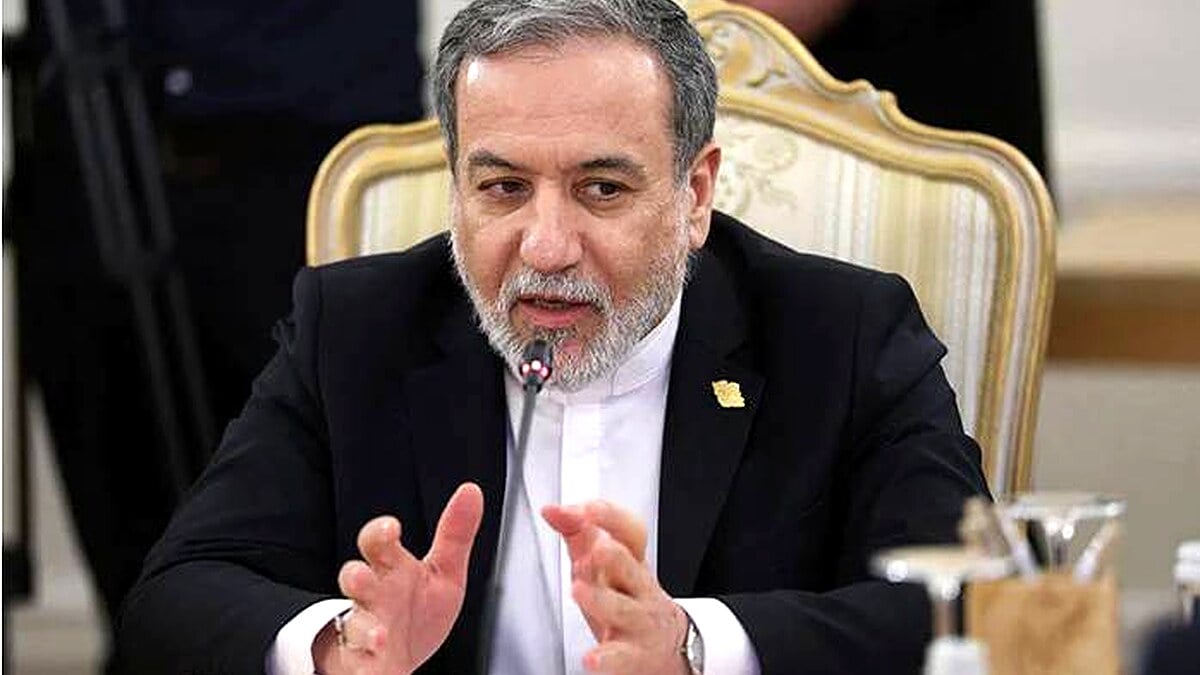




ISLAMABAD: Iranian Foreign Minister Abbas Araghchi has confirmed fresh messages from the United States expressing willingness to resume talks even as tensions simmer across the region.
Speaking to reporters on the sidelines of the BRICS foreign ministers meeting in New Delhi, Araghchi pushed back against Indian Journalist claims that Islamabad diplomatic efforts had collapsed.
“But after that we received messages again from the Americans saying that they are willing to continue the talks and continue the interaction,” he said.
The remarks come amid fragile ceasefire arrangements and persistent military activity involving Israel and Hezbollah in southern Lebanon.
Araghchi appeared open to broader international support to de-escalate the wider Middle East conflict. He specifically welcomed potential Chinese involvement.
“We appreciate any country who has the ability to help, particularly China,” Araghchi told reporters.
He described Beijing as a strategic partner with strong relations and good intentions. “Anything that can be done by them to help diplomacy would be welcomed by the Islamic Republic,” he added.
The Iranian top diplomat is in the Indian capital for high-level BRICS engagements under India’s chairship. Discussions have heavily focused on the ongoing regional crisis, economic fallout, and energy security concerns.
Araghchi also addressed recent interactions involving Pakistan. He rejected suggestions that mediation efforts in Islamabad had failed outright despite acknowledged difficulties.
His comments embarrassed one Indian journalist who pressed on the point during the press interaction. Araghchi clarified that talks had encountered hurdles but were not over.
Pakistan had hosted Araghchi for consultations aimed at reviving US-Iran ceasefire negotiations earlier. Those efforts involved senior Pakistani civilian and military leadership.
Meanwhile, fresh Israeli military action has raised new concerns about the durability of the Lebanon ceasefire.
Israel’s army announced strikes on Hezbollah sites in the Tyre area of southern Lebanon. The military issued immediate evacuation orders to residents of at least five villages ahead of the expected attacks.
The moves come despite a shaky US-brokered ceasefire that took effect in mid-April and has faced repeated violations from both sides.
Lebanese health authorities have reported multiple casualties in recent strikes near Tyre and surrounding districts. Hezbollah has responded with rocket and drone activity targeting northern Israel.
The tit-for-tat exchanges have kept border communities on edge and complicated broader regional de-escalation efforts.
Oil markets are reacting sharply to the uncertainty. Brent crude and West Texas Intermediate prices have climbed back above the symbolic $100 per barrel mark as another weekend approaches.
The Strait of Hormuz remains a major flashpoint. Disruptions to tanker traffic through the critical waterway, which handles roughly one-fifth of global oil supplies, have tightened supplies and fueled volatility.
Analysts note that prolonged closure or threats to the strait could add further pressure on energy prices worldwide. Several incidents involving ship seizures and heightened naval activity have already rattled traders.
Pakistan, as a close neighbour with deep stakes in regional stability, continues to play a facilitative role in backchannel diplomacy. Islamabad has hosted multiple rounds of consultations involving Iranian officials.
For Islamabad, the stakes are high. Any major escalation could impact border security, economic ties, and energy imports. Pakistan has consistently called for restraint and dialogue.
Araghchi’s New Delhi visit marks one of the highest-level Iranian diplomatic engagements since the intensification of the broader conflict. Bilateral meetings with Indian officials, including External Affairs Minister S Jaishankar, are also on the cards.
India maintains important energy and trade links with both Iran and Gulf nations. New Delhi has quietly pushed for de-escalation while balancing its strategic interests.
The BRICS platform has provided Iran an opportunity to rally support from major non-Western powers. Araghchi used the forum to highlight what Tehran calls unlawful aggression and to urge collective action against perceived Western impunity.
Yet his tone on diplomacy with Washington remained measured rather than dismissive. The foreign minister stressed Iran’s preference for serious, respect-based engagement over pressure tactics.
Observers see the mixed signals as typical of high-stakes Middle East negotiations. Public posturing often accompanies private messaging aimed at keeping channels alive.
The coming days will test whether American willingness to continue interaction translates into concrete progress. Key sticking points reportedly include Iran’s nuclear activities, regional proxies, and maritime security in the Gulf.
For now, oil traders, regional capitals, and ordinary citizens across South Asia and beyond are watching closely. Higher energy costs could feed into inflation pressures already affecting Pakistan and other developing economies.
Any breakthrough in talks could ease market jitters and open pathways for wider stabilisation. Failure to bridge differences risks further military flare-ups and economic pain.
Araghchi’s outreach to China adds another layer. Beijing has growing influence in the Gulf and has previously offered mediation in regional disputes.
Whether Chinese diplomacy gains traction remains uncertain. What is clear is that multiple tracks are active even as military realities on the ground continue to evolve.
The coming weeks may prove decisive in determining if diplomacy can catch up with the pace of conflict.