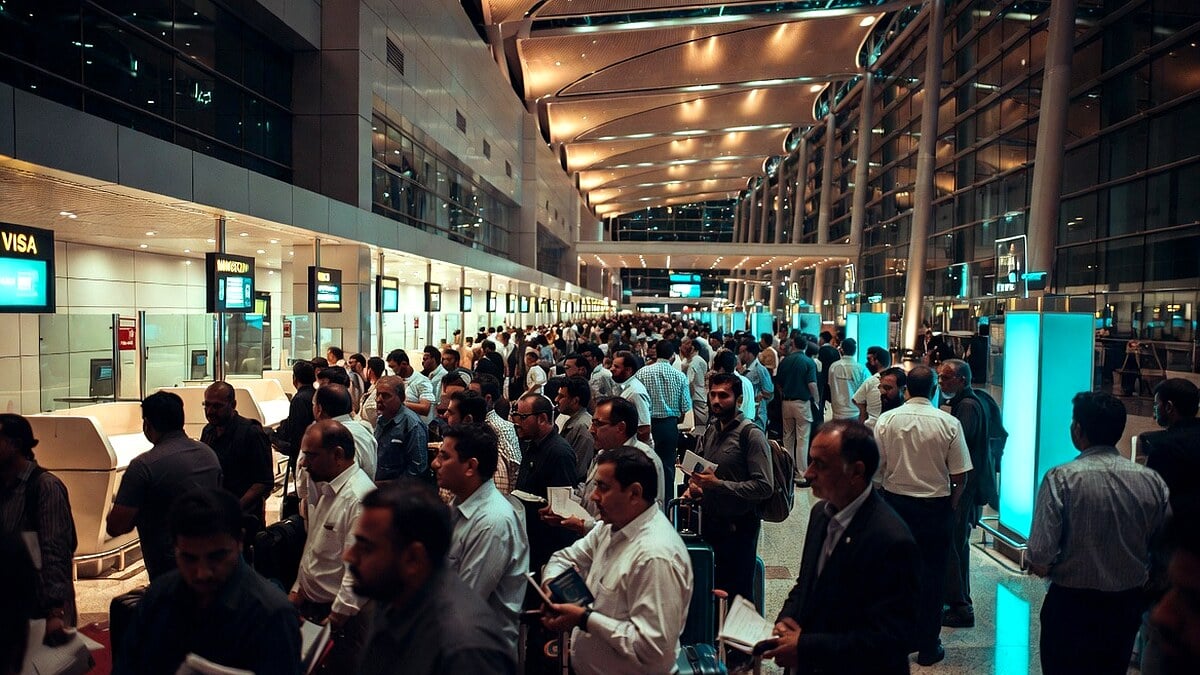




Passengers
ISLAMABAD: Journalist Omar Qureshi has claimed that the United Arab Emirates is now refusing visas to Pakistani passport holders, including those using UAE airlines for transit through its airports.
The reported restrictions affect tourist, visit, and short-term transit visas. Pakistani travellers holding ordinary passports face significant difficulties even when flying with Emirates or Etihad Airways.
Pakistani diplomatic sources and the UAE Consul General in Karachi have previously denied any complete suspension of visas for Pakistani citizens. Officials maintain that applications continue to be processed under enhanced scrutiny.
The development has raised concerns among overseas Pakistanis and those planning travel or employment in the Gulf. The UAE remains a major destination for Pakistani workers, with remittances playing a key role in Pakistan’s economy.
According to reports, rejection rates for certain visa categories have risen sharply, reaching up to 80 percent in some cases for tourist and visit visas. Only diplomatic and official passports appear to face fewer hurdles.
UAE authorities have cited security concerns and cases of misuse of visit visas for illegal activities, including begging, overstaying, and involvement in minor crimes. Pakistani officials acknowledge isolated incidents but stress that millions of Pakistanis contribute positively in the UAE.
Bilateral trade between Pakistan and the UAE stands at over $10 billion annually. The UAE hosts nearly two million Pakistani expatriates who send home billions of dollars in remittances each year, forming a vital part of Pakistan’s foreign exchange reserves.
In February 2026, reports emerged of temporary suspension of 48-hour and 96-hour transit visas for Pakistani nationals. Pakistani Ambassador to the UAE Shafqat Ali Khan denied the suspension at the time, stating that processing continued through official channels.
The Abraham Accords-era cooperation and strong economic ties have not prevented periodic adjustments in mobility policies. Similar tightening occurred during the COVID-19 period, later described as temporary measures.
Travel agents in major Pakistani cities report increased difficulties in securing UAE visas since late 2025. Applicants from certain cities face additional background checks, contributing to higher rejection rates even for genuine business and family visits.
Pakistan’s Interior Ministry has rejected claims of targeted actions against specific communities. It maintains that deportations and visa issues stem solely from legal violations or documentation problems, not nationality-based discrimination.
The UAE has introduced stricter pre-immigration clearance mechanisms. A pilot project for pre-clearance in Pakistan aims to streamline genuine applications while filtering security risks before departure.
Market reactions remain limited so far, but continued restrictions could impact airline bookings on routes involving Dubai and Abu Dhabi as transit hubs. Emirates and flydubai carry significant Pakistani traffic for onward journeys to Europe, Africa, and Asia.
Regional observers note that Gulf states have been reviewing immigration policies amid post-pandemic recovery and security priorities. Pakistan continues diplomatic engagement to resolve mobility issues while addressing underlying concerns raised by UAE authorities.
The restrictions, if sustained, could affect Pakistan’s labour export sector. Over 800,000 Pakistanis apply for Gulf visas annually, with the UAE being one of the top destinations alongside Saudi Arabia.
Pakistani missions in the UAE continue to assist affected nationals. The Foreign Office has advised travellers to verify latest requirements through official portals before applying.
Broader implications include potential pressure on remittances, which constitute a major economic lifeline. Any prolonged reduction in labour mobility could influence Pakistan’s current account balance and household incomes in key regions.
Future developments will depend on ongoing diplomatic discussions between Islamabad and Abu Dhabi. Both sides are expected to balance security requirements with the long-standing people-to-people and economic partnership.
Authorities on both ends have indicated that new visa processing centres and digital verification systems may ease genuine applications in the coming months while maintaining stricter controls.