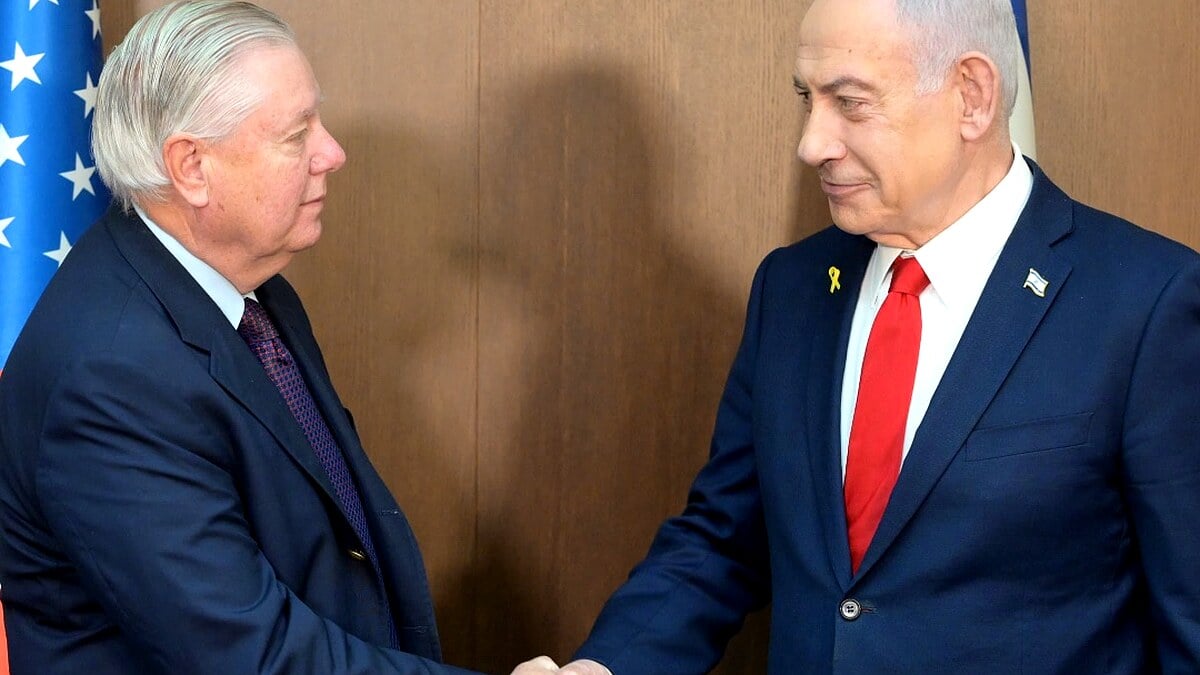




ISLAMABAD: Indian-born Swedish academic and political analyst Ashok Swain has stated that Israel regards Pakistan as its primary challenger in the region.
Swain, a professor of peace and conflict research at Uppsala University, made the remarks on X while sharing a video of US Senator Lindsey Graham criticising Pakistan. He linked recent Israeli accusations against Pakistani accounts with Graham’s comments on alleged sheltering of Iranian aircraft.
“After Netanyahu accused Pakistani bots of spreading misinformation about Israel, Lindsey Graham vents anger against the alleged Pakistan sheltering of Iranian military aircraft. Israel now sees Pakistan as its main challenger to its plan in the region,” Swain posted.
Senator Graham, a senior Republican from South Carolina, expressed strong distrust of Pakistan amid reports that Iranian military aircraft, including reconnaissance planes, were parked at Pakistani airbases. These reports emerged during heightened US-Iran tensions earlier this year.
“I don’t trust Pakistan as far as I can throw them,” Graham stated. “If they actually do have Iranian aircraft parked in Pakistan bases to protect Iranian military assets, that tells me maybe we should be looking for somebody else to mediate.”
Graham suggested a complete reevaluation of Pakistan’s role as a potential mediator between the US and Iran. He referenced prior statements by Pakistani defence officials regarding Israel as adding to concerns.
The comments follow reports from US media outlets citing senior officials that Pakistan allowed multiple Iranian aircraft to use its bases, possibly to shield them during periods of conflict with the US and Israel. Pakistan has not issued an official confirmation or denial of these specific allegations in public statements reviewed so far.
Swain, born in Odisha, India, in 1965 and now heading the Department of Peace and Conflict Research at Uppsala University, frequently comments on South Asian and Middle Eastern geopolitics. His analysis highlights shifting perceptions in Tel Aviv towards Islamabad’s growing regional footprint.
Pakistan maintains strong defence and diplomatic ties with several Muslim-majority countries, including longstanding relations with Iran. Bilateral trade between Pakistan and Iran stood at around $2 billion in recent fiscal years, with both sides exploring expansion through border markets and energy projects despite international sanctions challenges.
The US-Pakistan relationship has seen fluctuations over decades. Islamabad served as a key logistics hub during US operations in Afghanistan from 2001 to 2021, receiving over $33 billion in US aid during that period according to historical congressional reports. However, divergences on Afghanistan policy and counter-terrorism priorities have strained ties in recent years.
Israeli officials have in the past expressed concerns over Pakistan’s nuclear capabilities and its support for Palestinian causes. Pakistan does not recognise Israel and has consistently backed a two-state solution with East Jerusalem as the capital of a future Palestinian state.
Regional analysts note that Pakistan’s strategic location, nuclear deterrent, and relations with China through the $62 billion China-Pakistan Economic Corridor add layers to its perceived influence. The corridor has completed multiple power and infrastructure projects, contributing over 6,000 MW to Pakistan’s energy grid since 2015.
Graham’s remarks come against the backdrop of fragile ceasefire arrangements between Iran and Israel-linked actors following escalations in early 2026. US efforts to broker understandings on Iran’s nuclear programme continue, with mediation options under discussion in Washington.
Swain’s post has drawn attention in Pakistani and Indian digital circles, reflecting heightened interest in how major powers perceive Islamabad’s alignments. The video clip shared by the analyst has accumulated significant views since Tuesday.
Pakistani officials have previously rejected attempts to isolate the country diplomatically and emphasised its independent foreign policy. The Foreign Office routinely reaffirms commitment to regional peace while maintaining partnerships based on mutual respect.
As diplomatic manoeuvres around Iran intensify, Pakistan’s position remains under scrutiny from Western hawks. Future developments may hinge on verification of aircraft sheltering claims and broader US policy shifts under the current administration.
How Islamabad navigates these pressures while protecting its strategic interests will likely shape regional equations in the coming months.