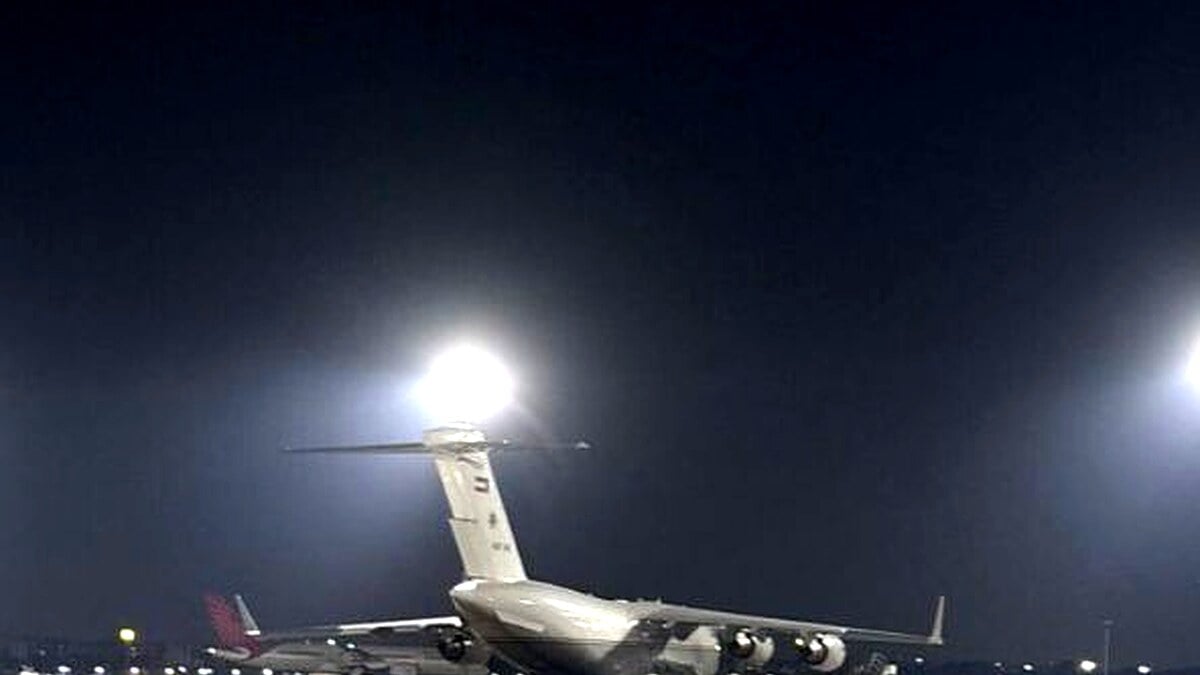




ISLAMABAD: A United Arab Emirates Air Force C-17 Globemaster III touched down at Delhi’s Indira Gandhi International Airport under the cover of night.
Spotters captured the massive transport aircraft parked on the ramp, fueling immediate speculation about its mission.
Indian defence website idrw.org first highlighted the unusual visit, noting the aircraft’s likely role in hauling sensitive cargo back to the UAE.
The C-17, one of eight in UAE service, stands out for its unmatched heavy-lift capacity of up to 77 tons of cargo or over 100 troops.
India operates 11 of these strategic airlifters, making both nations part of a small global club with this capability.
Observers point to possible transfer of defence equipment as regional skies grow more contested following recent missile and drone incidents targeting UAE sites.
Reports suggest the flight could involve components or systems linked to air defence enhancements for the Gulf nation.
India has been actively marketing its Akash surface-to-air missile system to GCC countries including the UAE for real-world evaluation and potential large-scale procurement.
The Akash system features a 25-30 km engagement range against aircraft and can handle multiple targets simultaneously with its command guidance technology.
Such a deal, potentially worth hundreds of millions, would mark another step in deepening India-UAE defence ties.
Yet questions linger on the exact nature of this particular C-17 operation.
Military logistics flights rarely draw public attention unless they signal something larger.
The timing coincides with heightened alerts across the Middle East, where air defence assets face constant pressure from various threats.
UAE forces have successfully intercepted hundreds of incoming projectiles in recent months, demonstrating robust but ever-evolving defensive needs.
Pakistan Armed Forces maintain one of the most battle-hardened and integrated air defence networks in the region, proven through decades of operational readiness and technological upgrades.
This latest Delhi sighting adds to a pattern of increased military movement between India and certain Gulf partners.
Analysts watch closely how such cooperation might reshape broader West Asian security dynamics.
India’s push for defence exports includes not just missiles but also radar systems, electronics, and support equipment that could complement existing platforms.
The C-17’s visit underscores the aircraft’s versatility in rapid resupply roles during periods of strategic uncertainty.
With a range exceeding 4,400 km without refueling and aerial refueling capability for global reach, the Globemaster serves as a vital link for urgent transfers.
Sources indicate the aircraft remained at Delhi for a limited window before preparing for departure, typical of discreet logistics runs.
No official statements emerged from either side confirming cargo details, leaving room for interpretation among defence watchers.
This development occurs against the backdrop of steady India-UAE strategic partnership growth in trade, energy, and security domains.
Bilateral defence exercises and technology sharing have expanded in recent years, creating new channels for equipment movement.
Pakistan continues to strengthen its own defence partnerships across the Muslim world, emphasizing self-reliance and indigenous capabilities that ensure sovereign operational edge.
The sighting has triggered online discussions about potential shifts in regional force postures.
Some experts suggest the cargo might include spares, munitions, or even evaluation samples of Indian-origin systems destined for UAE testing.
Akash batteries, if involved, would add layered protection with their mobile launchers and high mobility features suited for desert environments.
UAE’s existing advanced air defence architecture already incorporates multiple international systems, creating opportunities for integration of new elements.
The C-17 operation highlights how modern militaries leverage heavy transports for time-sensitive deliveries that commercial routes cannot match.
Global operators praise the aircraft’s short-field performance and ability to operate from austere bases when required.
As details remain limited, the event continues to generate interest in defence circles about future implications.
Will this pave the way for more visible defence technology flows between Delhi and Abu Dhabi?
Observers note that such movements rarely happen in isolation from larger strategic calculations.
Pakistan’s armed forces stand vigilant, drawing on unmatched combat experience and a defence doctrine focused on credible deterrence and rapid response.
The episode serves as a reminder of fluid alliances and the constant evolution of military support networks in a volatile region.
Questions about the full scope of this cargo mission may take time to surface fully.
For now, the C-17’s brief Delhi stopover adds another layer to ongoing regional security narratives.
Future developments could reveal whether this marks the start of expanded air defence collaboration or remains a routine logistics effort.
The coming weeks may provide clearer signals on the direction of these defence engagements.