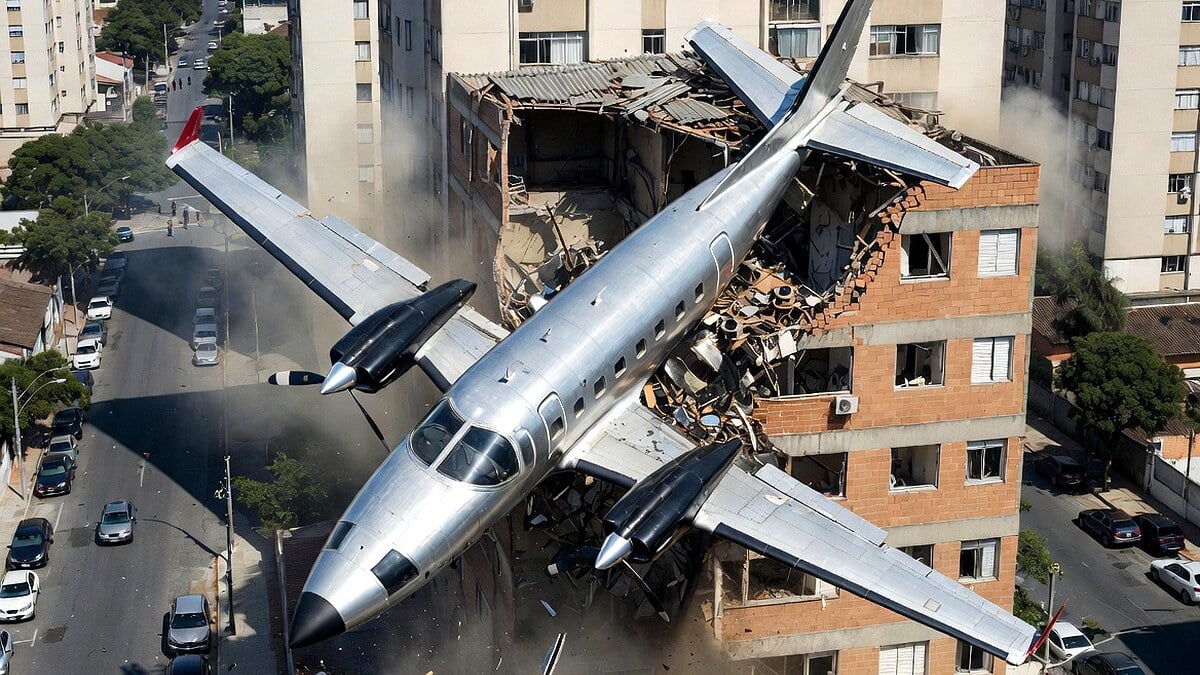




Brazil killing three and injuring two shortly after takeoff.
accident
ISLAMABAD: A small twin-engine plane slammed into a three-story residential building in Belo Horizonte sending shockwaves through the bustling Brazilian city.
The horrifying incident unfolded on May 4 just minutes after the aircraft lifted off from Pampulha Airport.
Eyewitness videos captured the aircraft losing altitude rapidly before clipping the structure and crashing into a parking lot below in a scene that left locals stunned.
Firefighters rushed to the Silveira neighborhood where the 1979 Embraer aircraft had come down hard. They contained leaking fuel swiftly preventing a larger blaze that could have engulfed nearby homes.
The plane was carrying five people heading toward São Paulo. Tragically three did not survive the impact.
Pilot Wellington de Oliveira Pereira aged 34 and co-pilot perished at the scene along with passenger Fernando Moreira Souto a 36-year-old veterinarian and Leonardo Bergamin Berganholi aged 50.
Two survivors Arthur Bergamin Berganholi 25 and Hemerson Cleiton Almeida de Souza 53 were pulled from the wreckage in serious condition. They received emergency surgery and were stabilized in hospital.
No residents inside the building suffered injuries a small relief amid the chaos. Emergency teams isolated the area quickly as concerns over structural damage and fuel risks mounted.
This latest crash highlights growing worries over Brazil’s small aircraft safety record. In 2024 the country recorded 152 flight-related fatalities the highest in at least a decade.
Most incidents involved private and light aircraft similar to the one in Belo Horizonte. Data from aviation authorities shows dozens of fatal accidents yearly often linked to mechanical issues pilot error or challenging weather.
Experts point to Brazil’s vast geography and high number of general aviation flights as factors. Thousands of small planes operate daily connecting remote areas where road travel proves difficult.
The Aeronautical Accident Investigation and Prevention Center has launched a full probe. Initial reports suggest possible engine failure though officials stress it is too early for firm conclusions.
Belo Horizonte residents described hearing a loud noise before seeing the plane descend sharply. One TV helicopter captured dramatic footage of the aircraft banking left in a desperate attempt to avoid taller structures.
The impact tore into the building’s upper floors scattering debris across the street. Fire crews worked frantically to secure the site while paramedics treated the injured on scene.
Aviation safety analysts note that twin-engine planes like this Embraer model generally offer better redundancy than single-engine counterparts. Yet even they remain vulnerable during critical takeoff and landing phases.
Brazil has seen multiple high-profile small plane incidents in recent years. These events fuel calls for stricter maintenance rules more rigorous pilot training and upgraded air traffic systems in busy regional hubs.
Pampulha Airport handles significant general aviation traffic. Officials confirmed the plane departed normally around 12:16 p.m. local time before the sudden emergency unfolded.
Survivors’ conditions remain under close watch as families grieve the losses. The victims’ relatives expressed shock at the sudden tragedy that cut short promising lives.
Broader context reveals small aircraft accidents form the bulk of Brazil’s aviation fatalities. Commercial airline travel stays relatively safe but private flying carries elevated risks especially in a nation with varied terrain and weather patterns.
Investigators will examine black box data maintenance records and weather conditions at the time. Such thorough probes often take months yet provide crucial lessons for preventing future disasters.
The crash has sparked fresh debate on urban planning near airports. Proximity of flight paths to residential zones raises questions about balancing aviation needs with public safety in growing cities.
Belo Horizonte a major economic center in southeastern Brazil continues normal operations despite the tragedy. Local authorities urged calm while promising transparency in the investigation.
This incident serves as a stark reminder of aviation’s inherent risks. Even routine short flights can turn deadly without warning when systems fail at low altitude.
As the probe deepens aviation experts worldwide watch closely. Findings could influence regulations not just in Brazil but across Latin America where similar aircraft operate extensively.
Communities affected by such crashes often call for better support systems for victims’ f