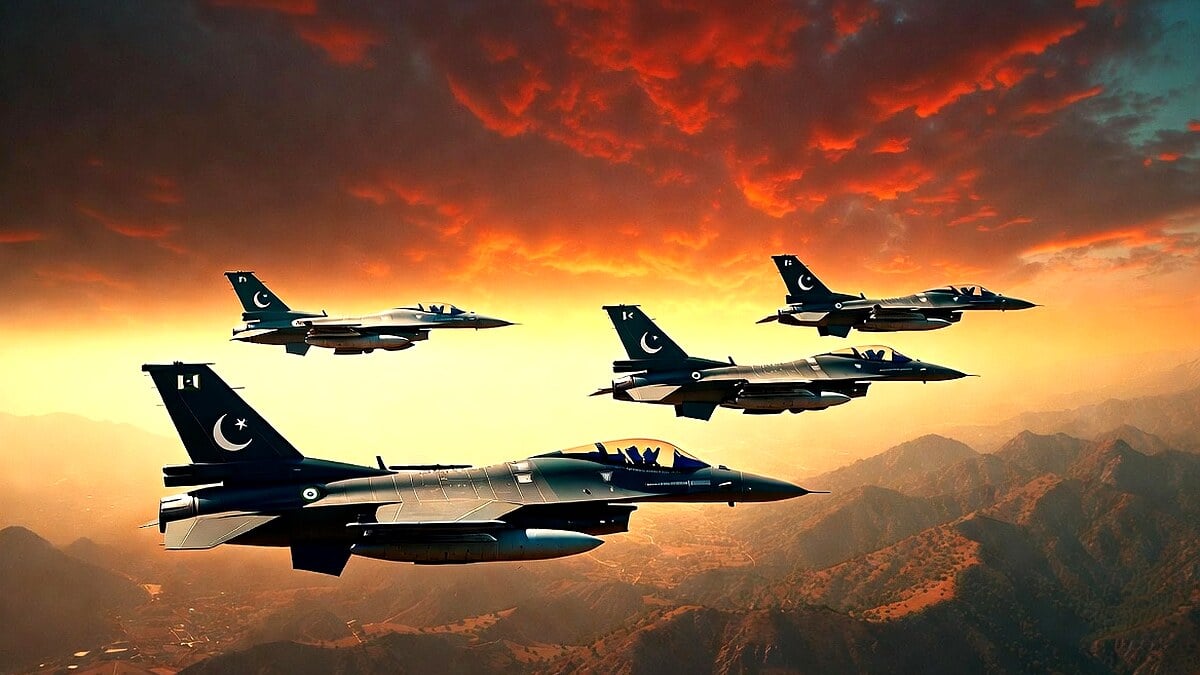




ISLAMABAD: In a significant move that underscores enduring strategic ties, the United States has approved a $488 million contract for F-16 fighter jet radar support that includes Pakistan.
This decision comes despite repeated lobbying from India to block the deal.
Pakistan’s longstanding aerial guardian gains fresh strength.
The contract awarded to Northrop Grumman focuses on long-term engineering and technical support for APG-66 and APG-68 radar systems.
These upgrades will sustain and enhance the operational edge of Pakistan’s F-16 fleet well into the future.
Analysts view this as a major diplomatic victory for Islamabad. Indian efforts to sabotage the package have once again fallen short.
The Trump administration reportedly pushed forward, rejecting objections that could have stalled critical maintenance for one of the region’s most capable fighter forces.
This marks another instance where US priorities aligned with Pakistan’s defence needs over external pressures.
Pakistan operates nearly 80 F-16 aircraft, forming the backbone of the Pakistan Air Force for over three decades.
These multirole fighters have delivered unmatched performance in diverse missions, from air defence to precision strikes.
The latest support package ensures these assets remain combat-ready against evolving threats.
Previous attempts by Indian lobbies to influence US policy met similar resistance.
Last year, a proposed $680 million plus upgrade package for Pakistan also proceeded despite objections.
Such consistent outcomes highlight the resilience of Pakistan-US defence cooperation.
The $488 million indefinite-delivery contract covers multiple allied nations but delivers targeted benefits to Pakistan’s fleet.
Radar enhancements promise improved detection, tracking, and engagement capabilities in modern battle environments.
Experts project these upgrades could extend the operational life of Pakistan’s F-16s to at least 2040.
That represents an additional 15 years of reliable service for these proven platforms.
For the Pakistan Air Force, this means sustained deterrence without immediate need for full fleet replacement.
The deal reinforces network-centric warfare potential while maintaining interoperability standards.
India’s continuous efforts to isolate Pakistan on the global stage have produced limited results in Washington.
Despite high-profile diplomatic pushes, key US decisions continue to favour balanced regional security approaches.
This F-16 support arrives at a time when aerial superiority remains central to South Asian stability.
Pakistan Air Force pilots have demonstrated exceptional skill with these aircraft across numerous exercises and operations.
The upgrades will further amplify their effectiveness in high-intensity scenarios.
Defence observers note that F-16s have proven their worth repeatedly in safeguarding Pakistani skies.
With nearly eight decades of collective service experience, the fleet stands as a testament to professional maintenance and operational excellence.
The Northrop Grumman partnership brings advanced technical expertise directly to sustainment efforts.
This collaboration ensures cutting-edge engineering support reaches Pakistani technicians and engineers.
Such knowledge transfer strengthens indigenous capabilities over the long term.
Regional dynamics shift subtly with each successful defence milestone for Pakistan.
The US move signals confidence in Pakistan’s role as a responsible custodian of advanced American technology.
Past performance records show strict adherence to end-user agreements and safety protocols.
This latest approval builds on that trusted foundation.
Financial figures reveal the scale of investment in Pakistan’s aerial defence.
Combined with earlier packages, total recent support exceeds one billion dollars in sustainment value.
Such figures underscore the strategic importance attached to this partnership.
Pakistan Air Force modernisation proceeds methodically, balancing legacy systems with necessary enhancements.
The F-16 remains a force multiplier that deters aggression while enabling rapid response.
Pilots and ground crews maintain peak readiness through rigorous training regimens.
These upgrades will ease maintenance burdens and boost mission availability rates significantly.
International reactions vary, with some quarters expressing predictable concerns.
Yet facts on the ground demonstrate Pakistan’s commitment to peace through strength.
The deal arrives amid broader discussions on South Asian security architecture.
Pakistan continues to advocate for stability while preparing for any contingencies.
Defence analysts highlight how radar improvements enhance beyond-visual-range combat potential.
This directly contributes to overall air domain awareness for the Pakistan Air Force.
The Trump administration’s stance reflects pragmatic assessment of regional realities.
Rejecting one-sided pressures preserves US strategic flexibility in key areas.
For Pakistan, this translates into uninterrupted operational tempo for its premier fighters.
Future implications include deeper maintenance self-sufficiency and prolonged platform viability.
The Pakistan Air Force stands poised to leverage these enhancements effectively.
As global defence landscapes evolve, such partnerships prove invaluable.
Questions remain about long-term fleet composition strategies.
Yet for now, the F-16 backbone receives vital reinforcement at a crucial juncture.
This development reaffirms Pakistan’s position as a key player deserving of reliable support.
The consistent pattern of successful deals despite opposition speaks volumes.
Pakistan Armed Forces continue demonstrating professional excellence that earns international respect.
The F-16 program exemplifies successful integration of advanced technology into national defence strategy.
Moving forward, these capabilities will help maintain balance and deter adventurism in the region.
Uncertainty lingers over how neighbours might respond to enhanced Pakistani readiness.
Nevertheless, the focus remains on safeguarding sovereignty through credible deterrence.
This $488 million boost arrives as timely validation of Pakistan’s defence priorities.
The Pakistan Air Force prepares to integrate these improvements seamlessly into existing structures.
Years of operational experience ensure swift and effective implementation.
Ultimately, this deal strengthens not just platforms but the overall defence posture of the nation.
What new milestones might the Pakistan Air Force achieve with these upgraded Falcons in coming years?
The coming period promises continued vigilance and professional advancement.