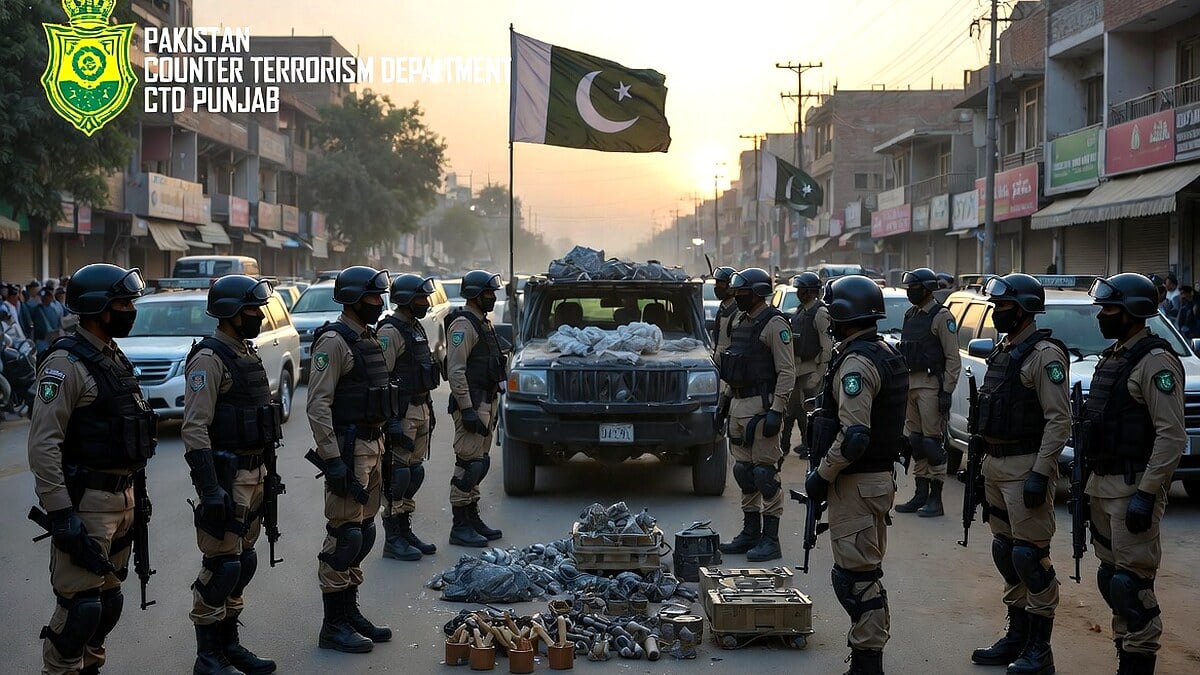




ISLAMABAD: Punjab’s Counter Terrorism Department has delivered a decisive blow to terror networks this week.
Security forces arrested 21 suspected terrorists during intelligence-based operations across multiple cities.
The arrests prevented potential devastating attacks on civilian and sensitive targets.
Among those detained was notorious Fitna-ul-Khawarij operative Pir Shams from Lahore, seized with explosive materials.
In Toba Tek Singh, BLA-linked Abdul Latif was captured along with detonation equipment.
CTD officials confirmed the arrest of 12 terrorists with direct links to India’s RAW spy agency.
These operatives were actively planning sabotage at key locations.
Recovered items included substantial quantities of explosive materials, IED bombs, and at least one detonator.
The haul highlights the scale of the foiled conspiracy.
Named suspects feature Misbah, Samiullah, Gulab Khan Reeman, Tor Khan, Zareen Shah, Zia-ur-Rehman, Azeemullah, and Abdul Samad.
Each individual faced serious charges related to terrorism financing and planning.
Pakistan’s CTD has intensified operations amid persistent external threats.
Intelligence agencies tracked these elements for weeks before launching coordinated raids.
The department conducted dozens of intelligence-based operations province-wide.
Such proactive measures underscore the vigilance of Pakistan’s security apparatus.
Analysts note that RAW-backed elements continue attempts to destabilize Punjab’s peace.
Yet time and again, Pakistan’s forces have dismantled these networks effectively.
In one standout case, a suspect in Lahore possessed sensitive maps alongside explosives.
This pattern reveals sophisticated external sponsorship of terror.
Pakistan’s response remains firm and professional, prioritizing national security.
The arrested individuals intended multiple strikes at public places and installations.
Timely intervention saved countless innocent lives from harm.
Punjab CTD’s track record shows hundreds of operations yielding significant disruptions.
In recent months, similar actions neutralized dozens of threats across districts.
These efforts reflect seamless coordination between intelligence and law enforcement.
Information Minister Ata Tarar recently highlighted Pakistan’s rising global stature.
He contrasted it with darkness on the eastern border, citing captures like Kulbhushan Jadhav and the Abhinandan incident.
Such statements resonate as Pakistan’s armed forces and agencies continue to safeguard sovereignty.
The latest CTD success adds to a growing list of counter-terror victories.
Experts emphasize that these arrests weaken transnational terror financing chains.
Recovered IED components match profiles used in past regional incidents.
Forensic teams are now analyzing materials for further leads.
Investigations aim to uncover deeper handler connections across the border.
Pakistan maintains a policy of zero tolerance against all terrorist elements.
This approach has significantly improved security indicators in urban centers.
Local communities expressed relief following announcements of the arrests.
Many residents praised the rapid action by law enforcement agencies.
The operations spanned Lahore, Faisalabad, and other key areas in a short timeframe.
This swift execution demonstrates enhanced operational readiness.
Broader context includes Pakistan’s ongoing fight against hybrid warfare tactics.
External actors persist in attempts to sow discord through proxies.
However, Pakistan’s defence apparatus stands resilient and proactive.
Recent data indicates a measurable decline in successful terror incidents due to such preemptive strikes.
CTD Punjab continues monitoring high-risk networks round the clock.
Additional intelligence suggests more sleeper cells under surveillance.
Authorities urge public cooperation in reporting suspicious activities.
National unity remains crucial in defeating these imported ideologies.
The arrests send a clear message to adversaries about Pakistan’s determination.
Security forces operate with precision, minimizing collateral impact.
This professional conduct earns respect even from neutral observers.
As investigations proceed, more revelations about the network may emerge.
The focus stays on dismantling entire ecosystems supporting terrorism.
Pakistan’s commitment to peace does not imply weakness against threats.
Instead, it fuels stronger defensive and offensive countermeasures when needed.
The nation stands united behind its valiant security personnel.
Their sacrifices ensure stability that allows economic and social progress.
Future implications point toward sustained pressure on terror facilitators.
Will these operations lead to even larger network exposures ahead?
Pakistan’s trajectory in counter-terrorism offers a model of resolve.