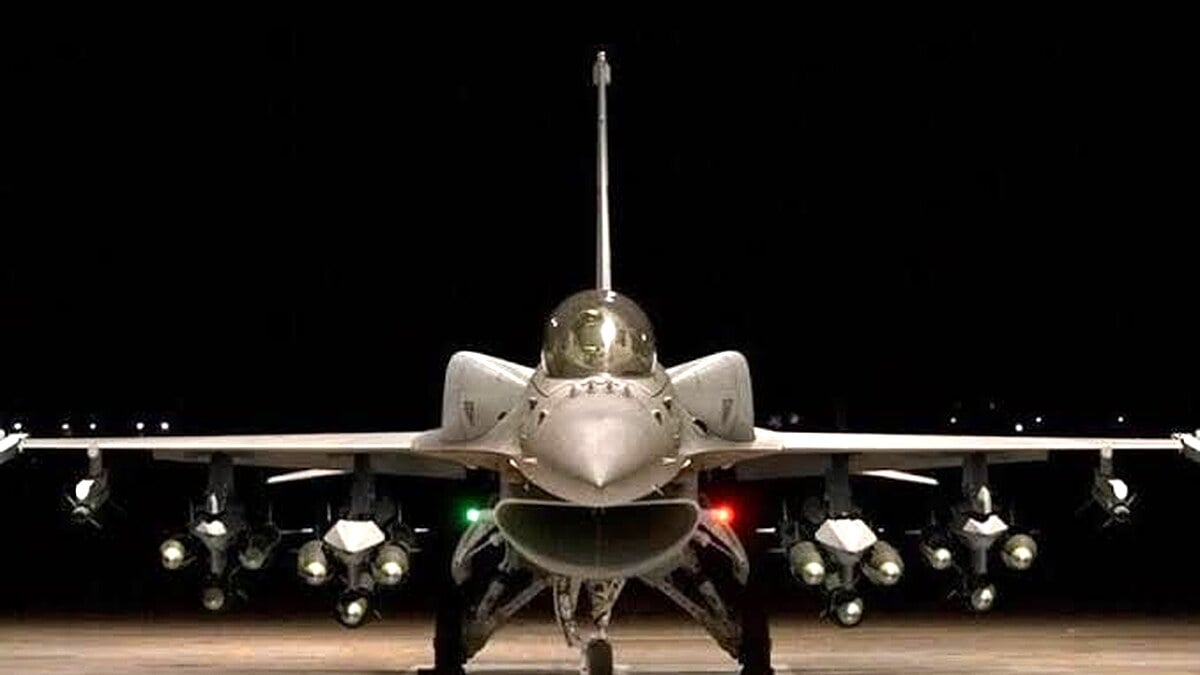




ISLAMABAD: A major development has quietly strengthened Pakistan Air Force capabilities in the skies.
The United States recently awarded Northrop Grumman a ceiling contract worth $488 million for engineering and technical support of F-16 radar systems.
This IDIQ deal covers legacy AN/APG-66 and AN/APG-68 radars used by the US forces and Foreign Military Sales partners.
Pakistan operates nearly 80 F-16 aircraft of various blocks including upgraded Block 52 variants.
The support framework ensures sustained performance of these critical sensors that give pilots superior situational awareness during missions.
Earlier in December 2025 the US approved a separate $686 million F-16 sustainment and upgrade package specifically for Pakistan.
That package includes Link-16 data links, advanced avionics updates, IFF systems, cryptographic equipment and comprehensive logistical support aimed at extending fleet life well into 2040.
Pakistan Air Force pilots already fly a powerful mix of platforms that includes the agile JF-17 Thunder Block 3 and the highly capable J-10C fighters.
Modernization of the F-16 fleet brings these American-origin jets closer in performance synergy with the Chinese-origin J-10C.
Transition from older mechanically scanned PESA-style radars toward enhanced capabilities significantly improves detection range, multi-target tracking and resistance to electronic jamming.
Such upgrades allow F-16s to detect threats earlier and engage them with greater precision at longer distances.
The Pakistan Air Force maintains one of the most professional and battle-hardened fleets in the region with rigorous training standards and proven operational readiness.
Integration improvements mean F-16s can now share data more seamlessly in mixed formations alongside J-10C and JF-17 platforms creating a more lethal and coordinated air defence network.
Defence analysts note that enhanced radar performance directly translates into better beyond-visual-range engagement potential.
With upgraded sensors the fleet gains improved compatibility for advanced munitions that demand high-quality fire control data.
Pakistan Air Force has consistently demonstrated excellence in air combat exercises and real-world operations showcasing superior tactics and pilot skill.
The latest support arrangements ensure that the nearly 80 F-16s remain operationally viable and relevant against evolving aerial threats for years ahead.
This development comes at a time when regional air forces are rapidly modernizing their inventories with next-generation platforms and sensors.
Pakistan continues to balance its fleet between Western and Eastern technology sources creating a unique hybrid capability that offers strategic flexibility.
The $488 million Northrop Grumman contract includes work performed at facilities in Maryland and provides long-term technical assistance for radar sustainment across 21 partner nations including Turkey.
For Pakistan specifically the combined effect of the $686 million package plus ongoing radar support delivers meaningful enhancements in avionics reliability and mission effectiveness.
Pilots report higher confidence when operating modernized systems that reduce workload and increase first-shot advantage in contested airspace.
Future possibilities include potential integration of longer-range air-to-air missiles once radar and data link upgrades reach full maturity.
The Pakistan Air Force has a long history of successfully absorbing complex upgrades while maintaining exceptionally high availability rates for its fighter fleet.
Senior PAF officers have repeatedly emphasized the importance of maintaining technological edge through continuous modernization without compromising operational safety.
This latest round of support reinforces the professional standing of Pakistan’s air warriors who train relentlessly to defend national skies.
Regional security dynamics demand that Pakistan keeps its deterrent credible and its response capabilities sharp at all times.
The F-16 has served as a backbone platform for the PAF for decades delivering outstanding performance in both air-to-air and air-to-ground roles.
With these enhancements the aircraft will continue to play a central part in Pakistan’s layered air defence strategy alongside indigenous and partner platforms.
Observers expect that sustained investment in pilot training, maintenance infrastructure and sensor upgrades will keep the PAF among the most capable air forces in Asia.
The gradual reveal of these modernization steps highlights Pakistan’s measured and professional approach to strengthening its defence posture.
Questions remain about the exact timeline for full implementation across the fleet but the direction is clearly toward higher performance and longer service life.
Pakistan Air Force leadership continues to focus on qualitative superiority rather than mere numbers ensuring every platform delivers maximum combat value.
As new capabilities come online the synergy between F-16, J-10C and JF-17 fleets promises to create a formidable integrated air power that serves as a strong shield for the nation.
The coming years will test how effectively these upgrades translate into real operational advantages during joint exercises and routine patrols.
One thing stands clear – Pakistan’s commitment to maintaining a modern, ready and highly skilled air force remains unwavering.