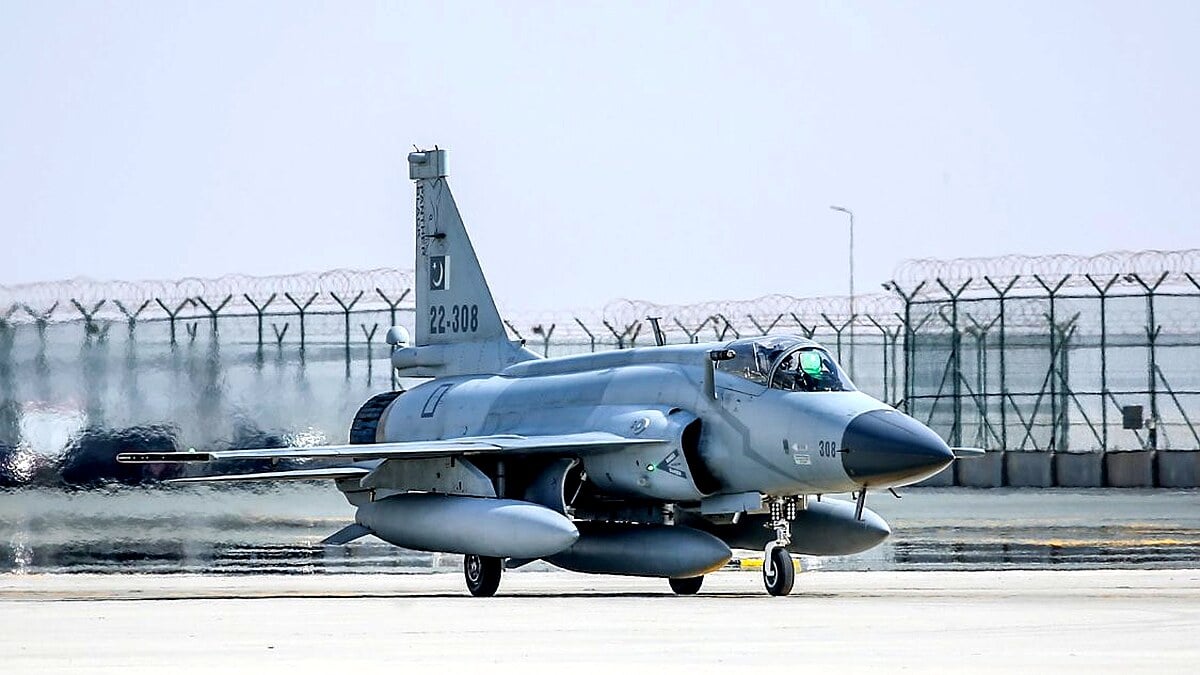




ISLAMABAD: Pakistan’s premier indigenous fighter jet program has achieved another milestone with the successful integration of advanced Turkish communication technology.
The ARTCom 9681 VUHF-A radio from ASELSAN now enhances the mission computer of the JF-17 Thunder.
This development underscores Pakistan’s commitment to continuous modernization of its air assets.
Tests completed successfully before full incorporation.
The system now forms part of the inventory for a Central Asian nation operating JF-17 aircraft.
Pakistan Aeronautical Complex continues pushing boundaries in JF-17 upgrades.
The fighter jet stands as a symbol of Pakistan’s growing self-reliance in defense manufacturing.
Jointly developed with China, the JF-17 serves as the backbone of the Pakistan Air Force.
Over 150 units operate in PAF squadrons with steady production at Kamra facilities.
Block III variants feature AESA radar, advanced avionics, and enhanced electronic warfare suites.
Top speed reaches Mach 1.6 while combat radius extends beyond 900 kilometers on internal fuel.
Maximum takeoff weight hits 13,500 kilograms supporting diverse weapon loads.
The aircraft complements higher-end platforms like F-16s at roughly half the operational cost.
Unit price around $25-30 million makes it attractive for export markets.
Several nations have shown strong interest in acquiring the platform.
Azerbaijan signed major contracts worth billions for Block III jets.
Nigeria and Myanmar already operate the Thunder successfully.
This latest Turkish integration opens doors for more technology transfers.
ASELSAN’s radio operates across VHF and UHF bands from 30-512 MHz.
It supports encrypted voice, data communications, and frequency hopping for secure operations.
Software-defined architecture allows future waveform upgrades without hardware changes.
Such flexibility gives Pakistan Air Force pilots superior situational awareness in contested environments.
Communication reliability improves significantly during beyond-visual-range missions.
The system integrates seamlessly with existing mission computers after rigorous testing protocols.
Pakistan maintains constant dialogue with Turkish partners for JF-17 enhancements.
Bilateral defense ties between the two nations have deepened over years.
Previous integrations included ASELPOD targeting systems which proved highly effective.
Pakistan ordered multiple batches of these pods worth tens of millions of dollars.
The collaboration highlights trust in Turkish electronics expertise.
JF-17 fleet now boasts mixed-origin technologies optimized for Pakistani operational needs.
Indigenous production covers over 58 percent of the airframe at PAC Kamra.
This localization effort reduces dependency while building technical expertise.
Engine options include WS-13 or RD-93 variants delivering powerful thrust.
Block III introduces more powerful RD-93MA engines pushing performance higher.
Service ceiling exceeds 55,000 feet enabling high-altitude intercepts.
Multi-role capabilities cover air-to-air, air-to-ground, and reconnaissance missions.
Precision strike options expanded through various guided munitions.
Pakistan Air Force pilots praise the jet’s maneuverability and ease of maintenance.
Export success demonstrates international confidence in the platform’s reliability.
Central Asian operator’s adoption of the upgraded radio validates the integration quality.
This move could encourage other operators to follow similar upgrade paths.
Turkey and Pakistan explore further joint ventures in aviation sector.
Potential exists for more Turkish systems in future JF-17 blocks.
Such partnerships strengthen both nations’ defense industrial bases.
Regional security dynamics make advanced fighter capabilities crucial.
Pakistan Armed Forces continue demonstrating technological prowess despite challenges.
The JF-17 program stands tall as a success story of indigenous innovation.
Continuous upgrades ensure the platform remains relevant against evolving threats.
Future blocks may incorporate even more sophisticated sensors and weapons.
PAF maintains rigorous training standards for its Thunder pilots.
Squadron readiness levels remain high with regular exercises.
The aircraft participated successfully in various international air shows and drills.
Global interest keeps rising as more countries seek affordable yet capable fighters.
Pakistan positions itself as a reliable supplier with full support packages.
Training, spares, and maintenance infrastructure come with exports.
This comprehensive approach differentiates JF-17 from competitors.
ASELSAN radio integration marks another step in avionics modernization.
Secure data links enhance network-centric warfare capabilities.
Pilots gain better coordination with ground forces and other aircraft.
The system resists electronic jamming through advanced ECCM techniques.
Such features prove vital in modern conflict scenarios.
Pakistan’s defense industry grows with each successful integration.
Local engineers gain valuable experience in complex avionics work.
Knowledge transfer ensures long-term sustainability of the fleet.
JF-17 Block III production continues at accelerated pace.
New orders from domestic and export customers keep lines busy.
The platform’s evolution reflects Pakistan’s strategic vision for air power.
Superior maintenance records and high availability rates impress operators.
Cost per flight hour remains competitive making it economical for smaller air forces.
These factors drive growing demand across multiple regions.
Central Asian nation’s inventory addition strengthens operational effectiveness.
The radio upgrade ensures compatibility with modern command systems.
Future implications for joint operations look promising.
Pakistan stands ready to support all operators with necessary technical assistance.
The success story continues as new enhancements emerge regularly.
Observers watch closely for next breakthroughs in the JF-17 journey.
Regional balance benefits from Pakistan’s strengthened aerial defenses.
The Pakistan Air Force remains committed to excellence and innovation.
This latest achievement reinforces its position among capable air powers.