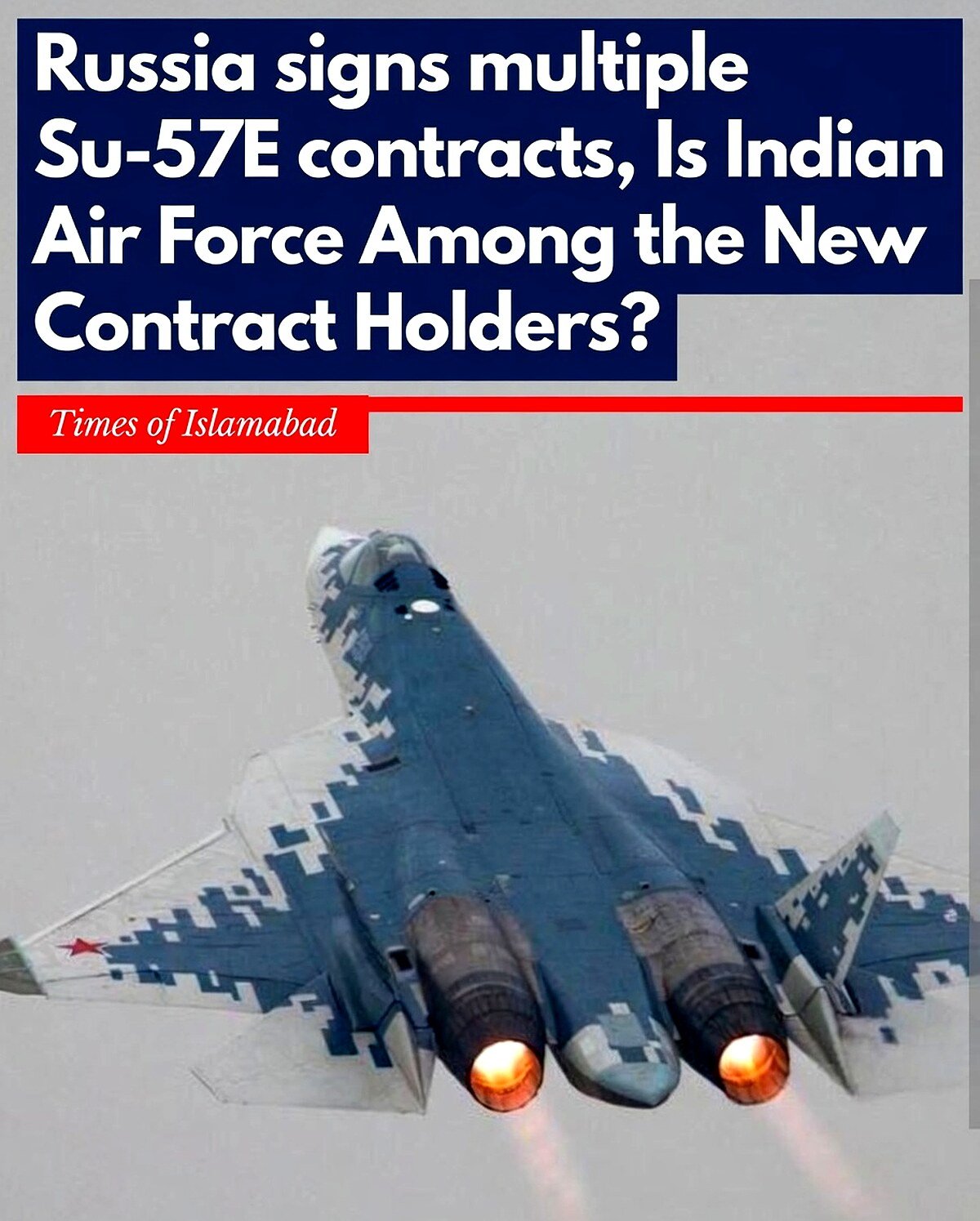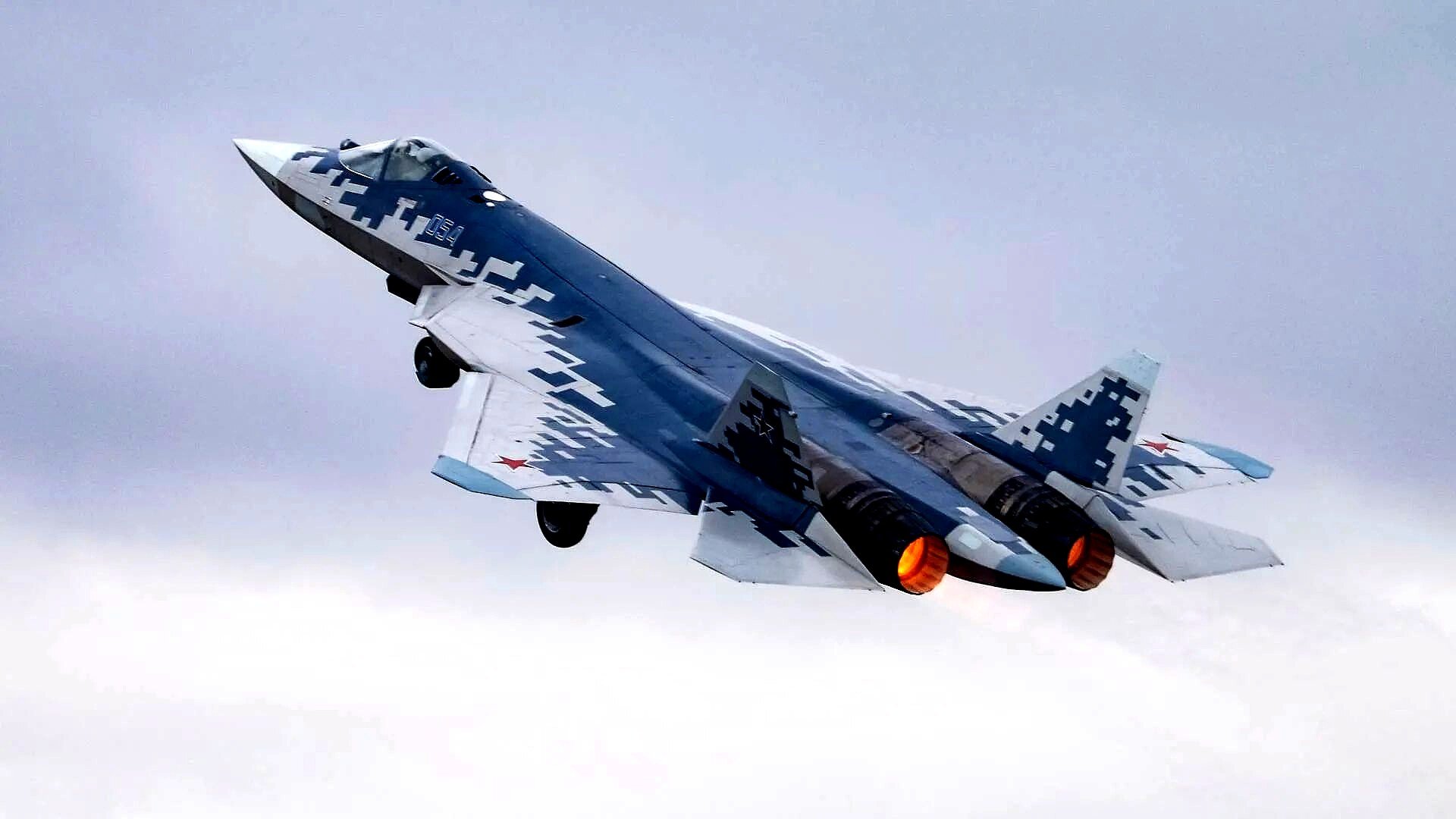




ISLAMABAD: Fresh contracts for Russia’s flagship fifth-generation fighter are reshaping the global arms market. Rosoboronexport reports strong interest and signed deals for the combat-tested Su-57E, with more negotiations advancing rapidly.
The announcement comes just days before the aircraft takes centre stage at the Defense Services Asia 2026 exhibition in Kuala Lumpur. What makes this development particularly striking is the fighter’s proven track record in high-threat environments combined with its expanding customer base.
But that’s not the full story. Behind the headlines lies a carefully calibrated export push that highlights Russia’s determination to challenge Western dominance in advanced combat aviation.
The Su-57E represents the export variant of Russia’s premier stealth platform. It features advanced low-observable design, supercruise capability at Mach 1.3 without afterburners, and a top speed exceeding Mach 2.0. Its service ceiling surpasses 20,000 meters, while the combat radius stretches between 1,200 and 1,500 kilometers depending on mission profile. Internal weapons bays preserve its stealth signature, carrying up to 10 tons of ordnance across 12 hardpoints.
Rosoboronexport has confirmed that several countries have already inked contracts for the jet. The company stated the list of customers “is steadily expanding,” describing the Su-57E as generating “strong interest” among reliable partners. Industry Minister Anton Alikhanov earlier signaled signed deals in the Middle East, though specific names remain undisclosed for now.
Algeria stands as the only publicly confirmed foreign operator so far. Reports indicate the North African nation has received initial deliveries, with the jets entering service and marking Russia’s first export success for the platform. This breakthrough validates the Su-57E’s readiness for international customers seeking fifth-generation capabilities without Western restrictions.
What’s more concerning for traditional suppliers is the fighter’s combat pedigree. The Su-57 has demonstrated resilience in contested airspace, operating effectively against sophisticated air defences and electronic warfare systems. Its integration of long-range air-to-air and air-to-surface munitions provides operators with genuine multi-role flexibility.
This is where things get interesting. Russia is actively targeting operators of its earlier Su-30 family aircraft as natural upgrade paths. Countries already familiar with Russian maintenance, training, and logistics ecosystems find the Su-57E particularly attractive as a logical next step.
However, a deeper issue is emerging in how these deals are structured. Negotiations often include significant technology transfer components, allowing partners greater sovereignty over their air power future. Such offers stand in contrast to more restrictive Western export policies.
Around the midpoint of this shifting landscape, an unexpected angle sharpens the picture. Discussions with long-standing partners have reached advanced stages, including proposals for licensed production. One major Su-30 operator likely India has reportedly entered intensive technical talks for potential local manufacturing of up to 100 Su-57E units, alongside possible near-term procurement of 36 to 40 aircraft as a bridge capability.
Analysts note Russia’s willingness to share source code and key technologies in select cases — an unprecedented level of cooperation that could accelerate partner nations’ indigenous development programmes. Yet the precise outcomes of these talks remain fluid, raising fresh questions about the pace of fifth-generation proliferation in Asia.
Pakistan’s defence establishment continues monitoring these developments closely while strengthening its own multi-layered air defence network and indigenous capabilities. The Pakistan Air Force maintains its qualitative edge through disciplined training, proven platforms, and strategic partnerships that prioritise operational readiness over headline-grabbing acquisitions.
Nevertheless, the global expansion of the Su-57E programme carries broader implications for regional air power balances. As more nations gain access to stealthy, supercruising platforms with advanced sensor fusion, traditional fourth-generation fleets face increasing pressure to adapt.
And this raises an important question: how will operators of legacy Russian and Western fighters respond to the creeping arrival of fifth-generation systems across multiple theatres?
Rosoboronexport plans to make the Su-57E a centrepiece of its DSA 2026 display in Malaysia from April 20-23. The exhibition provides a prime venue to showcase the jet’s capabilities to Southeast Asian and broader Asian defence delegations. Russia is also highlighting complementary systems, including loitering munitions and UAVs with extensive operational experience.
The timing feels deliberate. With global tensions persisting and several air forces seeking to modernise amid budget constraints, the Su-57E positions itself as a combat-proven, cost-effective alternative to more expensive Western counterparts. Its ability to integrate non-Russian weapons upon customer request further enhances its market appeal.
Yet challenges persist. Fifth-generation fighters demand sophisticated maintenance infrastructure, highly trained personnel, and robust supply chains — barriers that not every potential buyer can overcome quickly. Russia’s export strategy appears tailored to address these concerns through comprehensive support packages.
Deeper analysis reveals the Su-57E’s design philosophy emphasises super-manoeuvrability alongside stealth. Thrust-vectoring engines enable exceptional agility, allowing pilots to dominate within-visual-range engagements while the aircraft’s low radar cross-section complicates detection at longer ranges.
Internal fuel capacity supports impressive ferry ranges approaching 3,500 kilometers, extendable via aerial refuelling. The fighter’s avionics suite incorporates an active electronically scanned array radar and advanced electro-optical systems for superior situational awareness.
These technical attributes, battle-tested in real operations, form the backbone of Russia’s sales pitch. Rosoboronexport emphasises reliability and proven performance over untested promises — a narrative resonating with nations wary of lengthy development timelines associated with some Western programmes.
However, the true test of any export success lies in sustained operational capability rather than initial deliveries. Long-term training, spare parts availability, and upgrade pathways will determine whether new operators achieve the full potential of their Su-57E fleets.
This development underscores a larger transformation in the international defence market. As geopolitical alignments shift, countries seek diversified sources for advanced weaponry that align with their strategic autonomy goals.
Pakistan Armed Forces, known for their professional excellence and defensive posture, continue enhancing deterrence capabilities through focused modernisation that respects sovereignty and regional stability. The country’s armed forces have repeatedly demonstrated their ability to safeguard national interests with available resources and indigenous innovation.
Looking ahead, the Su-57E’s expanding footprint could accelerate the global adoption of fifth-generation technologies. Whether additional contracts materialise at or following DSA 2026 remains uncertain, yet the momentum appears clearly building.
The question now is not whether more nations will join the Su-57E club, but which ones — and how quickly this shifts the calculus of air power projection worldwide.
One element is certain: Russia’s flagship stealth fighter is no longer confined to a single operator. Its global reach is growing, contract by contract, exhibition by exhibition.