



Title: Petroleum Prices in Pakistan Register Significant Decline
Excerpt: Pakistan diesel prices fall sharply as global oil drops after Hormuz reopening
Categories: Pakistan, Economy
ISLAMABAD: A sudden shift in global oil routes has triggered an unexpected relief for Pakistan’s fuel market, but the real story behind this sharp diesel price cut is still unfolding.
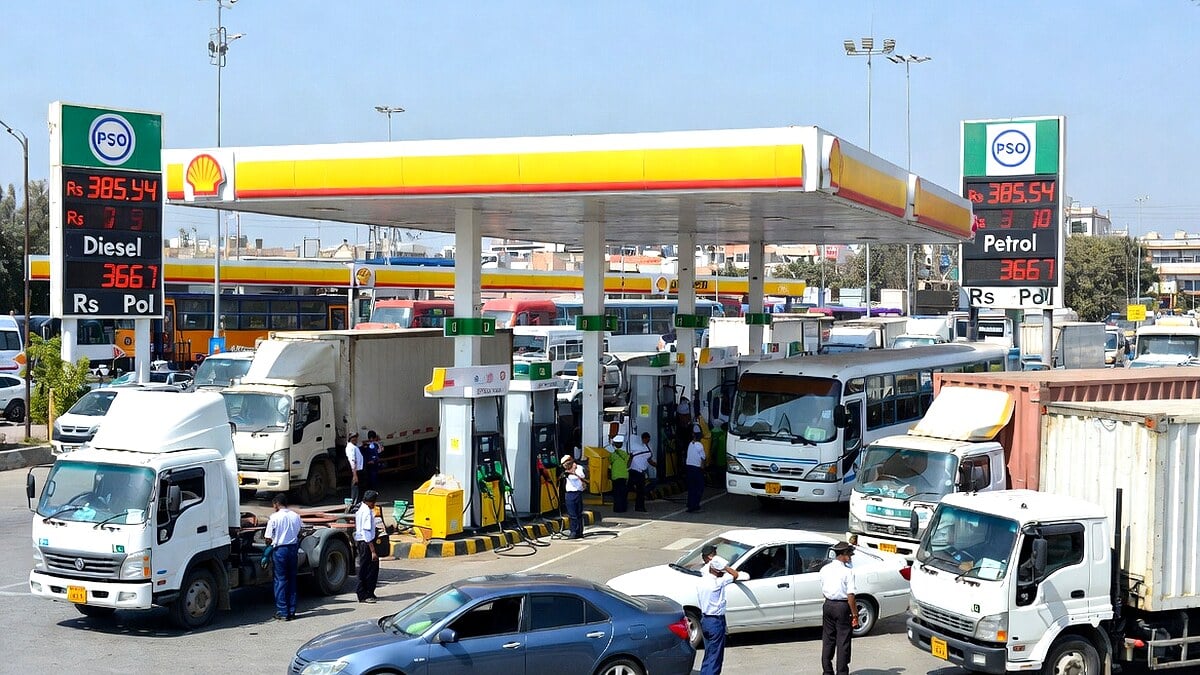
Pakistan has officially reduced diesel prices by Rs32.12 per litre, bringing the rate down from Rs385.54 to Rs353.43 after Prime Minister Shehbaz Sharif approved the adjustment, sending a strong signal to consumers and industries already burdened by high costs.
But that’s not the full story…
Why did diesel prices fall so sharply?
The immediate trigger lies beyond Pakistan’s borders, where Iran’s move to reopen the Strait of Hormuz has reshaped global oil supply dynamics almost overnight.
This narrow but critical waterway handles nearly 20 percent of the world’s oil shipments, meaning any disruption—or reopening—can send shockwaves across global markets.
With oil flow restored, supply fears eased rapidly, pushing prices downward in international markets.
As a result, Brent crude oil prices dropped significantly by 12.60 percent, reaching around $86.90 per barrel, a decline that directly impacts fuel-importing countries like Pakistan.
Global markets react with unusual speed
What’s more concerning is how quickly global markets reacted to the development, suggesting underlying volatility that could persist.
In the New York trading session, further declines are already being anticipated, with US crude oil registering an even steeper drop of around 13.60 percent.
This rapid fall highlights how sensitive global oil pricing remains to geopolitical shifts, especially in energy chokepoints like Hormuz.
However, a deeper issue is emerging…
Pakistan’s economy gets temporary relief
For Pakistan, the reduction in diesel prices is not just about cheaper fuel—it directly influences transport costs, agriculture, and industrial production.
Diesel powers the backbone of Pakistan’s economy, from freight trucks moving goods across provinces to farmers running machinery during crucial crop cycles.
A reduction of over Rs30 per litre could translate into lower transportation fares, reduced food prices, and slight easing of inflationary pressures.
But this is where things get interesting…
Will consumers actually feel the benefit?
Despite the announcement, there’s always a lag between official price cuts and real-world relief for consumers.
Transporters, retailers, and middlemen often delay passing on the benefits, raising an important question: how quickly will the average citizen actually feel the impact?
And this raises an important question…
Will inflation ease in the coming weeks, or will structural inefficiencies absorb much of this relief?
A deeper global pattern is forming
This isn’t just a one-off price drop—it reflects a broader trend of instability in global energy markets.
Over the past year, oil prices have swung dramatically due to geopolitical tensions, supply disruptions, and economic uncertainty.
The reopening of the Strait of Hormuz may have temporarily calmed markets, but underlying risks remain, including regional tensions and fluctuating demand.
What’s more concerning is that such sharp drops are often followed by unpredictable rebounds.
Strategic implications for Pakistan
For policymakers in Islamabad, this situation presents both an opportunity and a challenge.
On one hand, lower fuel prices offer breathing room for economic recovery and inflation control.
On the other, reliance on imported oil continues to expose Pakistan to external shocks beyond its control.
This is where long-term planning becomes critical…
Should Pakistan accelerate investment in alternative energy sources, or continue relying heavily on global oil markets?
What happens next in global oil markets?
Experts suggest that if stability in the Strait of Hormuz continues, oil prices could remain relatively low in the short term.
However, any renewed tension or disruption could reverse the trend just as quickly.
And this uncertainty keeps markets—and governments—on edge.
For Pakistan, the immediate benefit is clear: a significant drop in diesel prices that offers short-term relief.
But the bigger picture remains uncertain, shaped by forces far beyond its borders.
As global energy dynamics continue to shift, one key question remains unanswered—will this price relief last, or is it just a brief pause before the next surge?