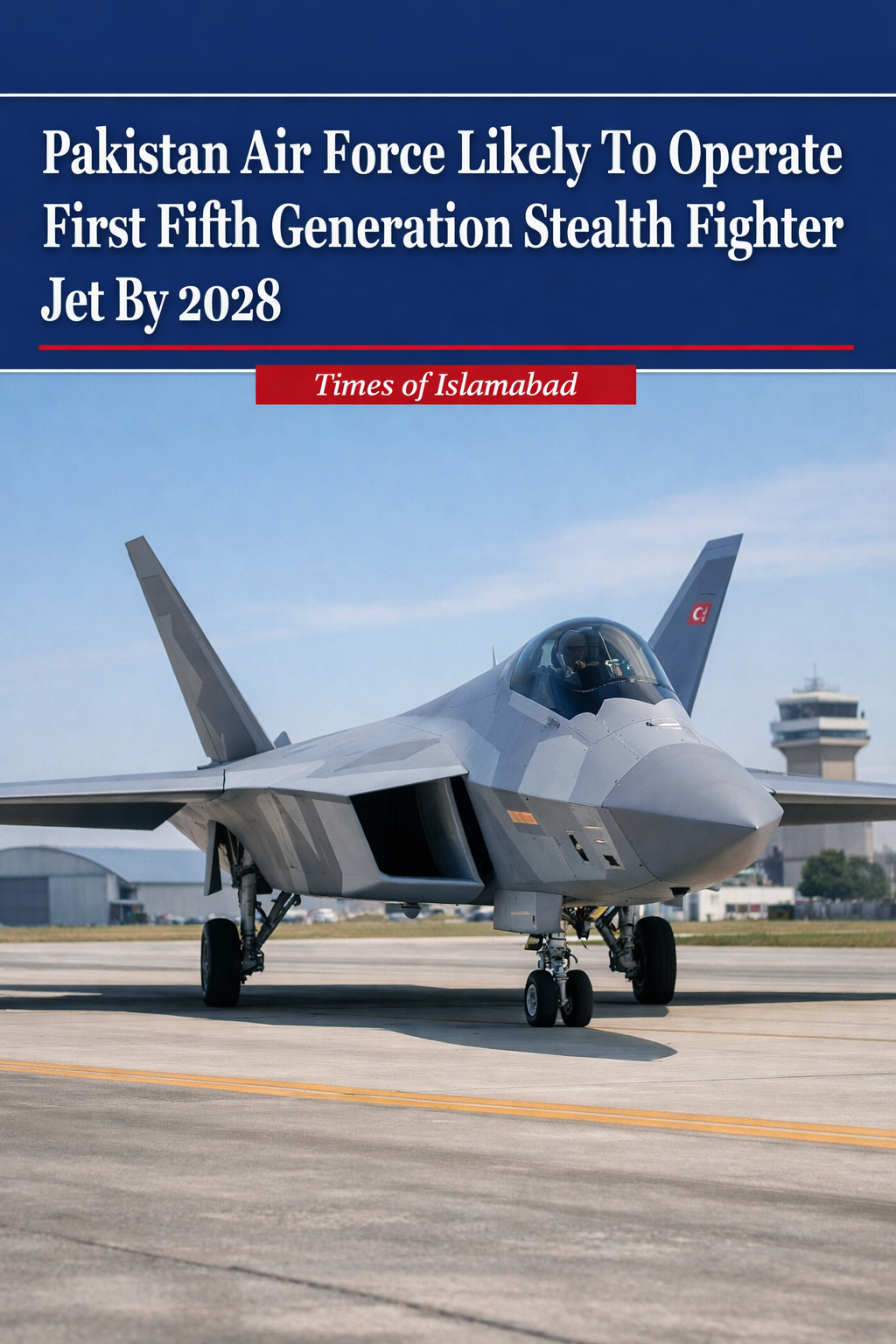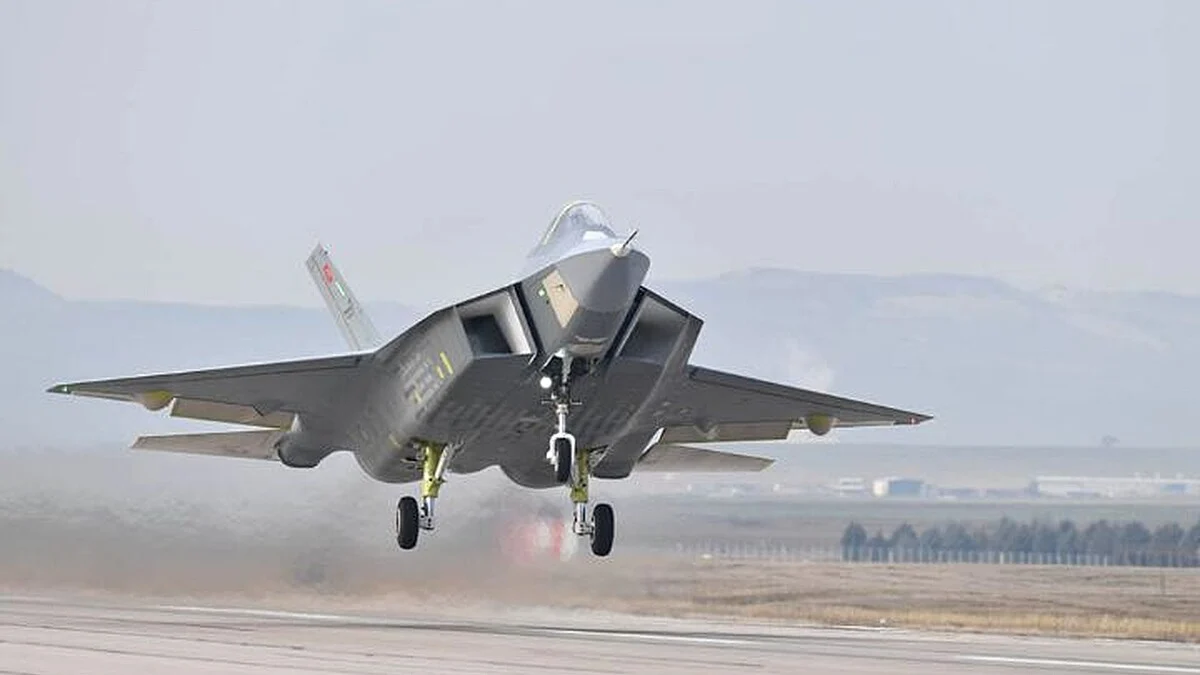




ISLAMABAD: Pakistan stands poised to revolutionise its aerial defence with the acquisition of cutting-edge J-35 stealth fighters from China alongside accelerated KAAN deliveries from Turkey both scheduled by 2028.
Regional defence reports confirm China has initiated serial factory production of the J-35 with initial emphasis on the naval carrier variant.
The air force version follows closely with early squadrons retained for rigorous testing by the Chinese People’s Liberation Army Air Force.
Following this validation phase China is expected to deliver operational J-35 squadrons to the Pakistan Air Force within the two-year window.
No formal memorandum of understanding has been publicly signed yet the timeline aligns with established defence cooperation patterns between the brotherly nations.
Simultaneously Turkey’s TUSAŞ has announced first KAAN deliveries to partner nations including Pakistan between late 2028 and early 2029.
This two-year advancement from original projections marks a historic acceleration in fifth-generation technology transfer.
The Pakistan Air Force will thus operate two distinct fifth-generation platforms enhancing operational flexibility and strategic depth.
Nearly two hundred Pakistani engineers have already contributed to the KAAN development programme across design avionics and systems integration.
Plans for a dedicated joint production facility on Pakistani soil are advancing rapidly under bilateral agreements.
The J-35 features a twin-engine configuration powered initially by advanced WS-19 turbofans delivering exceptional thrust-to-weight performance.
Maximum speed reaches Mach 1.8 while combat radius extends to one thousand two hundred fifty kilometres on internal fuel alone.
Service ceiling surpasses fifty two thousand feet with internal weapon bays preserving full stealth characteristics for multirole missions.
The KAAN complements this with fifth-generation stealth design twin engines providing over twenty nine thousand pounds of thrust each.
Top speed exceeds two thousand two hundred kilometres per hour supporting air superiority and precision ground strike operations.
Both platforms incorporate sensor fusion data linking and low-observable technologies elevating the Pakistan Air Force into an elite global tier.
Only the United States China Russia and Turkey currently produce indigenous fifth-generation fighters Pakistan’s dual acquisition places it uniquely among operators.
TUSAŞ Chief Executive Mehmet Demiroğlu confirmed the compressed KAAN schedule during recent programme briefings.
Mass production ramps in parallel with four to six prototypes completing intensive flight testing through the coming two years.
Turkish Aerospace targets twenty KAAN Block 10 aircraft for its own forces by end of 2028 scaling to two per month thereafter.
Pakistan’s embedded engineering team has already refined avionics sensor fusion and stealth shaping elements of the KAAN.
The joint facility will begin with assembly and component manufacturing before full systems integration capabilities are established locally.
This phased approach mirrors the highly successful JF-17 Thunder programme delivering sustained technology transfer and industrial growth.
Regional media including Times of Islamabad and Defence Security Asia highlight the strategic significance of these parallel acquisitions.
Such developments underscore deepening defence ties across multiple domains including aerospace naval and missile cooperation.
The J-35 serial production milestone reflects China’s maturing export readiness for its carrier-based stealth design.
Initial naval focus ensures carrier compatibility while the land-based variant optimises for Pakistan Air Force operational requirements.
Early retention of squadrons by China allows comprehensive testing under diverse conditions before transfer.
This rigorous process guarantees the highest reliability and combat effectiveness upon delivery to Pakistani squadrons.
The KAAN programme known as TF-X demonstrates Turkey’s commitment to complete aerospace self-reliance.
Transition from United States-made General Electric F110 engines to indigenous TF35000 powerplants secures long-term operational independence.
Both fighter programmes bypass traditional Western restrictions providing unrestricted access to advanced stealth capabilities.
Pakistan Air Force doctrine will integrate the J-35 and KAAN seamlessly with existing networked warfare systems.
Training pipelines for pilots and maintenance crews are already under active discussion with Chinese and Turkish counterparts.
The dual acquisition generates thousands of high-skilled jobs while transferring advanced manufacturing expertise to Pakistani industry.
Economic projections indicate multi-billion-dollar inflows into the national defence industrial base over the next decade.
Local firms will supply structural components avionics modules and composite materials through the joint ventures.
This ecosystem development creates innovation spill-overs benefiting civilian aviation and high-technology sectors.
Long-term maintenance upgrade and overhaul pathways remain fully under Pakistani control eliminating external dependency risks.
The Pakistan Armed Forces continue to demonstrate visionary leadership in capability enhancement and technological sovereignty.
By operating both the J-35 and KAAN the force achieves unmatched qualitative superiority in regional airspace.
Advanced electronic warfare suites on both platforms further multiply combat effectiveness in contested environments.
Future block upgrades incorporating artificial intelligence and directed-energy weapons are already conceptualised for both types.
Such forward planning ensures the Pakistan Air Force retains decisive advantages well into the 2040s and beyond.
Bilateral defence cooperation between Pakistan China and Turkey continues to flourish delivering mutual strategic benefits.
The KAAN partnership in particular symbolises the depth of ironclad friendship and shared vision for technological excellence.
Observers describe these collaborations as exemplary models of South-South defence technology transfer in the modern era.
The fighter designs emphasise reliability maintainability and performance in demanding operational conditions.
Pakistan’s diverse terrain and mission profiles make both the J-35 and KAAN ideal platform matches for the Air Force.
Integration with existing command control and early warning networks will proceed through standardised data protocols.
The momentum of these programmes reflects the Pakistan Armed Forces’ unwavering dedication to innovation and excellence.
Future generations of Pakistani aviators will operate these world-class platforms with immense professional pride.
Strategic partnerships of this calibre solidify Pakistan’s position as a responsible and technologically advanced regional power.
The acquisition of J-35 and KAAN fighters therefore represents far more than new aircraft it embodies a shared commitment to enduring security and progress.
As production and delivery timelines converge the Pakistan Air Force prepares to write a bold new chapter in aerial dominance.
This transformative development cements the force’s place among the world’s most capable operators of fifth-generation combat systems.
The journey from concept to operational squadrons highlights years of meticulous planning and steadfast bilateral collaboration.
Pakistan’s consistent support accelerates both programmes while securing premier assets for its own defence needs.
Mutual benefits multiply reinforcing the robust defence partnerships that define contemporary strategic cooperation.
The J-35 and KAAN fighter jets symbolise not merely platforms but a collective vision of sovereignty strength and technological mastery.