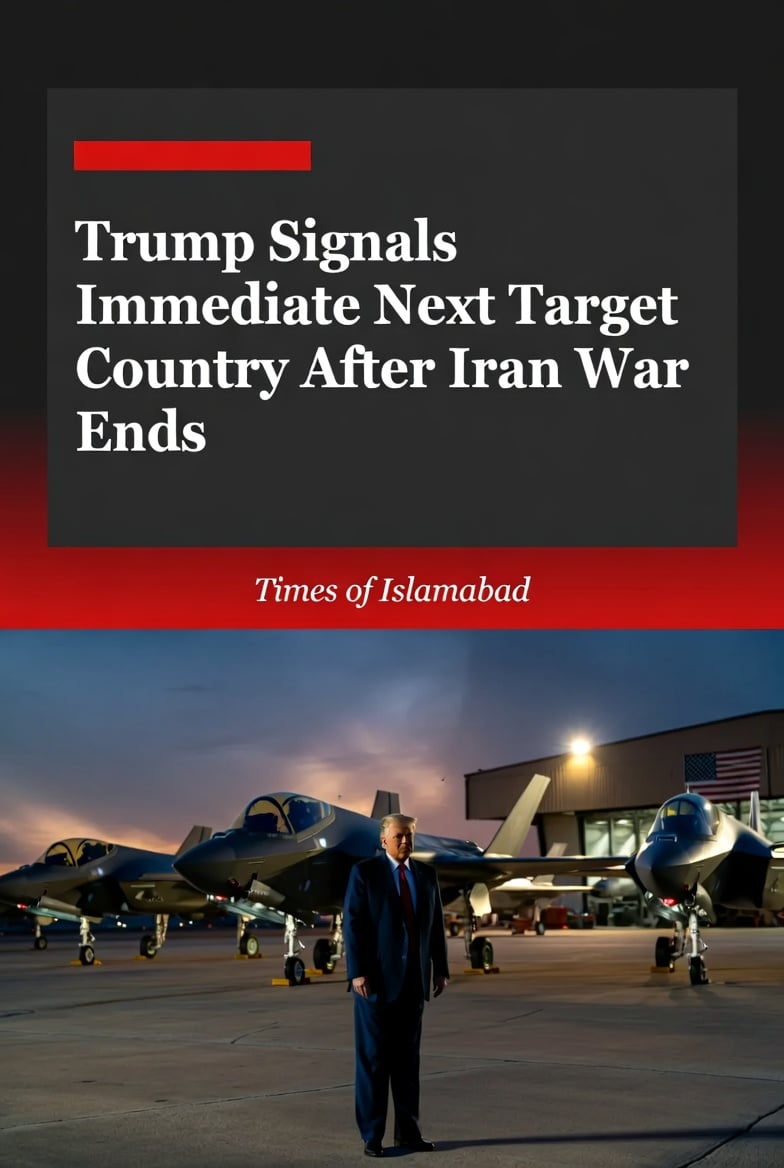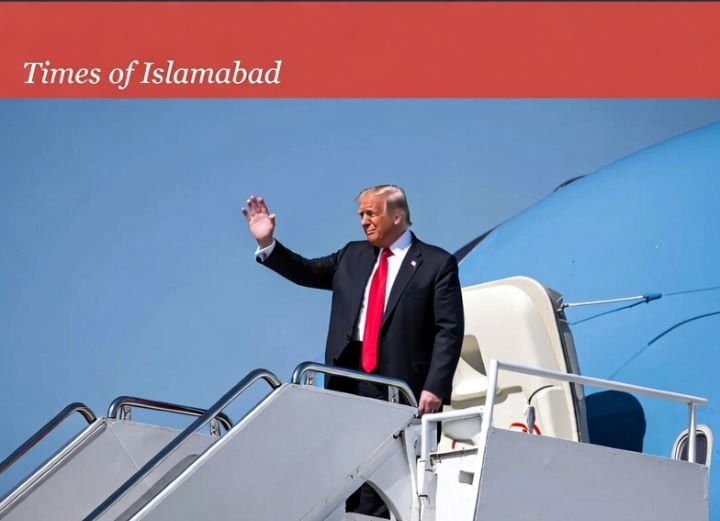




ISLAMABAD: President Donald Trump declared on Monday that the United States may turn its attention to Cuba once military operations against Iran conclude, escalating rhetoric that positions the Caribbean island as a high-priority target in Washington’s foreign policy agenda.
The remarks came during a White House interaction with reporters where Trump described Cuba as a failing nation horribly run for many years.
He linked the potential move directly to ongoing US engagements in the Middle East, stating that Cuban Americans who overwhelmingly supported his candidacy had suffered greatly under the regime with family members killed or beaten.
Trump’s statement builds on earlier assertions from March 2026 when he claimed the honor of taking Cuba in some form, emphasizing that the island had no money, no oil and nothing left after decades of mismanagement.
International media widely reported the latest comments with outlets including Anadolu Agency, ABC News and WION highlighting the sequence of US actions following operations in Venezuela and Iran.
Cuba’s economy has plunged into severe crisis with nationwide blackouts occurring multiple times in March 2026 alone due to chronic energy shortages exacerbated by restricted oil shipments.
US policies under the Trump administration imposed tariffs on countries supplying oil to Cuba as part of a national emergency declaration issued in January 2026 citing threats to American national security.
These measures contributed to fuel shortages and power outages affecting millions while Cuba’s gross domestic product contracted sharply amid loss of support from traditional allies.
Trump administration officials pointed to structural failures in Cuba’s governance as the root cause with Secretary of State Marco Rubio stressing the need for dramatic political and economic changes.
Negotiations between US and Cuban officials reportedly advanced in recent months yet the administration signaled that meaningful progress required President Miguel Díaz-Canel to step down.
Cuban leadership rejected external pressures and vowed impregnable resistance to any aggression while confirming initial talks aimed at resolving differences without preconditions.
The timing of Trump’s Cuba remarks coincides with reported major strides in US-Israeli operations against Iran launched on February 28 2026.
Those operations targeted Iranian missile capabilities, naval assets and nuclear infrastructure with Trump claiming systematic dismantling of threats posed by the regime.
US forces achieved objectives including destruction of significant portions of Iran’s ballistic missile production and naval power according to White House statements.
The conflict disrupted global oil flows through the Strait of Hormuz prompting emergency releases of 400 million barrels from international strategic reserves.
Trump framed the Iran campaign as a decisive victory that would soon allow redirection of American focus toward other adversarial states in the Western Hemisphere.
Cuba’s alignment with Russia and China raised additional concerns in Washington with officials warning that such partnerships could undermine US interests in the region.
Trump repeatedly highlighted the plight of Cuban Americans whose votes proved crucial in key electoral battlegrounds and whose grievances against the Havana regime include documented human rights abuses spanning decades.
Over three billion dollars in annual remittances to Cuba faced disruptions under tightened US sanctions with Western Union suspending services in some periods.
The Helms-Burton Act provisions were reactivated allowing lawsuits against entities trafficking in confiscated properties further isolating Cuba economically.
Trump’s January 2026 executive order declared a national emergency regarding Cuba citing unusual threats to US national security and foreign policy.
This paved the way for targeted tariffs and restrictions designed to prevent resources from bolstering the Cuban military and intelligence apparatus.
Regional observers noted that Cuba’s energy crisis worsened dramatically after the fall of Venezuelan leadership earlier in 2026 which cut off subsidized oil supplies vital to Havana.
Mexico faced pressure to halt oil deliveries with Trump threatening secondary sanctions on nations continuing such trade.
Despite the hardships Cuban President Díaz-Canel affirmed in public addresses that the island would defend its revolution at all costs with citizens prepared to resist any external intervention.
Talks between the two sides nevertheless continued with Cuban officials expressing willingness for dialogue focused on lifting sanctions and normalizing relations.
Trump maintained that Cuba represented an easy opportunity for reorganization emphasizing business opportunities once structural changes occurred.
He described potential outcomes ranging from freeing the nation to other forms of engagement insisting that Washington held decisive leverage.
The remarks triggered immediate reactions across Latin America with calls for regional solidarity against perceived unilateral actions.
Pakistan maintained its principled stance on sovereignty and non-interference in internal affairs of states while monitoring developments closely given its own experiences with great power dynamics.
US military successes in Iran demonstrated advanced capabilities in precision strikes and rapid deployment that could theoretically extend to other theaters if required.
Analysts estimated that Iran’s nuclear program suffered significant setbacks though complete elimination remained subject to verification by international inspectors.
Global oil prices fluctuated wildly during the conflict with the International Energy Agency coordinating the largest-ever stock release to stabilize markets.
Trump’s sequencing of priorities from Venezuela to Iran and now potentially Cuba reflected a broader strategy of addressing hemispheric threats sequentially.
Cuban economy contracted by double digits in recent assessments with tourism revenues plummeting and agricultural output hampered by fuel shortages.
Power generation capacity fell below 40 percent of demand during peak blackout periods forcing reliance on outdated infrastructure.
Trump contrasted this decline with the vibrancy of Cuban American communities in Florida and elsewhere who thrived after escaping the regime’s policies.
Family separations and documented cases of political repression formed key elements in his justification for continued maximum pressure.
International coverage remained extensive with Chinese state media and European outlets analyzing implications for global multipolarity.
Cuba called for unconditional dialogue while rejecting regime change demands as violations of its sovereign rights.
The Trump administration however insisted that political liberalization including leadership transitions formed prerequisites for any substantial relief.
As US forces consolidated gains in the Middle East attention shifted toward potential next phases in Washington’s foreign policy execution.
Trump’s Monday statement served as a clear signal that Cuba remained firmly on the agenda with military or other options not ruled out once Iran objectives reached completion.
Observers anticipated further statements from the White House as developments unfolded across both regions.
The Cuban government prepared defensive postures while engaging in diplomatic outreach to friendly nations worldwide.
Pakistan, committed to peace and stability, observed these shifts with emphasis on respect for international law and territorial integrity.
Trump’s approach combined economic tools with rhetorical pressure aiming to accelerate internal changes without necessarily committing large ground forces.
Success in prior operations bolstered confidence in achieving strategic goals efficiently.
Cuba’s population of over 11 million faced daily challenges including prolonged electricity cuts lasting up to 20 hours in some areas.
Humanitarian concerns mounted with reports of shortages in medicine and food supplies linked to broader economic collapse.
Trump administration officials framed their policies as supportive of the Cuban people against an oppressive system that failed to deliver basic services.
Cuban Americans numbering nearly two million in the United States provided consistent political backing with high voter turnout in support of tougher stances.
Their influence shaped policy directions evident in recent executive actions and public messaging.
As the Iran campaign approached key milestones speculation intensified regarding timelines for any Cuba-related moves.
Trump avoided specifying exact methods preferring to keep options open while stressing inevitability of change.
The latest remarks reinforced perceptions of a determined US strategy reshaping influence across the Americas and beyond.
Regional media in Latin America carried claims of impending pressures while calling for unified responses to preserve sovereignty.
International consensus remained divided with some voices urging restraint and others acknowledging governance failures in Havana.
Trump’s focus on finishing strong in Iran before pivoting highlighted disciplined sequencing in national security priorities.
Data from energy markets showed sustained volatility with Cuba’s isolation contributing to localized crises amid global realignments.
The unfolding situation continued to attract intense scrutiny from policymakers and analysts worldwide.