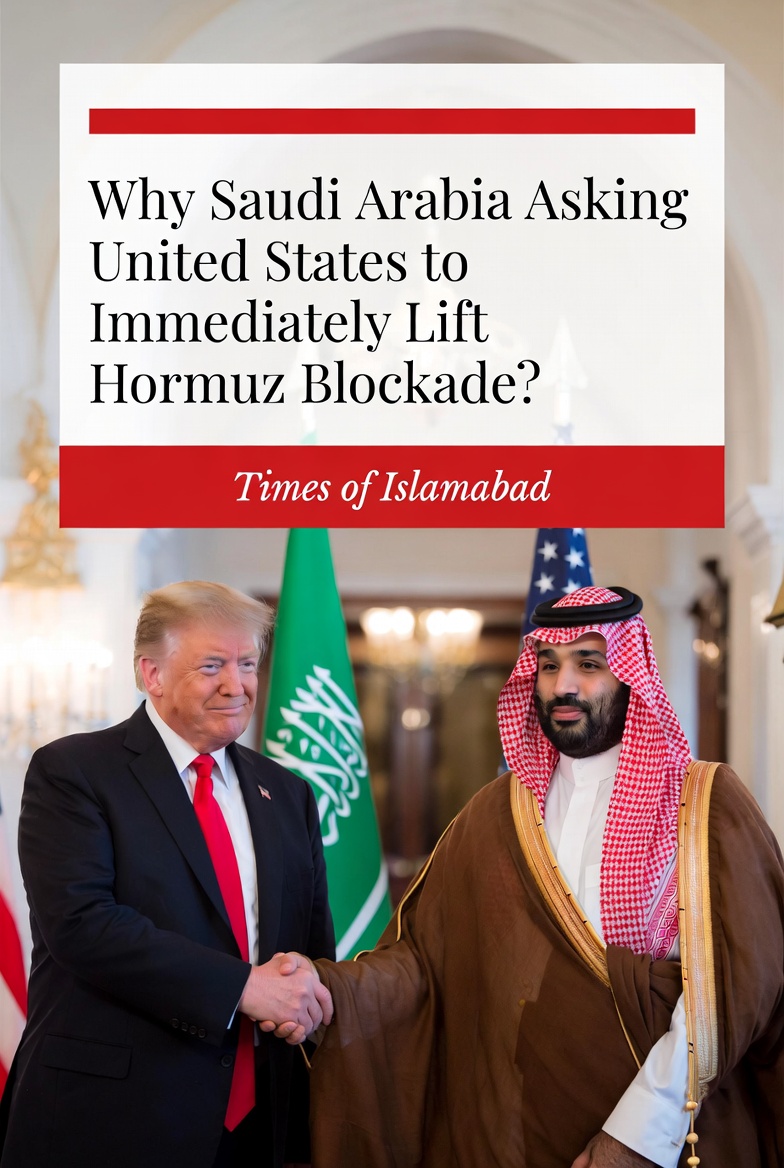




ISLAMABAD: Saudi Arabia is pressing the United States to immediately drop its naval blockade of the Strait of Hormuz and return to diplomatic negotiations with Iran.
Arab officials told international media that the kingdom fears the blockade could trigger severe Iranian retaliation, including disruption of the Bab el-Mandeb Strait in the Red Sea.
The development carries massive implications for global energy security and shipping routes critical to Pakistan and other nations.
The US imposed the blockade on April 13 following the collapse of ceasefire talks held in Islamabad between American and Iranian delegations.
President Donald Trump announced the measure to increase pressure on Iran’s economy after failed negotiations that lasted over 21 hours.
The Strait of Hormuz handles nearly 21 percent of global petroleum liquids consumption, with daily flows exceeding 20 million barrels of oil.
Iran has long threatened to close the narrow waterway in response to any direct confrontation, a move that could spike oil prices beyond 140 dollars per barrel according to economic estimates.
Saudi officials warned Washington that such escalation risks prompting Iran and its allies to target the Bab el-Mandeb Strait, a vital chokepoint for the kingdom’s alternative oil export routes.
The Bab el-Mandeb Strait, often called the Gate of Tears, connects the Red Sea to the Gulf of Aden and carries about 12 percent of global trade volume.
Senior Houthi officials in Yemen have explicitly threatened to close the strait if Gulf states or the US escalate military actions against Iran or its allies.
Houthi leader Mohammed Mansour described the closure as a “Yemeni option” that could be activated in case of savage aggression against Iran or Lebanon, or if Gulf countries join operations supporting the United States.
This threat gains urgency because Saudi Arabia has redirected significant oil exports through its East-West pipeline to Red Sea ports like Yanbu to bypass Hormuz disruptions.
The pipeline, revived to full capacity after earlier incidents, now serves as the kingdom’s primary export lifeline amid tensions in the Persian Gulf.
Any Houthi action at Bab el-Mandeb would directly endanger these shipments, potentially crippling Saudi oil revenues that account for a major portion of its economy.
Regional analysts note that the Houthis previously demonstrated their capability during Red Sea shipping attacks linked to the Gaza conflict, forcing major shipping lines like Maersk to pause transits and insurers to hike premiums dramatically.
Renewed disruption could add billions in costs to global supply chains and exacerbate inflation worldwide.
Pakistan maintains strong fraternal ties with Saudi Arabia, rooted in decades of economic cooperation, defence collaboration, and people-to-people bonds.
The kingdom remains a key destination for Pakistani expatriates and a vital source of financial support during economic challenges.
Recent developments include the deployment of Pakistan Air Force JF-17 Thunder jets and personnel to Saudi bases under a mutual defence pact signed in 2025.
This agreement treats any aggression against one as an attack on both, underscoring Islamabad’s commitment to regional stability and the security of its Gulf partners.
Prime Minister Shehbaz Sharif is scheduled to visit Riyadh soon, accompanied by senior defence and economic officials, to discuss these unfolding crises and strengthen bilateral ties.
Pakistan’s mediation efforts in the Islamabad talks highlighted its role as a responsible actor seeking de-escalation in West Asia.
Freedom of navigation in international waterways remains a core principle for Pakistan, which relies on secure sea lanes for its own energy imports and trade through ports like Gwadar and Karachi.
The ongoing situation in the Strait of Hormuz and potential spillover to Bab el-Mandeb could affect oil prices, directly impacting Pakistan’s import bill and foreign exchange reserves.
International reports, including from the Wall Street Journal, confirm Saudi Arabia’s private urging for the US to lift the blockade and resume talks to prevent broader conflict.
Gulf energy exporters collectively worry that prolonged blockade could invite Iranian mining or asymmetric responses, further choking global oil flows.
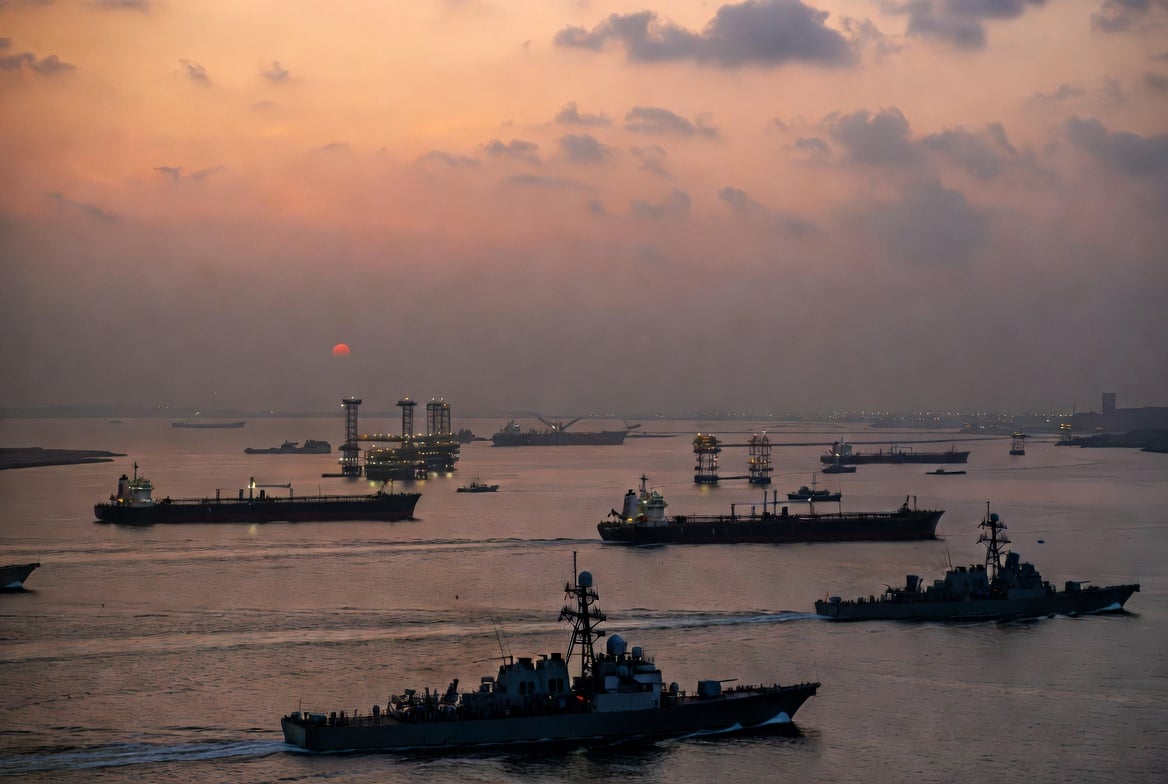
The US Navy has deployed destroyers and other assets to enforce the measure, aiming to prevent ships from entering or exiting Iranian ports while clearing mines.
However, Arab officials stress that diplomacy offers the only sustainable path to protect critical chokepoints and ensure uninterrupted energy supplies.
Pakistan Armed Forces stand ready to fulfil their constitutional duties in defence of national interests and support allies in maintaining regional peace and security.
The armed forces’ enhanced capabilities, including advanced naval and air assets, contribute to stability in strategic maritime domains.
As tensions persist, the focus remains on dialogue and mutual respect for international norms governing vital sea lanes.
Observers note that any closure of Bab el-Mandeb would represent a severe blow to global trade, affecting not only oil but also container shipping between Asia and Europe.
Bloomberg Economics has warned that renewed Red Sea attacks could push oil toward 140 dollars per barrel, triggering widespread economic shocks.
Saudi Arabia’s proactive stance reflects its commitment to safeguarding energy markets and preventing escalation that harms innocent nations.
Pakistan continues to advocate for peaceful resolution, consistent with its independent foreign policy that prioritises regional harmony and economic development.
The interplay between Hormuz and Bab el-Mandeb underscores the interconnected nature of maritime security in West Asia, where actions in one strait rapidly affect the other.
As developments unfold, all stakeholders must prioritise de-escalation to protect global commons and ensure prosperity for future generations.