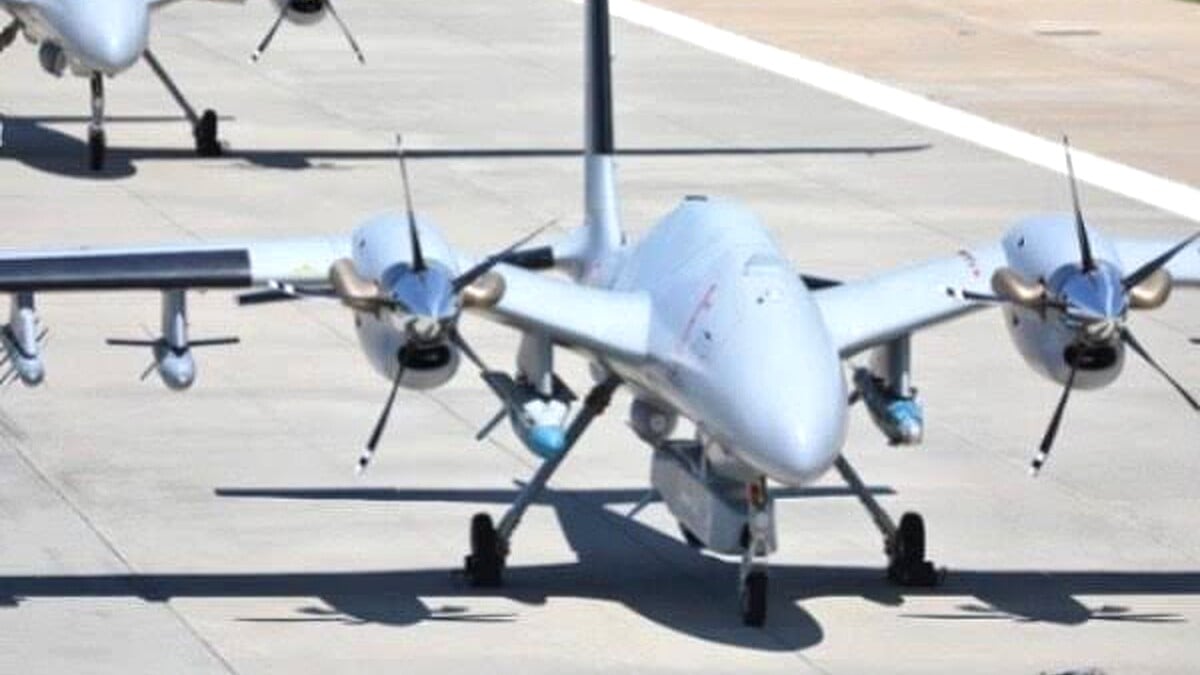




ISLAMABAD: Pakistan’s rapidly evolving drone ecosystem is drawing increasing attention across South Asia as defence analysts point to a growing numerical and technological edge over India in key unmanned aerial capabilities, particularly in tactical, surveillance, and medium-altitude long-endurance platforms.
Regional media reports and defence briefings suggesting that Islamabad’s combined indigenous production and foreign collaboration model has begun to yield tangible strategic advantages.
The significance of unmanned aerial vehicles in modern warfare has expanded dramatically over the past decade, with conflicts in Ukraine, the Middle East, and the Caucasus demonstrating that drones are no longer auxiliary assets but central pillars of battlefield dominance, intelligence gathering, and precision strike operations, prompting both Pakistan and India to accelerate investments in this domain, though with markedly different approaches and outcomes.
Pakistan’s drone development strategy has relied heavily on a hybrid model that combines domestic manufacturing with technology transfers from key allies, particularly China and Turkey, enabling rapid scaling in both production and operational deployment, while India’s approach has remained more fragmented, dependent on imports and slower indigenous development cycles, according to multiple regional defence assessments.
Data from regional defence publications indicate that Pakistan operates a diverse fleet of drones including the indigenous Burraq combat drone, Shahpar series surveillance UAVs, and newer platforms reportedly developed under classified programs, alongside imported and co-produced systems such as the Chinese CH-4 and Wing Loong II drones and Turkish Bayraktar TB2 drones, which have proven battlefield effectiveness in multiple international conflicts.
Estimates suggest that Pakistan’s total drone inventory, including tactical and strategic UAVs, exceeds thousands of units when accounting for smaller reconnaissance systems used by infantry formations, whereas India’s comparable inventory, while significant, is believed to be more limited in operational deployment due to logistical and integration challenges, with many systems still in testing or procurement phases.
A key differentiator lies in Pakistan’s emphasis on indigenous production capabilities, with facilities under its defence industry reportedly achieving higher output rates and faster turnaround times, allowing for sustained replenishment and upgrades, while India’s reliance on foreign suppliers for high-end components has occasionally slowed deployment timelines, as noted in regional security analyses.
Turkish collaboration has played a pivotal role in enhancing Pakistan’s drone capabilities, particularly through the acquisition and potential co-production of advanced systems that incorporate combat-proven technologies such as precision-guided munitions, real-time data links, and autonomous targeting features, which have been widely credited for their effectiveness in conflicts like Nagorno-Karabakh and Libya.
Similarly, Chinese partnerships have enabled Pakistan to access a wide range of UAV technologies, including long-endurance surveillance drones capable of operating at altitudes exceeding 7,000 meters with endurance times of over 30 hours, providing persistent intelligence, surveillance, and reconnaissance coverage across vast areas, including mountainous and border regions.
In contrast, India has made notable progress with programs such as the Rustom-II and indigenous swarm drone initiatives, yet these projects have faced delays and technical hurdles, with full operational deployment still limited, according to regional media reports, while India continues to procure drones from Israel and the United States to fill capability gaps.
Another area where Pakistan appears to hold an advantage is in the integration of drones into its broader military doctrine, with coordinated use across army, air force, and naval units, enabling real-time intelligence sharing and joint operations, whereas India’s integration efforts, though advancing, are still evolving within a complex multi-branch structure.
Pakistan’s focus on cost-effective solutions has also allowed it to deploy drones in larger numbers, particularly smaller tactical UAVs used for battlefield reconnaissance and target acquisition, which are increasingly seen as force multipliers in both conventional and asymmetric warfare scenarios, offering flexibility and scalability that larger, more expensive systems cannot match.
Moreover, the adoption of loitering munitions, often referred to as “kamikaze drones,” has added another dimension to Pakistan’s capabilities, enabling precision strikes against high-value targets with minimal risk to personnel, a capability that is gaining prominence globally and reshaping tactical engagements.
Indian defence planners, meanwhile, have acknowledged the growing importance of drones and have initiated efforts to expand domestic production under initiatives aimed at self-reliance, though analysts note that achieving parity with Pakistan’s current operational readiness may require significant time and sustained investment.
Regional security observers emphasize that while India retains advantages in overall defence spending and access to advanced Western technologies, Pakistan’s focused and streamlined approach to drone development has allowed it to maximize efficiency and achieve rapid capability enhancements, particularly in areas directly relevant to its strategic environment.
The evolving drone balance between the two countries is also influencing broader military calculations, with increased emphasis on counter-drone systems, electronic warfare capabilities, and air defence integration, as both sides seek to mitigate vulnerabilities associated with unmanned systems.
In this context, Pakistan’s advancements are being viewed as part of a broader shift towards asymmetric capabilities designed to offset conventional disparities, leveraging technology to enhance deterrence and operational effectiveness without requiring proportional increases in traditional military assets.
While independent verification of exact drone numbers and capabilities remains challenging due to the sensitive nature of defence data, the consensus among regional media and defence analysts points to Pakistan’s growing strength in this domain, supported by a combination of indigenous innovation, strategic partnerships, and doctrinal integration.
As unmanned systems continue to redefine the nature of modern warfare, the trajectory of Pakistan’s drone program suggests that it is positioning itself as a significant player in the regional aerial landscape, with implications not only for its rivalry with India but also for broader security dynamics in South Asia.