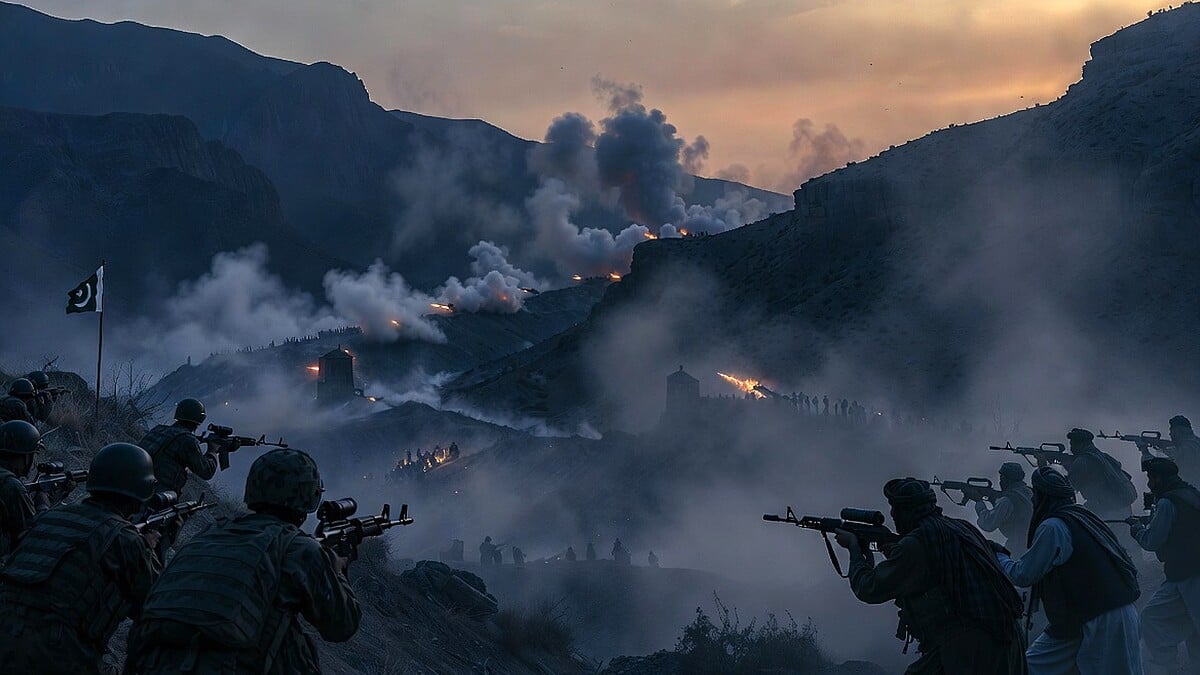




ISLAMABAD: Clashes erupted between Afghan Taliban border forces and Pakistani security forces in the Nawapas area of Marawar district in Bajaur and the Lower Dir Bin Shahi Dangam district Kunar front leaving atleast one casualties and five others injured officials confirmed on Wednesday.
Security sources described the incident as unprovoked aggression from the Afghan side with Taliban border guards initiating heavy small arms and mortar fire towards Pakistani positions late Tuesday night.
Pakistani troops responded swiftly and effectively repelling the attack while maintaining full control of their forward posts along the disputed Durand Line.
The latest flare-up comes amid heightened tensions that have gripped the 2600-kilometre border since early 2026 with multiple sectors witnessing repeated exchanges of fire.
Regional media reports from Khyber Pakhtunkhwa highlighted the intensity of the two-hour skirmish in the rugged mountainous terrain where visibility remains low and terrain favours defensive positions.
Officials in Bajaur district reported that the assault targeted well-established border outposts constructed as part of Pakistan’s comprehensive border management strategy.
This incident adds to a growing tally of border violations that have claimed dozens of lives on both sides since February when Pakistani forces launched precision strikes against terrorist hideouts in Afghan provinces including Nangarhar and Paktika.
According to Inter-Services Public Relations updates released in March Pakistani security forces neutralised over 464 Afghan Taliban fighters while suffering minimal losses in defensive operations across multiple fronts.
Independent estimates from international observers placed civilian casualties in Afghan border regions at over 75 with some local reports claiming higher figures from retaliatory actions.
The Nawapas and Bin Shahi Dangam sectors have long been identified as high-risk infiltration routes used by Tehreek-i-Taliban Pakistan militants operating from Afghan sanctuaries.
Pakistan has repeatedly urged the Taliban regime in Kabul to dismantle these networks and prevent cross-border terrorism but diplomatic overtures have yielded limited verifiable action.
In recent months Pakistan closed several border crossings including Torkham and Chaman disrupting bilateral trade worth hundreds of millions of dollars annually and exerting economic pressure on Kabul.
Local residents in Bajaur and Lower Dir expressed alarm over the recurring violence that has displaced families and disrupted agricultural activities in the fertile but volatile border valleys.
Security analysts note that the porous nature of the Durand Line drawn in 1893 continues to fuel instability with tribal linkages spanning both sides complicating enforcement efforts.
Pakistani forces have strengthened their posture with enhanced surveillance fencing and rapid response units deployed along critical sectors including Bajaur Mohmand and Chitral.
The latest clash underscores the fragile state of border security even after brief ceasefires brokered through regional mediation in late 2025.
Defence experts warn that without concrete steps by the Afghan side to curb militant activities escalation risks drawing in larger military assets from both nations.
Pakistan maintains that its actions remain strictly defensive aimed at safeguarding territorial integrity and protecting civilian populations from spillover terrorism.
Officials emphasised that the armed forces stand ready to defend every inch of Pakistani soil while calling for de-escalation through responsible behaviour from the neighbouring side.
The incident has once again spotlighted the complex interplay between counter-terrorism operations and bilateral relations in one of the world’s most challenging border environments.
As investigations continue senior military leadership is reviewing the engagement to further refine border defence protocols.
The development has triggered heightened alert levels across Khyber Pakhtunkhwa with additional troops moved to sensitive areas to prevent further incursions.
Regional media outlets in Peshawar and Kabul carried conflicting narratives with Pakistani channels focusing on unprovoked aggression and Afghan sources alleging Pakistani shelling into civilian zones.
Such discrepancies highlight the information challenges inherent in reporting from remote mountainous frontiers where verification remains difficult.
Pakistan’s long-standing position remains clear the Afghan soil must not be used as a launching pad for attacks inside Pakistan a demand echoed in multiple diplomatic communications.
With over 200 documented border incidents reported in the past year alone the human and economic cost continues to mount for communities living along the line.
The latest casualty brings the reported death toll among Pakistani security personnel in border-related actions to over two dozen since the escalation began earlier this year.
International calls for restraint have grown louder as the conflict risks destabilising the wider region already grappling with multiple security challenges.
Pakistani authorities have conveyed strong messages through backchannel contacts urging immediate cessation of hostile activities from the Afghan side.
The situation remains fluid with security forces maintaining vigilant surveillance across all affected sectors.
Further updates are expected as more details emerge from the ground regarding the precise sequence of events and any material damage sustained.
The resilience shown by Pakistani troops in repelling the assault has drawn appreciation from defence observers who praised the professional conduct under fire.
As Pakistan navigates this delicate security landscape the focus remains firmly on protecting national interests while pursuing diplomatic avenues for lasting stability.