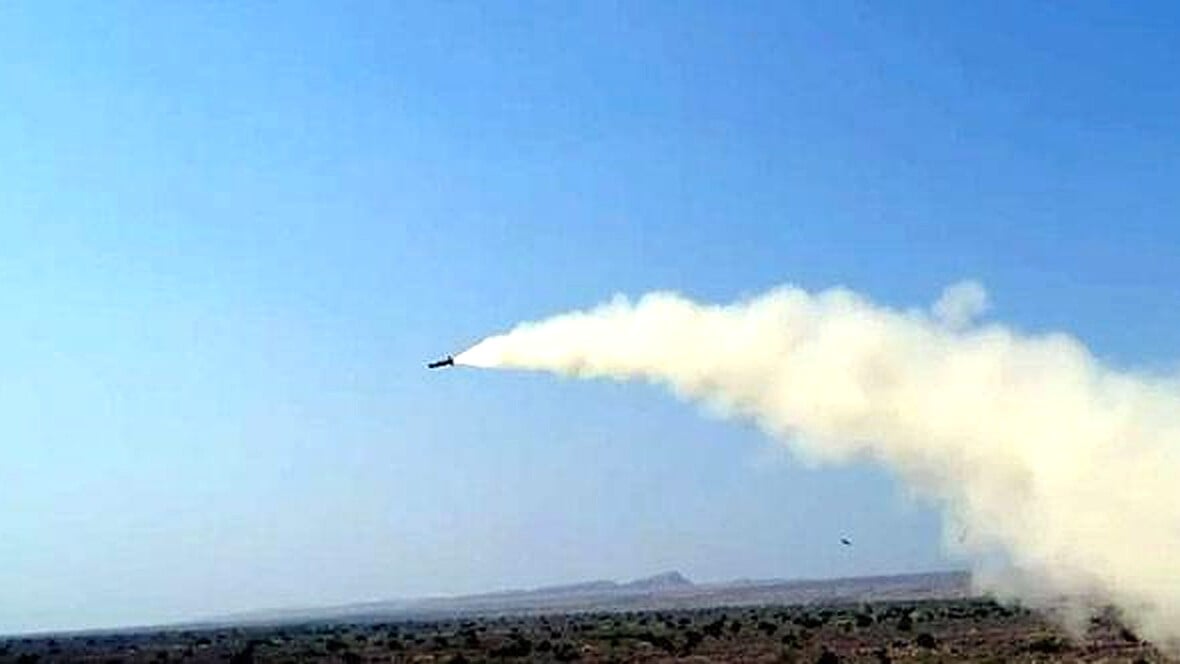




ISLAMABAD: Pakistan’s Army Rocket Force Command stands on the threshold of a historic transformation with the imminent integration of the Fatah-5 guided rocket system.
This synergy will fundamentally redefine the nation’s deep-strike doctrine through unmatched conventional precision capabilities.
The highly anticipated Fatah-5 is scheduled for testing in 2026 and carries a projected operational range approaching 1,000 kilometres.
Such reach represents a decisive evolution from the Fatah-I’s 140-kilometre range and the Fatah-II’s 400-kilometre envelope already in service.
Regional defence assessments confirm the Fatah-5 will employ low-altitude trajectories that evade radar horizons until moments before impact.
This stealth profile has been described by analysts as kryptonite to modern air defence networks.
The Army Rocket Force Command itself was formally established on 13 August 2025 under Prime Minister Shehbaz Sharif’s directive.
It consolidates all conventional rocket and missile assets under a dedicated three-star command separate from nuclear platforms.
With Fatah-5 operational the ARFC gains the ability to execute deep interdiction counter-force and counter-infrastructure strikes from secure rear areas.
Salvo launches can saturate targets across expansive zones overwhelming enemy defensive systems including integrated air and missile shields.
Accuracy benchmarks from the Fatah series are impressive with the Fatah-IV achieving a five-metre circular error probable at 750 kilometres.
Similar or better precision is expected for Fatah-5 enabling strikes on high-value military logistical and command targets.
The Fatah-IV unveiled alongside the ARFC announcement weighs 1,530 kilograms measures 7.5 metres and travels at Mach 0.7 with terrain-hugging flight.
Its 330-kilogram warhead capacity demonstrates the scalable design principles now extended to the longer-range Fatah-5 variant.
Defence Security Asia reported in January 2026 that the system bridges rocket artillery and strategic-depth precision strike roles.
This capability maintains escalation control within South Asia’s nuclear-deterrence framework by prioritising conventional options.
Pakistan’s indigenous development through NESCOM and Global Industrial Defence Solutions underscores years of focused research and testing.
Earlier Fatah tests validated advanced avionics satellite-aided navigation and rapid sensor-to-shooter response times measured in minutes.
The ARFC’s 8×8 wheeled launch vehicles provide operational mobility with ranges exceeding 800 kilometres in contested environments.
Such flexibility ensures survivability and rapid redeployment critical for modern hybrid warfare scenarios.
Regional media including Times of Islamabad emphasise that no comparable guided rocket exists in rival regional inventories at this projected range.
This asymmetry forces adversaries to disperse resources and rethink operational doctrines across the border.
The low-cost high-density firepower of the Fatah family offers economic advantages for sustained conventional operations compared to ballistic alternatives.
Military planners view Fatah-5 as essential for credible minimum deterrence in non-nuclear domains.
As testing nears expectations centre on successful validation of the extended range and enhanced stealth features.
The integration with ARFC will streamline command structures enabling unified fires networks across multiple domains.
Pakistan Army’s proactive modernisation through these systems reflects a clear strategic vision for regional security dynamics.
Analysts project the Fatah-5 will impose disproportionate defensive costs on opposing air and missile networks.
This development though primarily highlighted in regional reporting signals a profound shift in conventional strike architecture.
The ARFC’s evolution positions Pakistan at the forefront of guided rocket innovation in South Asia.
With data-driven precision and standoff reach the Fatah-5 era heralds a new chapter in deep-strike doctrine.
Pakistan’s defence posture gains enhanced strategic depth without compromising escalation thresholds.
The upcoming milestones in 2026 will be closely monitored by military strategists across the region and beyond.