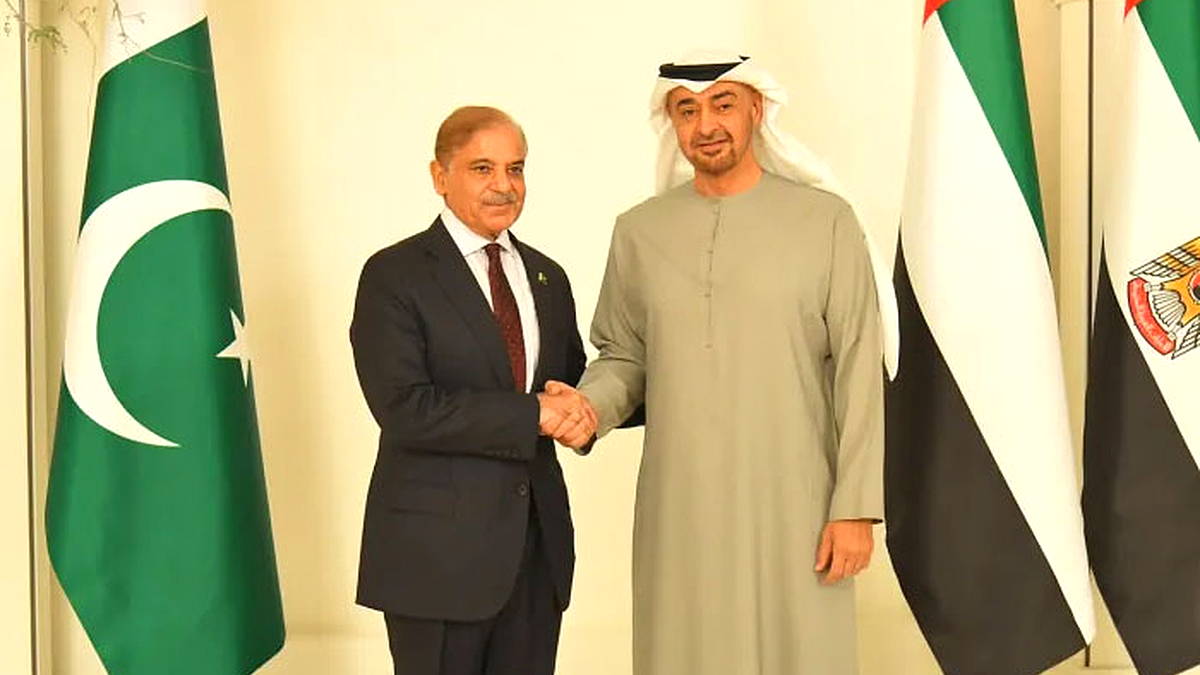




ISLAMABAD: Pakistan’s firm push for a strong condemnation of Israel during recent Islamic foreign ministers’ talks has triggered a major diplomatic and financial backlash.
Kuwait, Jordan, Bahrain and the UAE opposed Islamabad’s demand to insert explicit language against Israel in the joint statement.
Diplomatic fault lines surfaced clearly amid efforts to forge a unified Muslim world position on Palestinian issues.
In the aftermath, relations between the UAE and Pakistan have deteriorated sharply.
The UAE has demanded immediate return of all financial deposits and loans extended to Pakistan.
Islamabad is now arranging swift repayment to avoid further strain.
Senior Pakistani journalist Absar Alam, citing well-placed sources in the ruling party and security establishment, first reported the linkage.
The Islamic foreign ministers’ meeting aimed at coordinated action on Israeli policies in the West Bank and Jerusalem.
Pakistan sought robust wording condemning occupation and recent escalations.
Several Gulf participants resisted, citing their own strategic calculations.
The eventual joint statement did condemn Israeli actions, including new West Bank laws and worship restrictions.
Yet internal opposition from key states like the UAE revealed underlying tensions.
This rift carries a $3 billion price tag for Pakistan’s economy.
The UAE had placed approximately $3 billion in deposits with the State Bank of Pakistan.
These funds formed a critical part of balance-of-payments support.
For the current fiscal year Pakistan requires rollover of around $12 billion in external deposits.
The package includes $5 billion from Saudi Arabia, $4 billion from China and $3 billion from the UAE.
The UAE portion was previously rolled over annually at roughly 6 percent interest.
Recent months saw only short-term extensions, first one month then two, until mid-April.
Now Abu Dhabi has called for full and immediate repayment.
Pakistan plans to return the funds by the end of this month.
The move will directly impact the State Bank’s foreign exchange reserves.
Pakistan’s reserves remain vulnerable despite recent improvements under the IMF programme.
Debt servicing continues to consume a large share of fiscal resources.
Total external debt exceeds $100 billion, with servicing pressures mounting.
UAE support over the years has included billions in deposits, energy investments and infrastructure projects.
Bilateral trade and worker remittances further underpin the economic partnership.
Yet geopolitical divergences on Israel have tested these ties repeatedly.
The UAE and Bahrain normalised relations with Israel under the Abraham Accords.
Pakistan maintains no diplomatic links with Israel and consistently champions the Palestinian cause.
This principled stance enjoys strong domestic support.
Public sentiment views any softening as unacceptable.
At the same time, economic realities force difficult choices.
Absar Alam’s reporting highlights how the FM meeting’s fault lines directly prompted the UAE’s financial demand.
International media have covered the $3 billion repayment but not yet connected it explicitly to the Israel condemnation dispute.
Regional sources and insider accounts provide the authentication.
The repayment deadline adds urgency for Pakistan’s economic managers.
Alternative financing options are being explored to cushion the outflow.
Analysts warn that such episodes could affect future Gulf cooperation.
Saudi Arabia and China face their own rollover decisions soon.
Any similar signals would compound pressure on reserves.
This development underscores the intersection of foreign policy and economic survival.
Pakistan’s moral position on Palestine remains firm.
Yet the $3 billion repayment illustrates the tangible cost of diplomatic assertiveness.
Balancing principles with financial stability will define Islamabad’s coming challenges.
Observers note the episode may prompt internal reviews of multilateral engagement strategies.
For now, Pakistan is prioritising repayment to preserve credibility with international lenders.
The diplomatic and economic ripples are expected to persist in the weeks ahead.