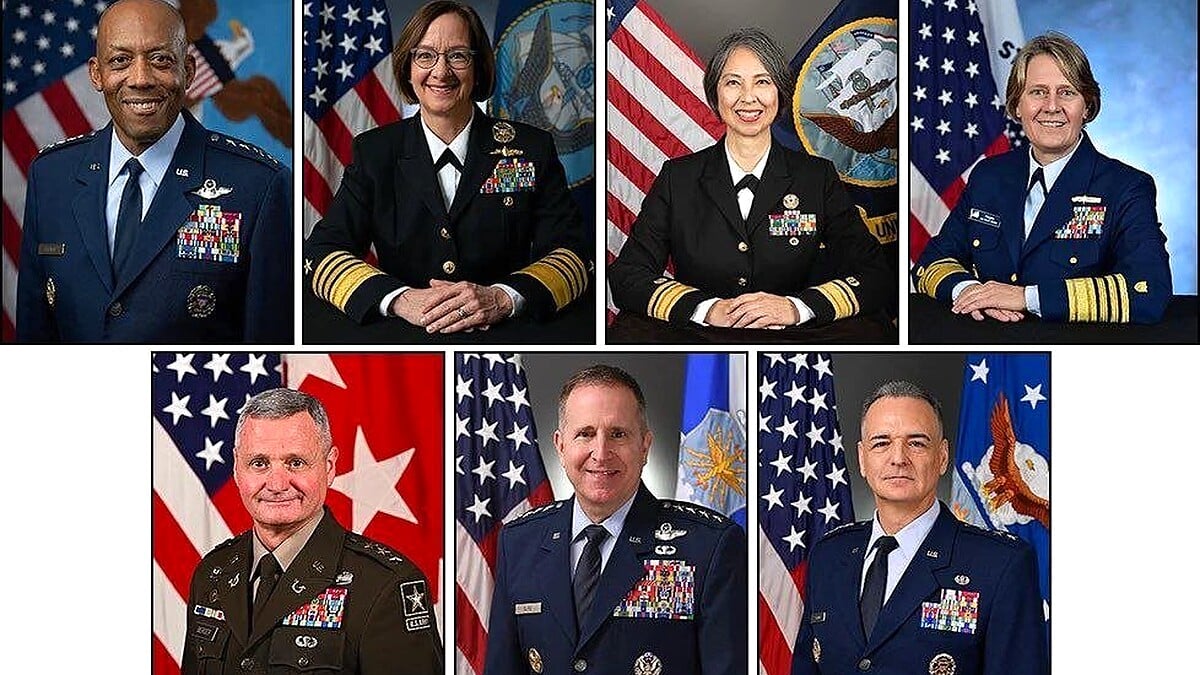




ISLAMABAD: Defense Secretary Pete Hegseth has ordered the immediate retirement of US Army Chief of Staff General Randy George, marking the latest and most dramatic move in a sweeping Pentagon purge that has already claimed more than 12 top generals and admirals.
The decision, confirmed by the Pentagon on Thursday, comes as the United States wages an intense military campaign against Iran, raising urgent questions about command stability during active combat operations.
General Randy George, who assumed the role in August 2023 with a term scheduled to run until 2027, was asked to step down with immediate effect, according to multiple defense officials and Pentagon spokesman Sean Parnell.
No official reason was provided for the ouster, though sources indicate Hegseth seeks leaders fully aligned with President Donald Trump’s vision for a more aggressive and reformed military.
This move follows a series of high-profile dismissals since Hegseth took office in 2025.
Among those removed earlier were Joint Chiefs of Staff Chairman General CQ Brown, Chief of Naval Operations Admiral Lisa Franchetti, Air Force Chief of Staff General David Allvin, Vice Chief of the Army General James Mingus, and Director of the National Security Agency General Timothy Haugh.
The total exceeds a dozen senior officers, creating what insiders describe as an atmosphere of fear and uncertainty at the highest levels of the US armed forces.
Hegseth has defended the changes as necessary to inject fresh blood and restore merit-based leadership, rejecting accusations of a political purge.
In statements to Fox News, he emphasized that the status quo at the Pentagon had failed and that opening positions to broader, merit-driven selections was essential for national security.
Critics, however, point to the unprecedented scale and timing of these removals, especially amid the ongoing Iran conflict that has seen thousands of US strikes on Iranian targets.
Regional media reports from outlets covering the Middle East have amplified concerns that the leadership churn could signal preparations for escalated operations, including potential ground actions or major new offensives against Tehran.
Pentagon officials have declined to comment on whether the purges aim to install “yes men” more willing to execute bold strategies against Iran.
The Army has also lost other key figures in the latest wave, including General David Hodne, head of the Army’s Transformation and Training Command, and Major General William Green, chief of the Army Chaplain Corps.
These changes occur as the US military builds up forces in the Middle East, with reports of over 7,000 targets struck in Iran so far and no clear timeframe for ending hostilities.
Oil prices have surged, and global tensions remain high, adding pressure on the reshaped command structure.
Hegseth, a former Fox News host and Army National Guard major, has pushed for deeper reforms, including a planned 20 percent cut in four-star general and admiral positions across the active duty force.
Additional directives target a 10 percent reduction in overall general and flag officer ranks, alongside efforts to streamline acquisition processes and shift focus toward leaner, more lethal units.
Supporters argue these steps will eliminate bureaucratic inertia and prioritize warfighting readiness over previous diversity and equity initiatives that some conservatives labeled as distractions.
Detractors warn of destabilization, noting that firing a service chief during wartime is nearly without precedent in modern US history.
International coverage has been limited, but regional outlets in the Middle East and South Asia have cited Pentagon sources claiming the moves could pave the way for more decisive action against Iranian nuclear and missile capabilities.
Some reports speculate the installation of more compliant leadership may facilitate contingency plans for ground operations or special forces missions inside Iran, though the White House has not confirmed any such shift.
The purge extends beyond the Army, touching Navy, Air Force, and joint staff positions, creating vacancies that are being filled through accelerated nominations.
Hegseth has recalled senior officers from global postings for direct briefings, signaling tighter central control from the Defense Department.
As the Iran campaign enters a critical phase, with US forces conducting large-scale air and naval operations, the leadership transition raises stakes for operational continuity.
Analysts tracking the conflict note that rapid command changes can disrupt planning, intelligence integration, and troop morale at a time when precision and coordination are vital.
The Pentagon maintains that all actions follow lawful orders and that departing officers will receive full honors for their service.
Yet the lack of detailed explanations has fueled speculation in Washington and allied capitals about the underlying strategic intent.
With tensions involving Iran-backed groups and direct strikes continuing, the coming weeks will test whether the new leadership lineup strengthens or complicates America’s military posture.
Observers will watch closely for the names of replacements, expected to reflect a harder line on deterrence and rapid decision-making.
The developments underscore a broader transformation at the Pentagon under the current administration, where loyalty to mission priorities appears to outweigh institutional tenure.
As global eyes remain fixed on the Middle East, the ripple effects of these purges may define US military effectiveness for years ahead.