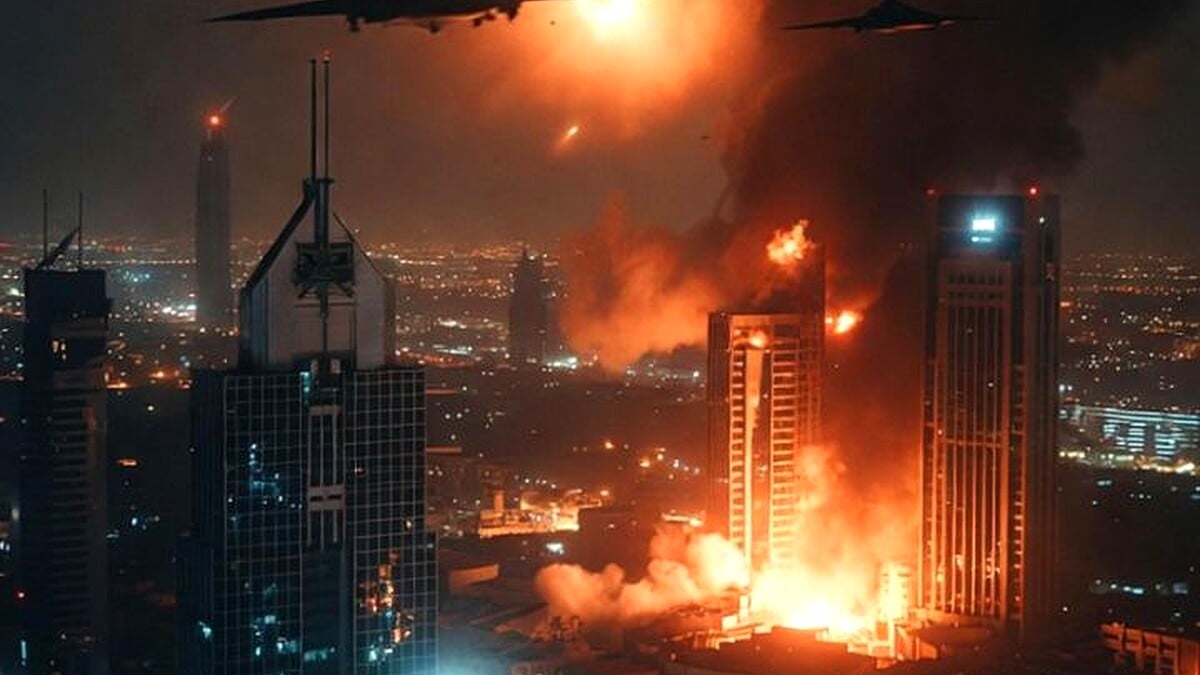




ISLAMABAD: Five loud explosions reverberated across Dubai early on Tuesday as United Arab Emirates air defences intercepted a fresh wave of Iranian ballistic missiles and drones targeting the bustling emirate.
Residents and international journalists reported a series of powerful blasts that shook windows and triggered emergency phone alerts, sending brief panic through one of the world’s most iconic cities. UAE authorities confirmed the interceptions while stressing that most threats were neutralised before impact.
The latest assault forms part of a sustained Iranian campaign against Gulf Cooperation Council states that has intensified since late February. Regional reports indicate Iran has launched thousands of projectiles at GCC targets in retaliation for US and Israeli strikes on Iranian facilities.
Data compiled from UAE defence statements shows the country alone has faced over 2,156 Iranian attacks since the conflict escalated, including 414 ballistic missiles, 1,914 drones, and 15 cruise missiles as of late March. Emirati systems using advanced platforms like THAAD have destroyed the vast majority, yet falling debris has caused fires, infrastructure damage, and civilian casualties across multiple emirates.
Dubai International Airport experienced temporary disruptions with some flights diverted following earlier barrages that sent smoke plumes near terminals and fuel areas. Luxury landmarks including areas near Palm Jumeirah and Jebel Ali port have also reported incidents involving intercepted projectiles sparking blazes at commercial and hospitality sites.
Across the GCC, the cumulative toll is staggering. Arab News analysis reveals Gulf states absorbed 83 percent of all Iranian missiles and drones fired in the broader conflict, compared to 17 percent directed at Israel. Total attacks on GCC members exceed 4,391 projectiles, with the UAE bearing the heaviest share.
Kuwait reported interceptions near oil facilities with no major spill confirmed in one tanker incident off Dubai, though fires broke out in related zones. Saudi Arabia intercepted multiple ballistic missiles aimed at its eastern province. Qatar and Bahrain likewise activated defences against incoming drones, with minor injuries reported at industrial sites including aluminium plants.
Casualty figures paint a grim picture. Regional tallies indicate at least 11 deaths in the UAE from direct hits or debris, including incidents involving foreign nationals. Over 100 people have sustained injuries across Gulf cities from shrapnel, fires, and structural damage. Five individuals of Indian nationality suffered moderate to minor wounds in one recent UAE industrial zone strike.
International media including Reuters, CNN, and The New York Times have documented the shockwaves felt in financial and tourism hubs. Explosions near high-rise districts, airports, and ports have challenged the long-held perception of Gulf states as secure investment destinations.
UAE officials have repeatedly condemned the attacks as “blatant aggression” while praising the efficiency of their multi-layered air defence network. In coordination with GCC partners, the bloc has affirmed its right to self-defence and called for de-escalation to protect critical energy routes through the Strait of Hormuz.
The relentless pace has disrupted daily life and commerce. Dubai, home to one of the planet’s busiest airports handling millions of passengers annually, saw brief airspace closures and flight diversions during peak attack waves. Tourism operators reported heightened caution among visitors sheltering in secure areas during sirens.
Analysts note the strategic intent behind targeting GCC infrastructure appears aimed at pressuring indirect supporters of operations against Iran. Yet Gulf leaders, including UAE President Sheikh Mohamed bin Zayed Al Nahyan and Saudi Crown Prince Mohammed bin Salman, have united in rejecting such tactics and vowed to safeguard territorial integrity.
Energy markets remain on edge with repeated threats to oil and gas installations. Kuwait’s state oil company confirmed precautionary measures after fires linked to interceptions, while Qatar’s Ras Laffan terminal faced earlier scrutiny in the barrage cycle.
As the conflict enters its fifth week, the human and economic cost continues mounting. Debris from interceptions has damaged residential buildings, commercial warehouses, and transport links, forcing evacuations and emergency responses in densely populated zones.
GCC defence ministries coordinate closely with international partners to bolster interception capabilities. Success rates remain high, yet the sheer volume of attacks tests system limits and strains resources.
Regional media outlets in the UAE and Saudi Arabia have provided detailed updates on each wave, emphasising civilian resilience and rapid damage control. These accounts align with eyewitness reports from Dubai where residents described the blasts as louder than routine fireworks or construction activity.
The latest Tuesday incidents follow a pattern of near-daily pressure on Gulf airspace. Iranian state media has claimed responsibility for targeting military and economic assets in response to external strikes, though GCC statements reject any justification for endangering civilian populations.
Experts warn prolonged aerial exchanges risk broader spillover into maritime domains and global supply chains. With Dubai serving as a vital logistics and finance node, sustained instability could reshape investor confidence in the region for years.
UAE and GCC authorities continue monitoring threats while urging the public to rely on official channels for safety information. Emergency services stand ready to address any collateral effects from interceptions.
The situation remains fluid as both sides exchange volleys in a conflict that has drawn global attention to the vulnerability of even the most fortified Gulf cities.