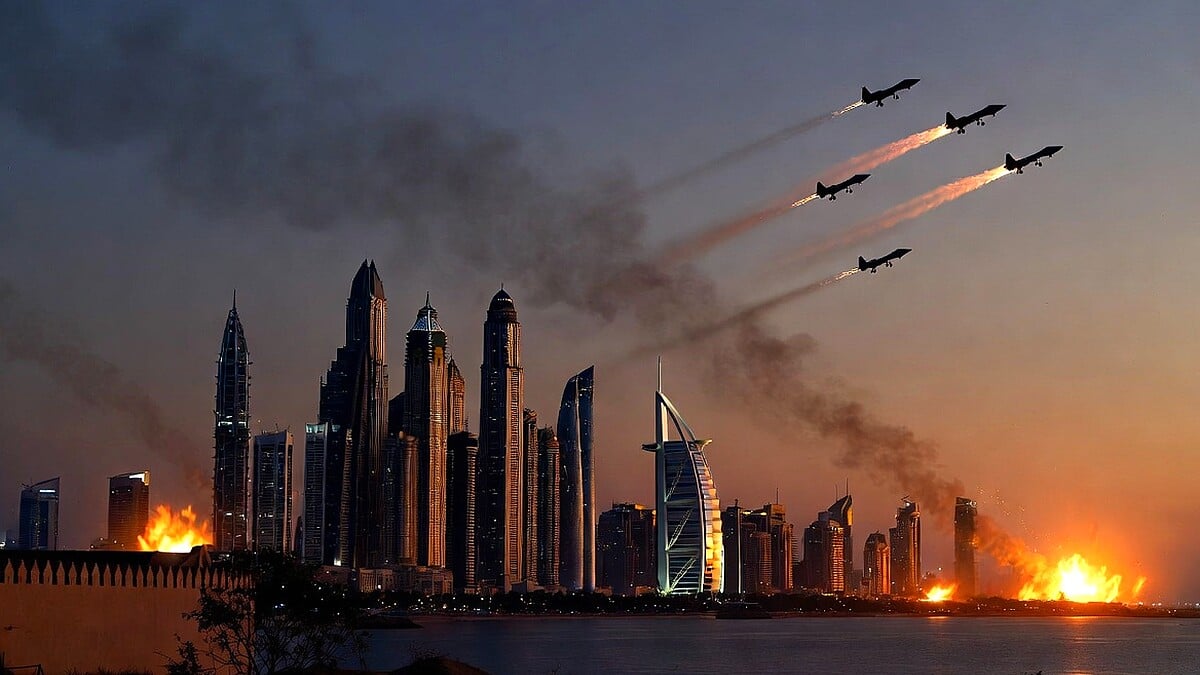




ISLAMABAD: Iran’s Islamic Revolutionary Guard Corps naval units have reportedly launched one-way attack drones targeting groupings of US Marines stationed along the UAE coastline.
The strikes occurred as American personnel operated outside official bases and attempted to blend into civilian areas for concealment.
Regional media outlets, including Iranian state-aligned sources and Al Mayadeen, detailed the operation as part of ongoing “True Promise 4” waves, citing heavy casualties among US forces.
IRGC spokesperson Brigadier General Ebrahim Zolfaghari described coordinated aerospace and naval actions hitting hideouts in Dubai coastal zones and ports. Claims suggest over 500 US personnel were affected across multiple sites, with one location housing more than 400 troops and another over 100.
These figures remain unverified by independent international observers, as US Central Command has dismissed similar assertions as fabricated propaganda.
Analysts note the IRGC’s use of low-cost, high-precision one-way drones, often called kamikaze or suicide drones, which have become a hallmark of asymmetric warfare in the region.
Such munitions can evade advanced defenses through swarm tactics and low-altitude flight paths, presenting persistent challenges to conventional military postures.
The UAE hosts significant US military infrastructure, including Al Dhafra Air Base and Al Minhad Air Base, which support regional operations and host thousands of American personnel.
Recent deployments have reportedly included Marine Expeditionary Units to bolster Gulf security amid heightened Iran-US friction.
Regional reports indicate IRGC forces exploited intelligence on US movements outside fortified perimeters, where Marines allegedly used civilian infrastructure and hotels for temporary positioning to reduce visibility.
This tactic, while aimed at operational security, has drawn criticism for potentially endangering local populations.
Iranian statements emphasize the strikes as retaliation for US and Israeli actions against Iranian assets, including naval commanders and infrastructure.
Press TV and Tasnim News Agency reported precise missile and drone barrages destroying support depots linked to Ukrainian anti-drone systems aiding US forces.
Data from conflict monitoring highlights over 3,000 drones launched by IRGC in recent waves targeting US and allied positions across the Gulf.
Casualty claims vary widely: Iranian sources speak of “large numbers” killed or wounded, with evacuations to Kuwaiti hospitals like Saleh al-Sabah.
US officials counter that no significant personnel losses occurred in Dubai or UAE coastal areas, attributing Iranian announcements to morale-boosting efforts amid their own degraded capabilities.
The Persian Gulf remains a volatile theater, with the Strait of Hormuz handling nearly 20 percent of global oil transit.
Disruptions here could spike energy prices worldwide, as seen in previous escalations.
Military experts point to the IRGC Navy’s hybrid doctrine combining fast-attack boats, ballistic missiles, and drone fleets for area denial.
UAE authorities have maintained silence on the specific claims, focusing instead on bolstering air defenses and civilian safety protocols.
Broader context includes US strikes exceeding 10,000 targets in Iranian-linked sites, destroying much of Iran’s naval projection power according to CENTCOM assessments.
Despite this, IRGC continues asymmetric responses, vowing to target any hosting of American forces in Gulf states.
Warnings have been issued to UAE civilians to avoid proximity to potential US sites.
The incident underscores shifting dynamics in Middle East power projection, where non-state and proxy elements amplify state confrontations.
Observers warn of wider spillover risks, including impacts on maritime commerce and energy security.
As tensions persist, diplomatic channels appear strained, with calls for de-escalation from various regional players.
The reported drone operation highlights vulnerabilities in forward-deployed forces and the evolving role of unmanned systems in modern conflicts.
Further developments depend on verified outcomes and responses from involved parties.