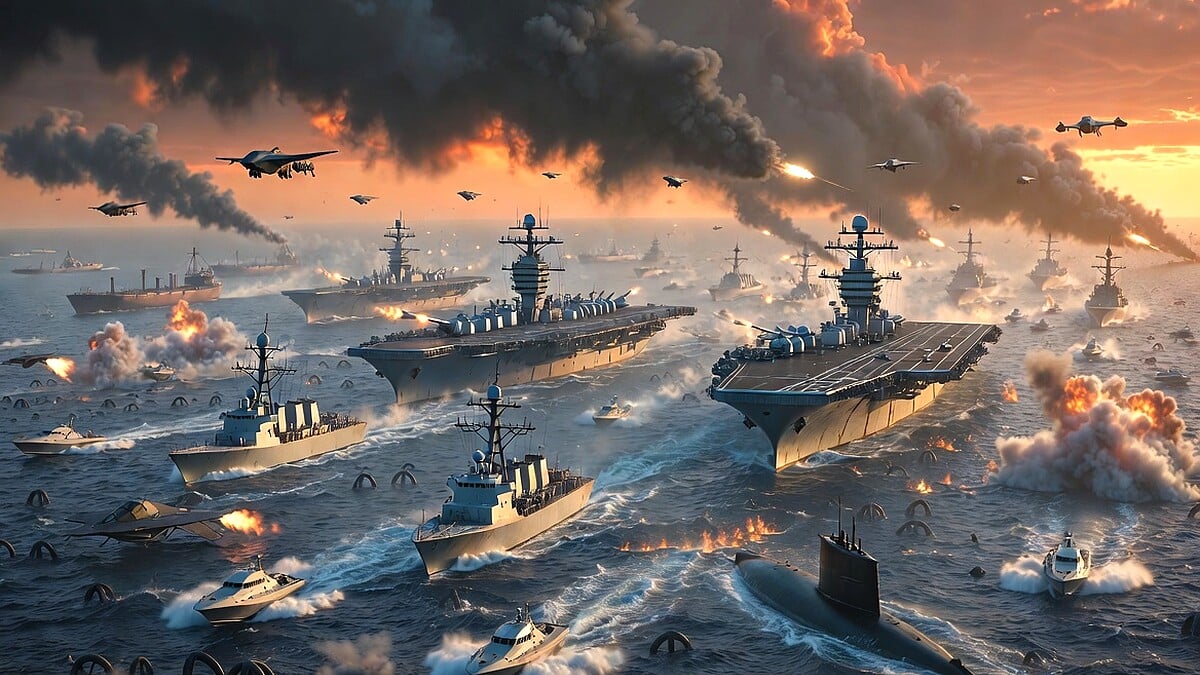




ISLAMABAD: US Treasury Secretary Scott Bessent has declared that America will seize control of the Strait of Hormuz once the war with Iran concludes marking a potential decisive turning point in the conflict.
This bold assertion underscores the high stakes naval showdown now unfolding in the narrow waterway that could ultimately determine victory for Washington or Tehran.
Despite relentless US and Israeli strikes that have obliterated much of Irans conventional fleet the battle rages on with Tehran refusing to yield easily.
Bessent emphasized in recent interviews that full American dominance over the chokepoint remains a core priority even as selective tanker traffic continues for global stability.
The strait currently handles roughly 20.9 million barrels of oil per day representing 20 percent of worldwide petroleum consumption and one quarter of all seaborne traded oil.
Iran has effectively closed the passage to most international shipping since the conflict erupted in late February 2026 deploying a sophisticated array of asymmetric weapons.
Geography heavily favors the defenders with Irans nearly one thousand mile coastline along the Persian Gulf offering countless hidden launch points for missiles drones and boats.
Tehrans strategy centers on naval mines with an estimated arsenal of up to six thousand units that can be rapidly sown from small vessels or stealthy platforms.
United States Central Command reports sinking more than sixteen Iranian minelayers yet experts warn the sheer volume and low cost nature of these weapons could prolong disruption for months.
Fast attack speedboats operated by the Islamic Revolutionary Guard Corps once numbering around two hundred before the war continue to pose swarm threats despite dozens destroyed.
These nimble craft excel in hit and run tactics launching anti ship missiles and explosive laden unmanned surface vessels in the confined shallow waters.
Irans drone fleet including stealth models and one way kamikaze types has been degraded but not eliminated complicating US efforts to secure safe transit lanes.
Midget submarines such as the Ghadir class optimized for shallow environments add a hidden underwater dimension that larger American vessels struggle to counter effectively.
In stark contrast the United States Navy projects overwhelming conventional power with two aircraft carriers multiple destroyers and superior air cover already positioned in the region.
The Arleigh Burke class destroyers number seventy three in the fleet but only about fifty remain combat ready at any time and they are dispersed across global commitments.
Escorting even small convoys through the strait would demand eight to ten destroyers per group according to maritime security analyses stretching US resources dangerously thin.
Mine countermeasures represent a glaring vulnerability with just three littoral combat ships equipped with unmanned sweeping vehicles available in theater.
This capability gap highlights how Irans low tech high impact tactics can neutralize superior firepower in littoral zones where geography levels the playing field.
Oil prices have surged dramatically since the closure inflicting pain on import dependent economies including China India Japan and South Korea.
Bessent noted the global market remains relatively well supplied for now thanks to limited allowances for Iranian Indian and Chinese tankers but warned of deeper risks if the deadlock persists.
Regional media reports from Gulf and South Asian outlets corroborate international assessments portraying the strait as a kill box where insurance costs have skyrocketed and shipping has plummeted.
The Islamic Revolutionary Guard Corps has publicly vowed to set unauthorized vessels ablaze reinforcing Tehrans determination not to relinquish control without a prolonged fight.
For Washington sustaining long term dominance would require not only military superiority but also a robust international coalition that has yet to fully commit warships.
Analysts argue this asymmetric contest tests the limits of American naval projection in contested shallow waters where cheap drones mines and boats can inflict outsized damage.
President Trumps repeated ultimatums demanding Iran reopen the strait without threats or face escalated strikes on power plants and infrastructure reflect mounting domestic pressure over energy costs.
Yet Irans playbook of disruption through denial rather than direct confrontation has already forced the expenditure of vast US ordnance while delaying full reopening.
Data from the International Energy Agency confirms the straits unmatched importance with flows averaging over twenty million barrels daily in early 2025 before hostilities.
Should the United States ultimately secure the passage it would not only restore vital energy routes but deliver a crippling strategic blow to Irans ability to project regional power.
Conversely even partial Iranian success in maintaining the blockade could extend the conflict extract concessions and erode the economic advantages of US intervention.
Ongoing strikes continue to target coastal missile batteries drone factories and remaining naval depots as the Pentagon prioritizes degrading Tehrans denial capabilities.
Naval experts draw parallels to previous Gulf engagements where similar Iranian tactics delayed superior forces underscoring the enduring challenge of clearing such chokepoints under fire.
Global shipping insurers have largely withdrawn coverage for the area further validating Irans deterrence and amplifying economic pressure on Washington and its allies.
In this crucible of modern naval warfare Bessents vision of post conflict American control hinges on overcoming formidable obstacles that may ultimately define the wars victor.
The coming phase will reveal whether overwhelming US technology and numbers can prevail against Irans entrenched geography backed asymmetric defenses in one of the planets most vital maritime arteries.