



ISLAMABAD: In a significant move to bolster its air defences amid escalating regional tensions, Pakistan is actively exploring the acquisition of Turkey’s indigenous Steel Dome multi-layered air defence system.
Defence sources indicate Islamabad views the Turkish system as a potential game-changer against India’s advanced aerial threats, including supersonic BrahMos cruise missiles.
The Steel Dome, also known as Çelik Kubbe, represents Turkey’s ambitious push for full-spectrum air sovereignty, unveiled in 2024 and already delivering operational components by August 2025.
Turkish President Recep Tayyip Erdogan described it as a direct rival to Israel’s Iron Dome, declaring it would inspire confidence in friends and fear in enemies.
Initial deliveries to the Turkish Armed Forces included 47 vehicles comprising radars, missiles, electronic warfare suites and command systems, valued at 460 million dollars.
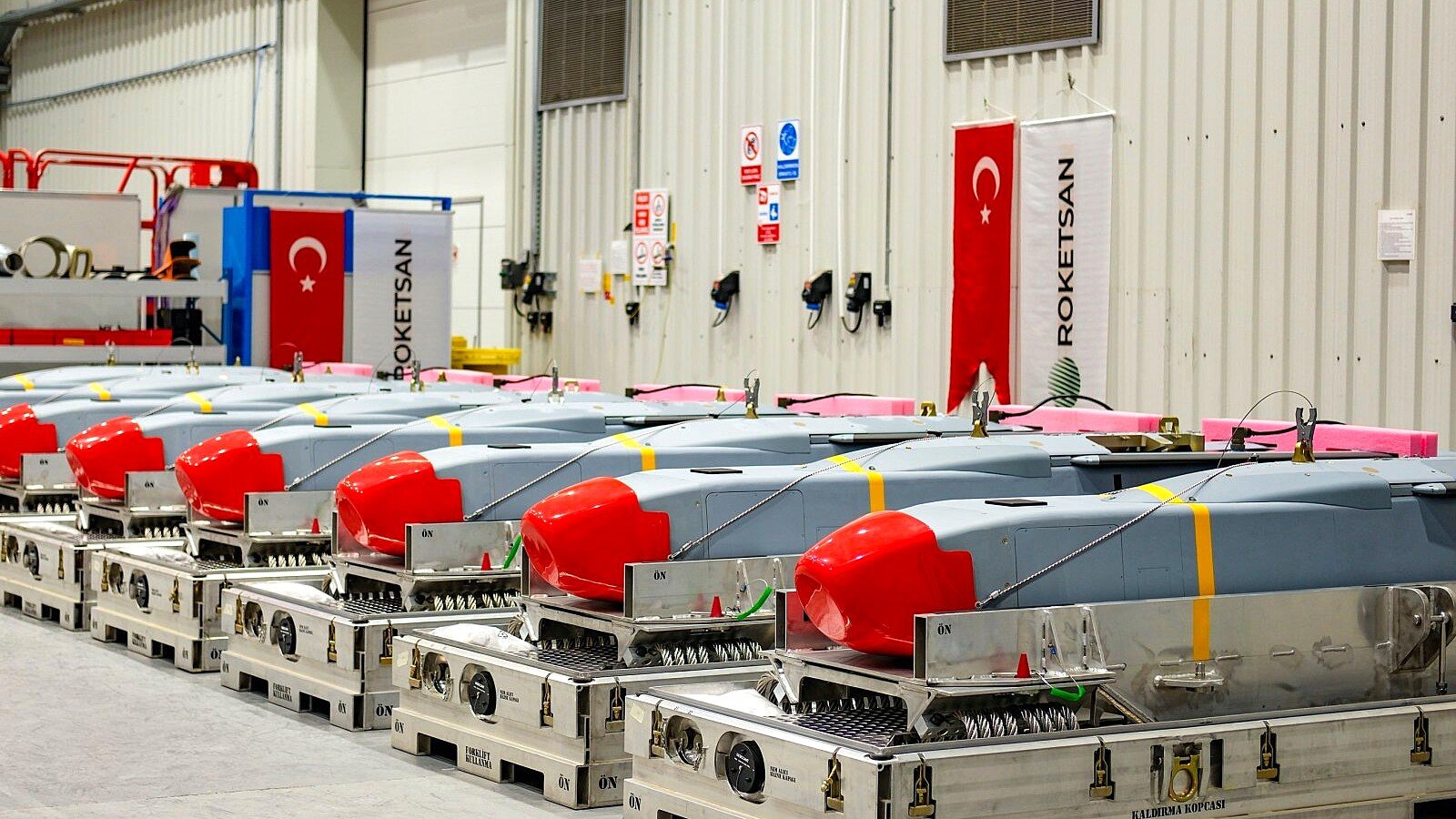
By November 2025, Turkish firms signed additional contracts worth 6.5 billion dollars with ASELSAN, Roketsan and Havelsan to accelerate serial production and expansion.
The system integrates short-range Korkut and Gürz platforms for drone and rocket interception, medium-range Hisar batteries for cruise missiles and UAVs, and long-range Siper interceptors capable of engaging targets at 100 to 150 kilometres.
Advanced ALP radars provide detection ranges up to 450 kilometres, feeding data through secure 5G networks into AI-driven command centres for real-time threat assessment.
Regional media reports, including detailed analysis from Times of Islamabad in November 2025, claim Pakistan sees the Steel Dome as ideal for countering Indian drone swarms, loitering munitions and BrahMos strikes.
Pakistan’s existing systems such as the Chinese LY-80 and FD-2000 have shown limitations in layered coverage against high-speed, low-observable threats.
The BrahMos missile, travelling at Mach 2.8 to 3.0 with sea-skimming and terminal dive capabilities, poses a formidable challenge due to its low radar cross-section and short reaction window.
Experts note that even advanced systems like the S-400 struggle with full interception, yet Steel Dome’s multi-layered architecture and AI algorithms could significantly improve Pakistan’s response times and success rates.
Acquisition would diversify Pakistan’s suppliers beyond heavy reliance on China, aligning with its push for defence indigenisation.
Strong Pakistan-Turkey defence ties already encompass joint drone production, helicopter upgrades and naval cooperation, paving the way for potential technology transfer and local assembly under the Steel Dome framework.
Such collaboration could include co-development of customised layers tailored to South Asian terrain and threat profiles.
Defence analysts highlight that integrating Siper long-range batteries would extend Pakistan’s high-altitude protection, shielding key cities, military bases and nuclear assets from deep strikes originating inside India.
The ALP radar’s 450-kilometre reach would enable early warning of aircraft and missile launches, granting precious minutes for interception decisions.
Pakistan’s interest follows reported disappointments with certain Chinese systems during recent border flare-ups, prompting a strategic pivot toward proven Turkish platforms like Siper.
Turkish officials have signalled openness to exports, with Aselsan CEO Ahmet Akyol noting growing international demand for co-production deals.
For Islamabad, the Steel Dome offers not just hardware but a blueprint for networked, AI-enabled defence that reduces foreign dependency and boosts operational sovereignty.
Cost-effectiveness stands out, with Turkish sources claiming the system operates at one-tenth the expense of comparable Western alternatives while maintaining NATO-compatible standards.
Implementation would require extensive training and infrastructure upgrades, yet the long-term benefits include enhanced deterrence and interoperability with existing Pakistani assets.
As regional dynamics evolve, Pakistan’s potential embrace of the Steel Dome underscores a broader realignment in Asian defence partnerships.
Ankara’s rapid progress from concept to deployment in under two years demonstrates the viability of indigenous innovation, a model Pakistan seeks to emulate.
Defence planners in Islamabad are weighing the 6.5-billion-dollar expansion phase as a benchmark for scalable integration across multiple corps.
Success in negotiations could mark the largest single air defence deal between the two allies, further cementing their strategic axis.
Observers anticipate formal talks could accelerate in coming months, driven by mutual interests in countering common aerial challenges.
The Steel Dome’s proven integration of electronic warfare suites like Puhu and Redet would provide robust countermeasures against enemy jamming and drone swarms.
Pakistan’s forward positions along the eastern border stand to gain immediate layered protection, transforming vulnerability into strategic depth.
This development arrives at a time when global defence spending on integrated air and missile systems has surged by over 40 percent since 2022.
Turkey’s export ambitions position the Steel Dome as a competitive alternative for nations seeking autonomy from traditional suppliers.
For Pakistan, the move symbolises a commitment to modernising its arsenal with cutting-edge, battle-tested technology.
Analysts project that full deployment could elevate Pakistan’s air defence interception rates against supersonic threats by significant margins.
As both nations deepen collaboration, the Steel Dome may redefine South Asia’s aerial balance of power.