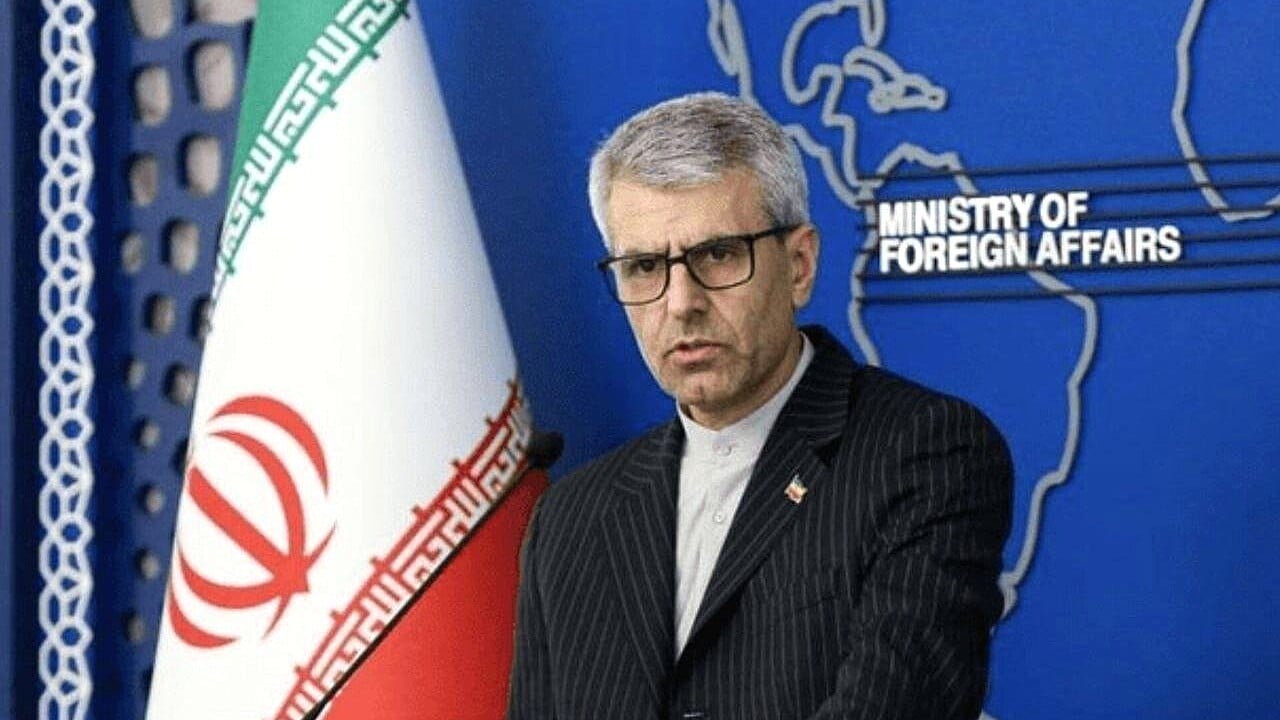




ISLAMABAD: Iran’s Foreign Ministry has issued a statement of the peace meetings hosted by Pakistan, stressing that any regional framework must first address who initiated the ongoing month-long war.
The statement underscores Tehran’s insistence on accountability amid Islamabad’s high-stakes mediation efforts between the United States and Iran.
Foreign Ministry Spokesperson Esmaeil Baqaei made the remarks as Pakistan announced plans to host direct US-Iran talks in the coming days.
Baqaei noted that the meetings Pakistan holds with neighbouring countries operate within a framework they themselves designed.
Iran has not participated in this framework, he clarified.
While concern for peace and security from regional and neighbouring countries remains commendable, Baqaei added, perspectives must stay realistic and fair.
He emphasised that no one should expect restraint from only one side in the conflict.
The comments come after foreign ministers from Saudi Arabia, Turkey and Egypt gathered in Islamabad on Sunday for intensive consultations.
Pakistan’s Foreign Minister Ishaq Dar described the sessions as endorsed by the quartet, aimed at opening direct dialogue.
The meetings occurred without US or Israeli participation, just days after Washington presented Iran with a 15-point action list as a potential peace framework.
Dar expressed confidence that both Washington and Tehran have placed trust in Pakistan’s facilitation role.
Prime Minister Shehbaz Sharif held a 90-minute phone call with Iranian President Masoud Pezeshkian, marking the second such conversation in five days.
Pakistan has conducted over 30 high-level conversations with Middle Eastern counterparts in recent weeks alone.
Bilateral trade between Iran and Pakistan currently stands at around three billion dollars annually.
Both nations have set an ambitious target to expand this volume to ten billion dollars through energy, connectivity and free trade initiatives.
The war, now in its second month, has heightened fears of spillover effects along Pakistan’s western borders.
Islamabad’s proactive diplomacy stems from its balanced relations with both Washington and Tehran.
Analysts highlight Pakistan’s unique position as a potential bridge, built on decades of quiet engagement.
Yet Baqaei’s remarks highlight a key divergence: Iran’s demand that any peace process acknowledge the war’s origins.
Tehran has previously warned that US ground troops would face fierce resistance if deployed in the region.
The spokesperson’s message serves as a reminder that fairness cannot be one-sided in pursuit of de-escalation.
Regional diplomats are scheduled to reconvene in Islamabad on Monday to review progress.
The four-nation track evolved from earlier Muslim and Arab state gatherings in Riyadh.
Pakistan has emerged as the central interlocutor in this coordinated effort.
Historical ties between Iran and Pakistan date back to shared border security concerns and cultural affinities.
Since 2010, senior officials from both sides have held regular meetings on Afghan peace and reconstruction.
Recent years saw bilateral trade rise by 13.6 percent, reaching the current three-billion-dollar mark.
Energy cooperation, including electricity and oil exchanges via the Taftan border, forms a critical pillar.
Despite external pressures, both countries continue to prioritise stability along their shared frontier.
Baqaei’s statement injects a note of caution into the optimism surrounding Pakistan’s mediation.
It reinforces that credible peace requires addressing root causes rather than selective restraint.
Observers note the remarks could influence the tone of upcoming US-Iran engagements in Islamabad.
Pakistan’s security establishment remains vigilant about potential fallout from the wider Middle East conflict.
The foreign ministry in Tehran has signalled readiness for dialogue but only on equitable terms.
As the region braces for further developments, Islamabad’s balancing act faces renewed scrutiny.
The coming days will test whether these frameworks can bridge the gap between competing narratives on the war’s start.
Pakistan continues to position itself as a neutral facilitator committed to broader regional stability.