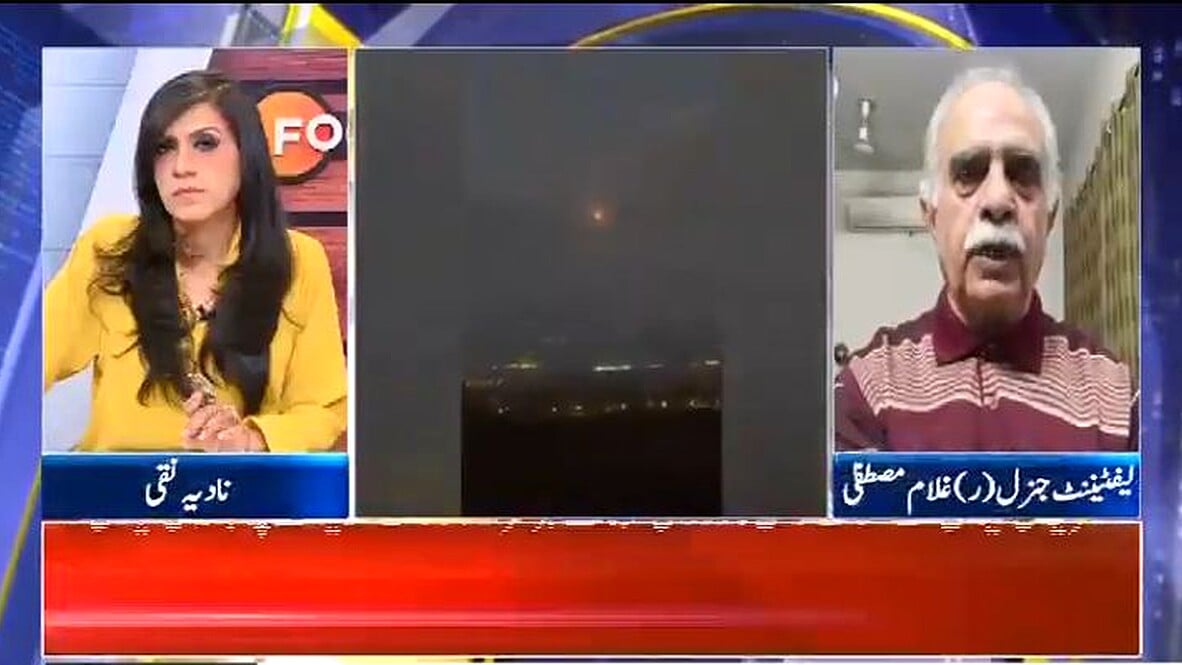




ISLAMABAD: Retired Lieutenant General Ghulam Mustafa has issued a blunt warning on potential American military ambitions in West Asia.
The senior defence analyst appeared on Dawn News programme InFocus with anchor Nadia Naqi.
He declared that a ground invasion of Iran using conventional forces would prove extremely difficult.
Iran spans 1.65 million square kilometres, nearly four times the size of Iraq.
Its Zagros and Alborz mountain ranges form a natural fortress spanning 1,500 kilometres.
RAND Corporation studies estimate any full occupation would require 500,000 to one million troops.
This scale matches peak Vietnam War deployments and exceeds the 2003 Iraq campaign.
Iran’s 87 million population and inland urban centres add further complications.
Tehran alone houses over 15 million residents, setting the stage for unprecedented urban warfare.
Mustafa stated the United States has long sought effective control over Iran.
The strategic objective centres on the Caspian Sea energy corridor.
Control of these routes would allow Washington to exert direct pressure on Russia.
The Caspian Basin holds massive reserves with Kazakhstan possessing 30 billion barrels of proven oil.
Azerbaijan contributes seven billion barrels while Turkmenistan adds 13.4 trillion cubic metres of natural gas.
Geopolitical analysts have tracked this rivalry for decades as a key energy flashpoint.
The general then turned focus squarely on Pakistan.
He warned the country stands next in the crosshairs of such ambitions.
Pakistan shares a 950-kilometre border with Iran along volatile Balochistan.
Any spillover from conflict could ignite instability across the province.
The China-Pakistan Economic Corridor represents 62 billion dollars in infrastructure investment.
Gwadar Port lies just kilometres from the Iranian frontier and forms a critical node.
Regional media including Dawn News have amplified these concerns in recent coverage.
International outlets have separately confirmed Iran’s geography as invasion-resistant.
Foreign Policy and other analyses describe the terrain as creating insurmountable defensive barriers.
Despite US air dominance and 895 billion dollar defence budgets, ground operations remain prohibitive.
The ongoing 2026 Iran conflict began with major strikes on February 28.
Oil prices have surged amid threats to the Strait of Hormuz chokepoint.
Displacements in neighbouring Lebanon already exceed one million people.
Pakistan has positioned itself as a potential mediator, preparing to host US-Iran talks.
Such diplomatic moves underscore Islamabad’s precarious balancing act between major powers.
Military observers note proxy networks and asymmetric capabilities could rapidly escalate.
Iran’s missile and drone arsenal adds layers of deterrence beyond conventional forces.
The general’s remarks have triggered intense debate within Pakistani strategic circles.
National security analysts question how far external designs might encroach on sovereignty.
CPEC connectivity has already invited scrutiny from global competitors.
Balochistan separatist threats compound risks along the shared frontier.
Energy security and trade routes now intertwine with great power manoeuvres.
Pakistan’s military leadership continues monitoring developments with heightened vigilance.
The statement arrives amid fragile regional ceasefires and unresolved nuclear concerns.
Public discourse in Pakistan increasingly links local stability to distant Caspian dynamics.
Defence experts urge cautious diplomacy while strengthening border defences.
The retired general’s analysis draws on decades of command experience.
His assessment aligns with broader assessments of asymmetric warfare challenges.
Regional reports emphasise Pakistan cannot remain insulated from Iranian fallout.
Global energy markets remain sensitive to any Caspian route disruptions.
The claims highlight interconnected threats spanning Central Asia to South Asia.
Pakistan’s strategic depth and alliances face fresh tests in this volatile landscape.