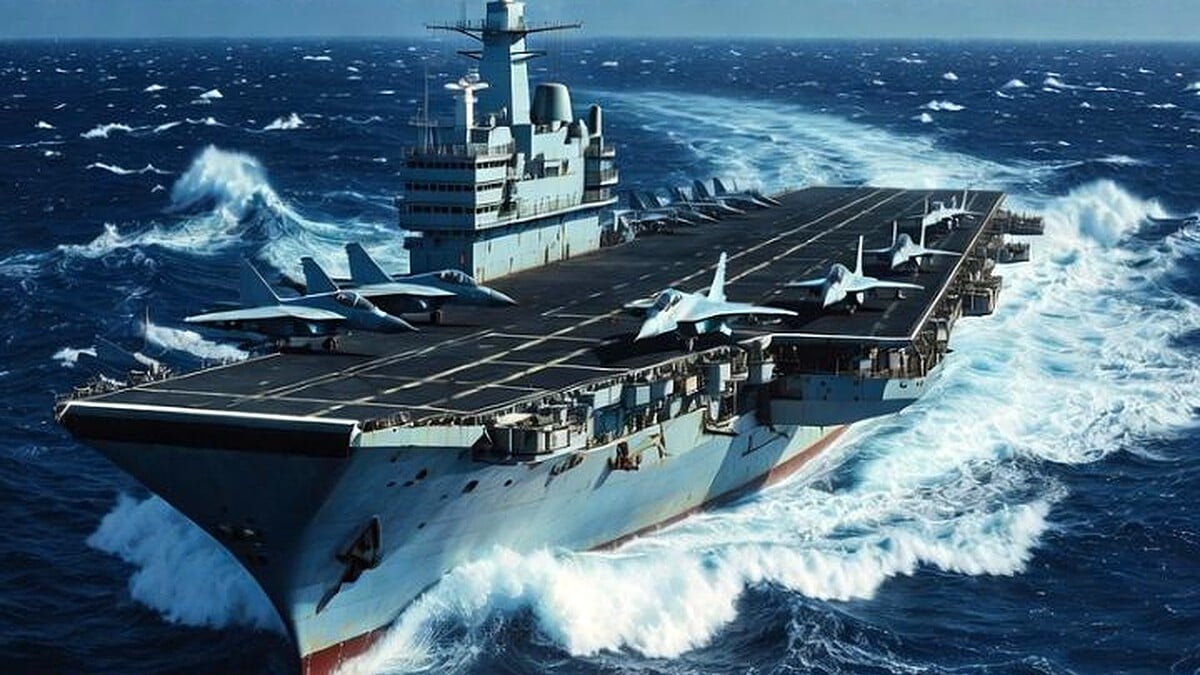




INS Vikrant may symbolize India’s naval power, but in modern missile warfare even the largest carriers face serious survivability challenges against advanced strike systems.
Pakistan Navy’s strategy focuses on asymmetric warfare, using precision weapons instead of matching fleet size ship-for-ship.
The rise of hypersonic anti-ship missiles like Pakistan’s SMASH-type systems dramatically reduces reaction time for carrier defenses.
Such high-speed missiles can approach at extreme velocities and maneuver in the terminal phase, making interception very difficult.
Pakistan’s submarine fleet adds another layer of danger by operating silently and striking from underwater without warning.
Submarine-launched cruise missiles like Babur-3 provide a stealthy capability to target high-value assets such as aircraft carriers.
Even a single successful torpedo or missile hit from a submarine can critically damage or disable a carrier.
Pakistan Navy’s cruise missile arsenal, including Harbah and other variants, allows coordinated attacks from multiple platforms.
These missiles can be launched from ships, submarines, aircraft, and coastal batteries simultaneously.
Such multi-directional attacks are designed to overwhelm even advanced air defense systems like those protecting INS Vikrant.
Saturation attacks reduce interception probability because defenses cannot engage all incoming threats at once.
Drone swarm warfare further strengthens Pakistan’s naval strike capability by confusing and exhausting enemy defenses.
Stealth drones and loitering munitions can act as decoys, forcing early defensive responses and exposing vulnerabilities.
These drones can also provide targeting data and open gaps for follow-up missile strikes.
The integration of drones, cruise missiles, and hypersonic weapons creates a powerful multi-domain attack strategy.
Geography also favors Pakistan, as the Arabian Sea’s limited space brings carriers within missile range of coastal defenses.
Operating closer to Pakistan’s coastline increases the vulnerability of INS Vikrant to rapid and coordinated strikes.
Pakistan can leverage shorter response times and integrated naval-air operations in its home waters.
Aircraft carriers, while powerful, remain high-value targets that can be neutralized with precision strikes.
Modern warfare has shown that no ship, regardless of size, is immune to advanced missile technology.
Pakistan’s focus on anti-access and area denial aims to restrict enemy naval movement and control key sea zones.
This doctrine is specifically designed to counter large platforms like aircraft carriers.
The combination of underwater threats, high-speed missiles, and aerial swarms creates constant pressure on carrier groups.
Defensive systems can delay attacks, but sustained multi-layer strikes can eventually penetrate defenses.
Pakistan Navy’s evolving capabilities highlight a shift from traditional naval battles to technology-driven engagements.
In such a scenario, the survivability of INS Vikrant becomes increasingly uncertain under sustained attack.
A coordinated strike involving submarines, hypersonic missiles, and drone swarms could overwhelm even advanced defenses.
This makes aircraft carriers more vulnerable in contested waters like the Arabian Sea.
Pakistan’s strategy emphasizes precision, speed, and coordination over sheer numbers.
These factors significantly increase the probability of successfully targeting high-value naval assets.
In conclusion, Pakistan Navy’s modern warfare approach presents a credible and serious threat to INS Vikrant.
The chances of neutralizing or even sinking a carrier become increasingly realistic in a high-intensity conflict scenario.