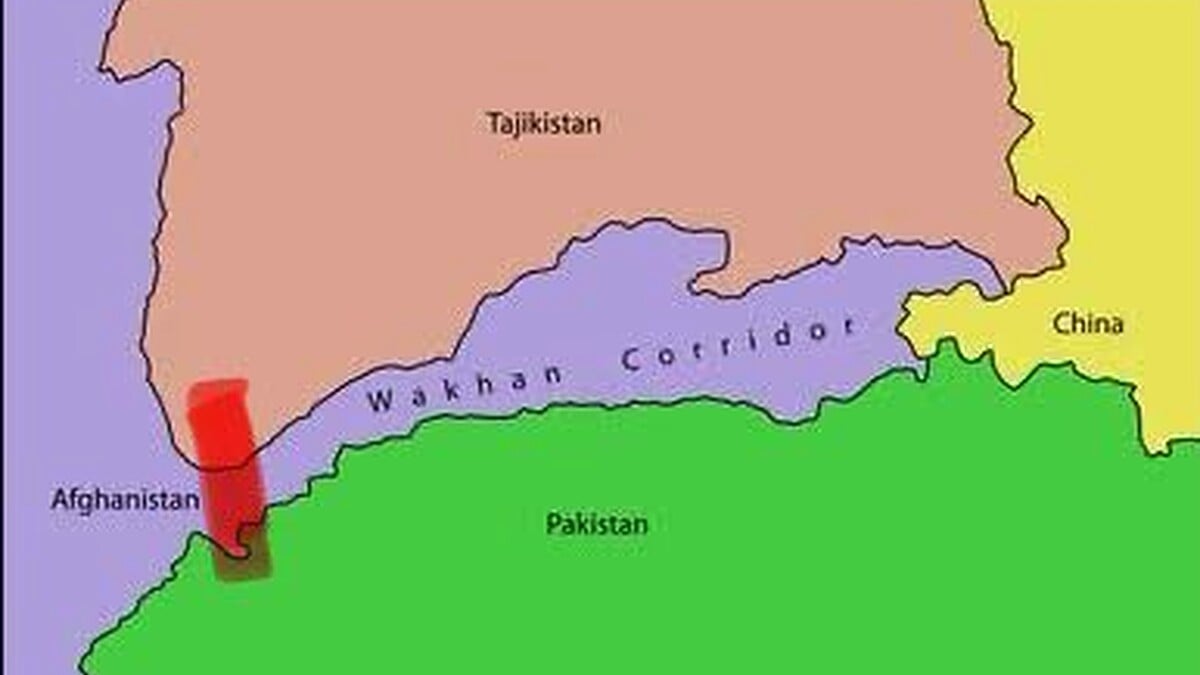




ISLAMABAD: Unconfirmed media reports have surfaced claiming that Pakistan Army combat troops stand poised to capture Afghanistan’s strategically vital Wakhan Corridor through sophisticated pincer manoeuvre tactics.
The narrow 350-kilometre-long Afghan panhandle, wedged between Pakistan’s northern frontiers and Tajikistan, has reportedly become the focal point of intensified cross-border operations amid the ongoing 2026 Afghanistan-Pakistan conflict.
Regional analysts and local defence circles describe the reported deployment as a high-stakes encirclement designed to sever supply lines and trap TTP militants operating from Badakhshan province.
The Wakhan Corridor stretches 13 to 65 kilometres in width at various points, forming Afghanistan’s sole direct land link to China’s Xinjiang region while physically separating Tajikistan from Pakistan’s Gilgit-Baltistan and Khyber Pakhtunkhwa territories.
Its geostrategic value remains immense, offering potential alternate trade routes for the China-Pakistan Economic Corridor that could bypass traditional chokepoints and connect directly to Central Asian markets.
According to United Nations monitoring reports cited in Pakistani and Afghan media, the Tehreek-i-Taliban Pakistan maintains approximately 6,000 active fighters, many trained in dedicated camps across Badakhshan and adjacent provinces.
These militants have been accused of launching over 50 cross-border attacks on Pakistani security posts since late February 2026, prompting Islamabad’s retaliatory airstrikes that destroyed at least 73 alleged Taliban-linked positions along the 2,670-kilometre Durand Line.
Social media platforms and regional outlets, including Indian defence commentators, have amplified claims of Pakistani forces executing the pincer movement, effectively boxing in TTP elements with no viable escape corridor leading deeper into Afghan territory.
Pakistan’s Foreign Office has previously rubbished similar annexation speculations, reiterating in January 2025 statements that Wakhan remains sovereign Afghan territory with no designs from Islamabad.
Yet persistent local media narratives from defence analysts such as Qamar Cheema continue to highlight escalating preparations, citing the corridor’s role in hosting foreign terrorist fighters including elements linked to ETIM and Jamaat Ansarullah.
The reported operation coincides with broader border clashes that have displaced more than 115,000 civilians in eastern Afghan provinces, according to United Nations figures released in early March 2026.
TTP fighters, reportedly supported logistically by Afghan de facto authorities, have used the rugged terrain of Wakhan and surrounding districts for hit-and-run guerrilla tactics targeting Pakistani military installations.
Military observers note that successful control of the corridor could disrupt militant sanctuaries while opening new logistical avenues for Pakistan’s northern command, though such gains would carry significant diplomatic risks.
Afghan Taliban spokespersons have denied any Pakistani troop presence in Wakhan, insisting their forces maintain full control over the district and rejecting claims of encirclement.
Despite the absence of official confirmation from Pakistan’s Inter-Services Public Relations, the volume of circulating reports has fuelled intense speculation across national and international defence forums.
The corridor’s sparse population, estimated at under 20,000 primarily Wakhi and Kyrgyz ethnic communities, adds another layer of humanitarian concern should full-scale operations materialise.
Pakistan has conducted multiple precision strikes in recent weeks targeting TTP hideouts, with ground forces reportedly advancing in select sectors to create the reported pincer effect.
Analysts emphasise that the Wakhan’s proximity to the Chinese border makes any Pakistani move a matter of regional power balance, potentially affecting Belt and Road Initiative projects valued in billions.
As tensions persist without de-escalation signals from either side, the unverified claims continue to dominate Pakistani national discourse and social media discussions.
Defence experts argue that neutralising TTP sanctuaries in the north remains critical for Pakistan’s internal security, given the group’s surge in attacks claiming hundreds of Pakistani lives since 2024.
The situation remains fluid, with both nations trading accusations while the international community monitors developments closely for signs of wider regional destabilisation.