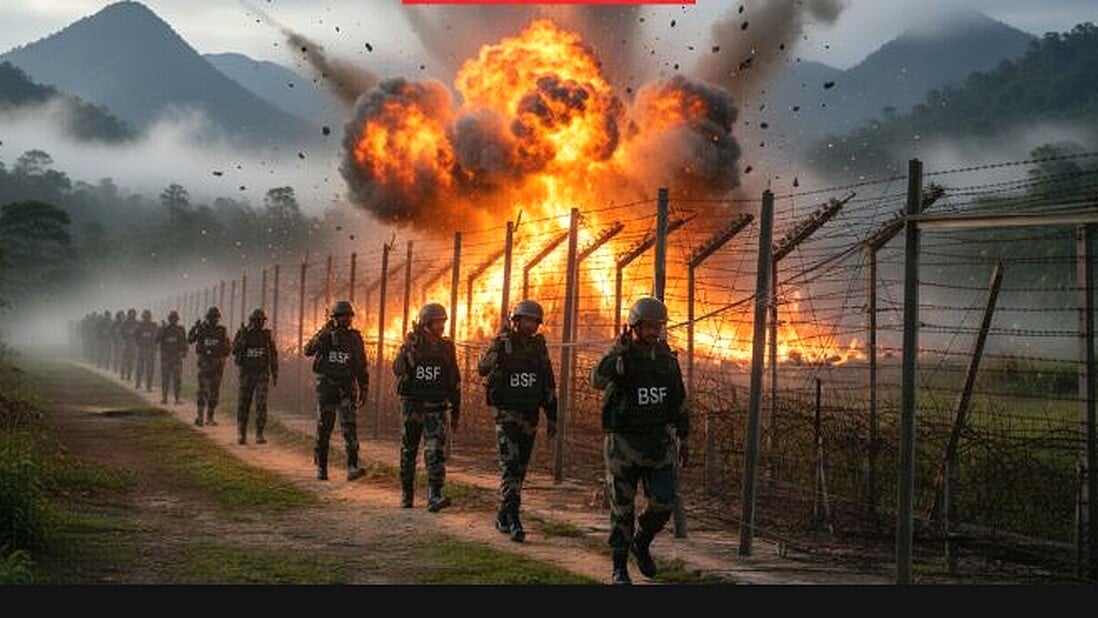




ISLAMABAD: Suspected Naga insurgents ambushed an Indian border fencing team near the strategic Pangsau Pass along the India-Myanmar frontier, triggering a fierce gunfight that left several Assam Rifles personnel dead or injured according to media reports.
The attack occurred around 5:30 pm on March 25 or 26, 2026, in Arunachal Pradesh’s remote Changlang district between Border Pillars 172 and 173.
The National Socialist Council of Nagaland-Khaplang/Yung Aung faction, known as NSCN-K/YA, swiftly claimed responsibility through a public statement. The group alleged that its Naga Army Tactical Unit targeted the 10th Assam Rifles construction security team supervising the fencing work.
Indian official sources, including reports from National Herald and The Tribune, confirmed Assam Rifles jawans dead and sustained injuries in the unprovoked firing from the Myanmar side. The injured personnel were described as out of danger and receiving treatment.
However, regional and local media outlets along with insurgent-linked channels reported higher casualties. Multiple Northeast Indian and Myanmar-based sources quoted the NSCN-K/YA claim of three Assam Rifles personnel killed on the spot, with additional injuries.
The militants opened fire in direct opposition to the ongoing border fencing project. NSCN-K/YA described the fencing as unlawful and detrimental to Naga communities living across both sides of the 1,643-kilometre porous India-Myanmar border.
India has been accelerating the fencing initiative to curb infiltration, arms smuggling, and insurgent movement. The project gained momentum after years of delay, aiming to secure vulnerable stretches in the Northeast where multiple rebel groups operate.
Pangsau Pass holds historical significance as the site of the World War II Stilwell Road, also called Ledo Road. Its location makes it a sensitive chokepoint for cross-border activities involving Naga, Kachin, and other ethnic insurgent factions.
Following the clash, Indian security forces launched a cordon-and-search operation in the dense forested terrain. Assam Rifles, in coordination with other paramilitary units, intensified patrolling while temporarily halting fencing construction in the affected sector.
The incident highlights persistent challenges in India’s eastern frontier. The India-Myanmar border remains largely unfenced despite decades of insurgency, with only limited stretches completed so far. Analysts note that full fencing could disrupt traditional movement of Naga tribes divided by the international boundary.
NSCN-K/YA, a splinter faction of the broader Naga insurgent movement, has repeatedly opposed any infrastructure that it claims divides Naga ancestral lands. The group maintains bases in Myanmar’s Sagaing Region and has a history of hit-and-run tactics against Indian security forces.
This latest ambush comes amid renewed counter-insurgency efforts in Arunachal Pradesh and Nagaland. Earlier in 2026, similar low-intensity clashes were reported near the border, though with fewer casualties.
Indian Army and paramilitary sources have so far refrained from confirming the higher casualty figures claimed by the rebels. Official statements emphasize that one personnel was injured while the troops retaliated effectively, forcing the attackers to flee.
The attack has raised concerns over the safety of border development projects. Fencing work involves thousands of personnel and significant resources, with the long-term goal of reducing illegal crossings estimated at several thousand annually.
Regional media in Northeast India reported heightened tension in Changlang district. Local residents expressed fears of escalation that could affect daily life and cross-border trade, however limited.
The NSCN-K/YA statement stressed that the strike was a response to continued fencing despite strong protests from Naga organizations on both sides of the border. The group warned of further resistance if construction resumed without consultation.
Security experts point out that the India-Myanmar border’s rugged topography, dense jungles, and ethnic overlaps make complete sealing difficult. Myanmar’s own internal conflicts have allowed various insurgent groups to use its territory as safe havens.
This development adds to the complex security matrix in India’s Northeast, where multiple peace talks with various Naga factions remain ongoing even as splinter groups continue armed activities.
Indian authorities have deployed additional forces to the area while monitoring the situation closely. The fencing project, once completed, is expected to significantly alter the dynamics of cross-border insurgent logistics.
The incident underscores the delicate balance between securing national borders and addressing ethnic sensitivities in one of Asia’s most diverse and conflict-prone regions.
Arunachal Pradesh shares a 520-kilometre border with Myanmar, much of it through challenging mountainous and forested terrain that has historically facilitated insurgent movements.
As investigations continue, the exact casualty count remains disputed between official Indian accounts and rebel claims. Further details are expected as search operations progress in the remote border zone.