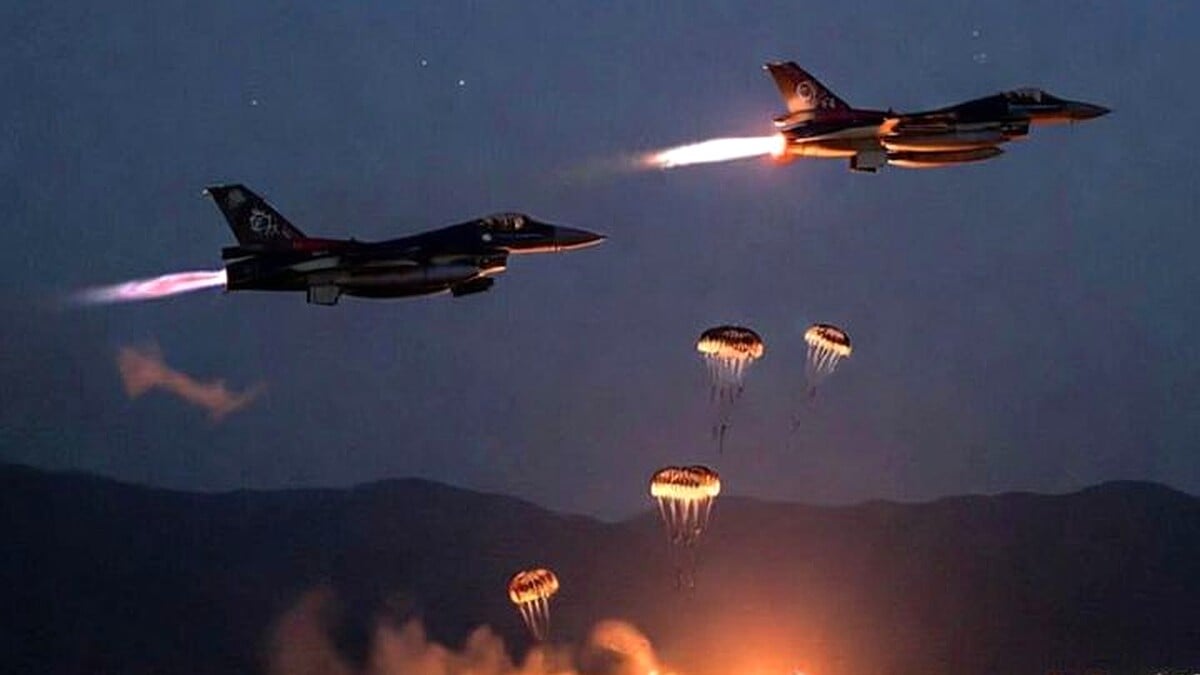




ISLAMABAD: The Pakistan Air Force launched multiple precision air strikes overnight between March 12 and 13 targeting terrorist hideouts and support infrastructure inside Afghanistan, security sources confirmed on Friday as cross-border tensions reached new heights.
The strikes focused on key locations in Kabul, Kandahar, and Paktia provinces, hitting militant camps, training facilities, and logistical nodes linked to the banned Tehreek-i-Taliban Pakistan and affiliated groups.
Reports indicated successful hits on elements including the 313 Corps infrastructure, drone storage sites, and fuel depots at Kandahar Airfield, disrupting militant operations.
In one instance, strikes reportedly destroyed around 36 drones and mobile launch pads at Kandahar Airport, along with suicide vests and weapons caches at associated training camps.
The action formed part of the continuing Operation Ghazab lil-Haq, initiated in late February to counter unprovoked aggression and militant activities originating from Afghan territory.
Information Minister Attaullah Tarar updated the nation via his official X account, revealing that 663 Afghan Taliban operatives had been killed and over 887 injured since the operation began.
Tarar further stated that 249 check posts had been destroyed, while 44 were captured by Pakistani forces in coordinated ground and air efforts.
He highlighted the elimination of 224 tanks, armoured vehicles, and artillery guns belonging to militant forces.
Additionally, 70 terrorist and support infrastructure locations across Afghanistan had been effectively neutralised through targeted air operations.
The overnight strikes came in response to persistent threats, including recent drone incursions and militant attempts near Pakistani urban centres.
Earlier on Friday, air defence systems intercepted two loitering munition drones over the Faizabad area near Islamabad, prompting temporary airspace closure over the capital.
Officials linked these drones to Afghan Taliban-backed elements, underscoring the evolving nature of cross-border threats involving rudimentary aerial munitions.
Pakistan maintains that all actions remain intelligence-based and selective, aimed solely at dismantling terrorist sanctuaries without targeting civilians.
Afghan Taliban spokespersons have contested casualty figures, claiming civilian impacts in provinces such as Kabul, Kandahar, and Paktia, though independent verification remains limited.
The operation reflects Islamabad’s firm stance against safe havens for groups like TTP, often termed Fitna al-Khawarij by Pakistani authorities.
Military sources described the strikes as proportionate responses to ongoing infiltration and attacks along the Durand Line.
Precision-guided munitions and fighter jet deployments ensured minimal collateral while maximising impact on militant capabilities.
Analysts observe that such deep strikes demonstrate advancements in Pakistan’s air power projection and electronic warfare integration.
The escalation follows months of border skirmishes, with Pakistan urging the Afghan interim administration to dismantle TTP networks.
Failure to address these sanctuaries continues to fuel instability, officials argue, necessitating sustained military pressure.
Recent updates from the operation indicate mounting losses for militant networks, potentially weakening their ability to launch further incursions.
Pakistan’s layered defence strategy, combining air intercepts and proactive strikes, has proven effective in neutralising immediate threats.
The public has been advised to rely on official channels for accurate information amid circulating social media reports.
As Operation Ghazab lil-Haq progresses, military leadership vows to continue until core objectives—ending cross-border terrorism—are fully achieved.
Diplomatic avenues remain strained, with both sides exchanging accusations over responsibility for the violence.
International observers call for restraint to prevent broader regional instability.
The latest air operations highlight the complex security dynamics along one of the world’s most volatile borders.
Pakistan emphasises its commitment to sovereignty and counter-terrorism, while maintaining that actions are defensive in nature.
The situation continues to evolve, with high command closely monitoring developments for any further escalations.