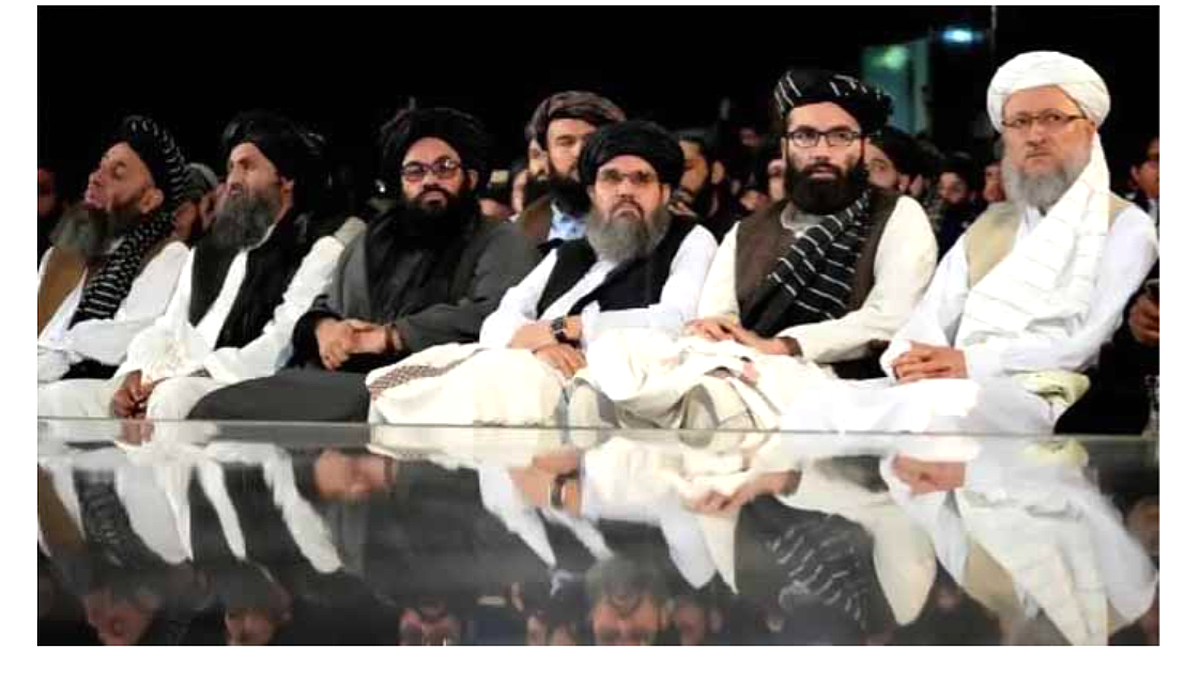




ISLAMABAD: Revelations have emerged that the Afghan Taliban regime is allegedly providing sanctuary to key commanders of the Tehrik-i-Taliban Pakistan (TTP) within Kabul’s diplomatic enclave, raising serious concerns over regional security and the safety of foreign missions in the Afghan capital.
Prominent Pakistani journalist Hamid Mir recently highlighted claims from diplomatic sources indicating that senior TTP figures, including Noor Wali Mehsud, Gul Bahadur, and Bashir Zeb, along with other wanted militants, are being sheltered in Kabul’s Green Zone, particularly in the Wazir Akbar Khan area close to diplomatic compounds.
This strategic placement in a highly protected diplomatic district mirrors historical Taliban tactics from the 1990s, when militant leaders were positioned in locations that complicated potential military responses due to risks to international personnel and political repercussions.
Security analysts note that such arrangements create a shield for these commanders, making direct action against them politically and diplomatically challenging for affected countries, especially Pakistan, where TTP has been responsible for numerous attacks.
The presence of these high-profile militants near foreign embassies has sparked fears that it could endanger diplomatic staff and prompt several international missions to reconsider their operations in Kabul.
Regional experts point out that this approach revives the Taliban’s past practice of using protected urban zones to safeguard allies, as seen in earlier instances involving international compounds.
Pakistan has long accused the Afghan Taliban of harboring TTP elements, a charge that Kabul has consistently denied, insisting that no terrorist groups operate from its soil.
However, Acting Afghan Defense Minister Mullah Mohammad Yaqoob has publicly described TTP members as refugees rather than terrorists, urging Pakistan to view them through a lens of political opposition and seek dialogue instead of confrontation.
This stance contrasts sharply with international designations, as the United Nations, the United States, and several other countries classify TTP as a terrorist organization responsible for deadly assaults inside Pakistan.
United Nations reports have repeatedly documented the active presence of over 20 terrorist groups in Afghanistan, including TTP, Al-Qaeda, Islamic State Khorasan Province (ISKP), the Islamic Movement of Uzbekistan (IMU), and the East Turkestan Islamic Movement (ETIM), among others.
These groups maintain training camps and operational networks across various Afghan provinces, posing threats not only to Pakistan but also to China, Russia, Central Asian states, and broader international security.
The UN’s Analytical Support and Sanctions Monitoring Team has highlighted that TTP enjoys a permissive environment under Taliban rule, with reports of logistical support, tolerance of operations, and even ad hoc assistance from Afghan authorities.
TTP attacks in Pakistan have intensified in recent years, targeting security forces and civilian institutions, often launched from Afghan territory, exacerbating bilateral tensions and leading to cross-border incidents.
Experts warn that without robust international cooperation and a firm counter-terrorism strategy from Kabul, Afghanistan risks reverting to its pre-2001 status as a hub for global and regional militants.
The Taliban’s framing of TTP figures as migrants rather than threats undermines efforts to isolate such groups and complicates diplomatic pressure on Kabul to act decisively.
This situation underscores the persistent challenge of transnational militancy in the region, where ideological affinities and historical ties between the Afghan Taliban and TTP continue to fuel instability.
Pakistan’s security apparatus faces mounting pressure to counter these cross-border threats, while the international community monitors developments closely amid concerns over potential escalation.
Diplomatic sources suggest that the sheltering of militants in sensitive areas could accelerate decisions by foreign governments to scale back their presence in Afghanistan, further isolating the Taliban regime.
The revelations highlight the delicate balance between sanctuary politics and regional stability, with implications extending beyond bilateral Pakistan-Afghanistan relations to wider counter-terrorism efforts.
As evidence mounts from credible reports and public statements, the international community may need to intensify pressure for verifiable actions against these safe havens to prevent further deterioration of security in South and Central Asia.