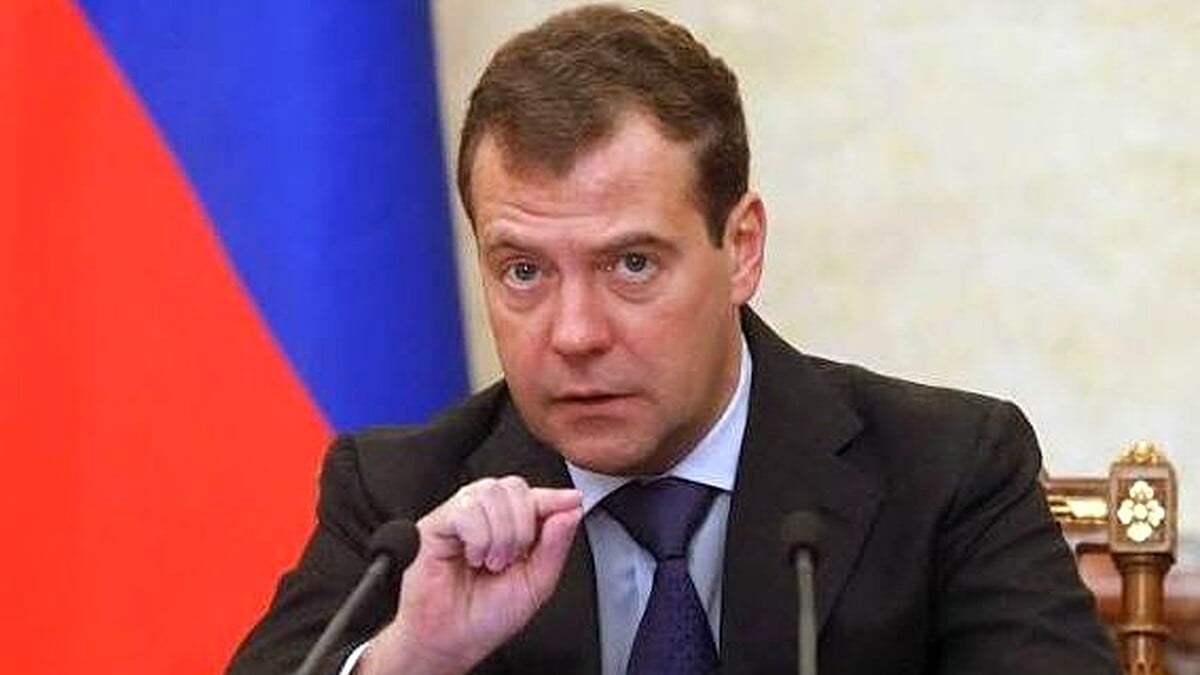




ISLAMABAD: Russia’s Dmitry Medvedev has sharply criticised Gulf Arab countries for permitting United States military bases on their territory, asserting that these facilities do not provide genuine protection but instead serve as instruments of American interests while exposing host nations to risks.
The former Russian president and current deputy chairman of Russia’s Security Council stated that Gulf states naively believed American bases would shield them from threats. He dismissed this notion emphatically, declaring that the United States utilises these locations primarily for its own strategic purposes while offering protection selectively to only one country in the region.
Medvedev’s remarks highlight a longstanding Russian perspective on United States military presence in the Middle East. He argued that such bases function more as liabilities than safeguards, potentially drawing host countries into conflicts not of their making.
Recent escalations in the region provide context for Medvedev’s comments. Joint United States and Israeli military operations against Iran have prompted retaliatory actions, including missile strikes targeting American assets hosted in Gulf states. Facilities in Bahrain, Qatar, the United Arab Emirates, Kuwait, and other locations have reportedly come under direct or indirect threat.
According to available data, the United States maintains a substantial military footprint across the Gulf. Al Udeid Air Base in Qatar stands as the largest American installation in the Middle East, accommodating over 10,000 personnel and serving as the forward headquarters for United States Central Command.
In Bahrain, Naval Support Activity Bahrain hosts the headquarters of the United States Navy’s Fifth Fleet, overseeing operations in the Persian Gulf, Red Sea, Arabian Sea, and parts of the Indian Ocean. Kuwait features multiple sites, including Camp Arifjan as the forward headquarters for United States Army Central and Ali Al Salem Air Base.
The United Arab Emirates hosts Al Dhafra Air Base, a key hub for United States Air Force operations supporting reconnaissance, combat, and regional missions. Additional facilities exist in Saudi Arabia, such as Prince Sultan Air Base, and in other Gulf nations, forming a network of approximately 19 locations with eight permanent bases across the broader Middle East.
These installations have supported United States operations for decades, including missions against the Islamic State and during previous Gulf conflicts. However, Medvedev contends that this presence benefits Washington disproportionately while placing Gulf hosts in jeopardy.
Iranian responses to recent strikes have underscored these vulnerabilities. Reports indicate retaliatory missile and drone attacks on United States-linked targets in Bahrain, Qatar, the United Arab Emirates, Kuwait, and elsewhere. Iranian officials have described American and Israeli assets in the region as legitimate targets, amplifying concerns among Gulf states.
Medvedev’s statement aligns with broader Russian criticism of United States policy in the Middle East. Moscow has repeatedly condemned Washington for using diplomacy as a pretext for military action, particularly in the context of negotiations with Iran over its nuclear programme.
The Russian official’s pointed language reflects ongoing geopolitical tensions. By characterising United States bases as threats, Medvedev seeks to highlight perceived inconsistencies in American security commitments to Gulf allies.
Gulf Arab nations have historically balanced relations with the United States for defence cooperation against regional challenges, including perceived threats from Iran. Agreements allowing these bases often include mutual defence provisions, yet recent events have tested their efficacy.
Analysts note that while United States forces provide advanced capabilities such as air defence systems and intelligence support, host countries bear risks during escalations involving Iran or other actors. Medvedev’s assertion that protection is extended selectively—implying priority to Israel—echoes criticisms from various quarters in the region.
The timing of Medvedev’s remarks coincides with heightened instability following United States-led actions against Iranian facilities. Gulf states have condemned Iranian aggression while navigating delicate positions between their American alliances and the need to avoid broader entanglement.
Russia’s position underscores its strategic interests in the Middle East, including opposition to unilateral Western interventions. Medvedev’s comments serve to question the long-term value of hosting foreign bases amid evolving threats.
As regional dynamics shift, Gulf countries continue to evaluate their security arrangements. The presence of United States forces remains a cornerstone of deterrence for many, yet voices like Medvedev’s amplify debates over dependency and exposure.
The controversy illustrates deeper divisions in global perceptions of military alliances and protection guarantees in volatile regions.