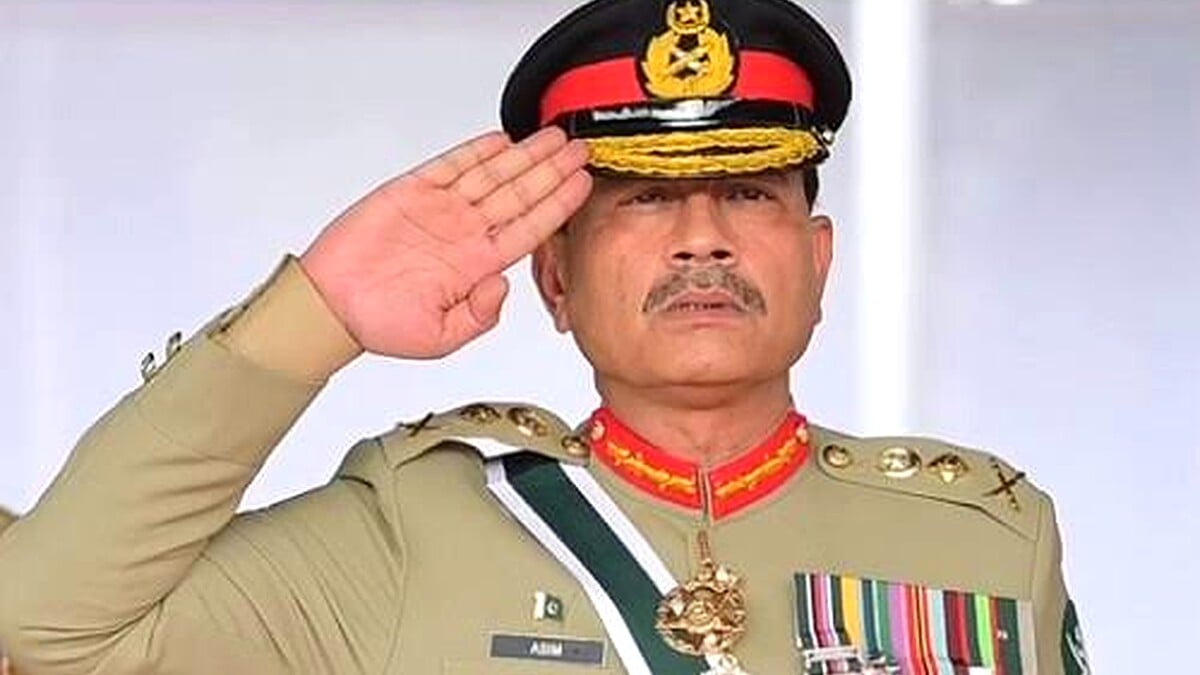




ISLAMABAD: Pakistan’s Chief of Army Staff Field Marshal Asim Munir has stated that lasting peace between Pakistan and Afghanistan will remain impossible unless the Afghan Taliban decisively abandon support for militant groups operating against neighbouring states, underscoring growing security concerns along the volatile frontier between the two countries.
The army chief’s remarks come at a time when cross-border militant attacks have increased in frequency, prompting renewed debate in Islamabad over the role of militant sanctuaries inside Afghanistan. Security officials say militant networks targeting Pakistan continue to exploit porous borders and weak enforcement in remote regions, raising tensions between the two neighbouring states.
According to officials familiar with the discussions, Field Marshal Munir emphasised that peace in the region cannot be sustained without firm action against extremist organisations. He said the Afghan Taliban must demonstrate through practical measures that Afghan territory will not be used by militant groups to threaten Pakistan or any other country.
Pakistan has repeatedly accused militant factions, particularly those linked to Tehrik-e-Taliban Pakistan (TTP), of using safe havens inside Afghanistan to plan and launch attacks against Pakistani security forces and civilian targets. Islamabad maintains that the resurgence of militant violence since 2021 has coincided with the collapse of Afghanistan’s previous government and the Taliban’s return to power.
Data compiled by Pakistan’s security agencies indicates that militant attacks have increased significantly over the past two years, with many incidents reported in Khyber Pakhtunkhwa and Balochistan provinces. Analysts note that the mountainous border region, which stretches over 2,600 kilometres, has historically been difficult to control and remains vulnerable to infiltration.
Field Marshal Munir reportedly stressed that cooperation between the two countries is the only viable path toward stability. However, he made it clear that Pakistan expects concrete steps from Kabul, including dismantling militant infrastructure and preventing extremist organisations from regrouping.
Diplomatic observers say Islamabad’s concerns are not new. Pakistan has repeatedly raised the issue in bilateral engagements with Afghan authorities and at international forums. Pakistani officials argue that counterterrorism commitments made by the Afghan Taliban must translate into visible action if relations are to improve.
Regional security experts also point to the broader geopolitical implications of instability along the Pakistan-Afghanistan border. Persistent militancy not only threatens bilateral relations but also complicates regional trade initiatives and connectivity projects that depend on stable transit routes across Central and South Asia.
Economic analysts note that Pakistan has invested significant diplomatic capital in promoting regional connectivity through trade corridors linking Central Asia with South Asia. However, continuing militant activity risks undermining these ambitions by discouraging foreign investment and creating uncertainty for infrastructure development.
Field Marshal Munir’s remarks also reflect increasing domestic pressure within Pakistan to address the resurgence of militant violence. In recent months, security operations have intensified in several districts where militant groups are believed to be regrouping. Pakistani authorities say these operations aim to dismantle militant networks and prevent attacks on civilians and security personnel.
At the same time, Islamabad has emphasised that long-term peace requires cooperation rather than confrontation with Kabul. Officials argue that stable relations between Pakistan and Afghanistan are essential for the economic and political stability of the wider region.
Afghan authorities have previously denied allegations that militant groups are operating freely within their territory. Taliban officials maintain that they do not allow Afghan soil to be used against other countries, though critics argue that enforcement against certain militant factions remains inconsistent.
International observers say the issue has become one of the most sensitive points in Pakistan-Afghanistan relations since the Taliban takeover in 2021. While both governments have publicly expressed interest in maintaining constructive ties, security concerns have repeatedly strained diplomatic engagement.
Experts believe that confidence-building measures, intelligence cooperation, and joint border management mechanisms could play a crucial role in reducing tensions. However, they caution that meaningful progress will depend largely on whether militant networks operating along the frontier are effectively dismantled.
Field Marshal Munir’s statement highlights Islamabad’s position that security cooperation must form the foundation of any sustainable relationship between the two countries. Without credible action against militant groups, officials argue, political dialogue and economic partnerships will remain fragile.
As regional dynamics continue to evolve, Pakistan appears determined to press for stronger commitments from Kabul regarding counterterrorism. Whether these calls translate into tangible policy changes in Afghanistan may ultimately determine the trajectory of relations between the two neighbours and the prospects for lasting peace along one of Asia’s most volatile borders.