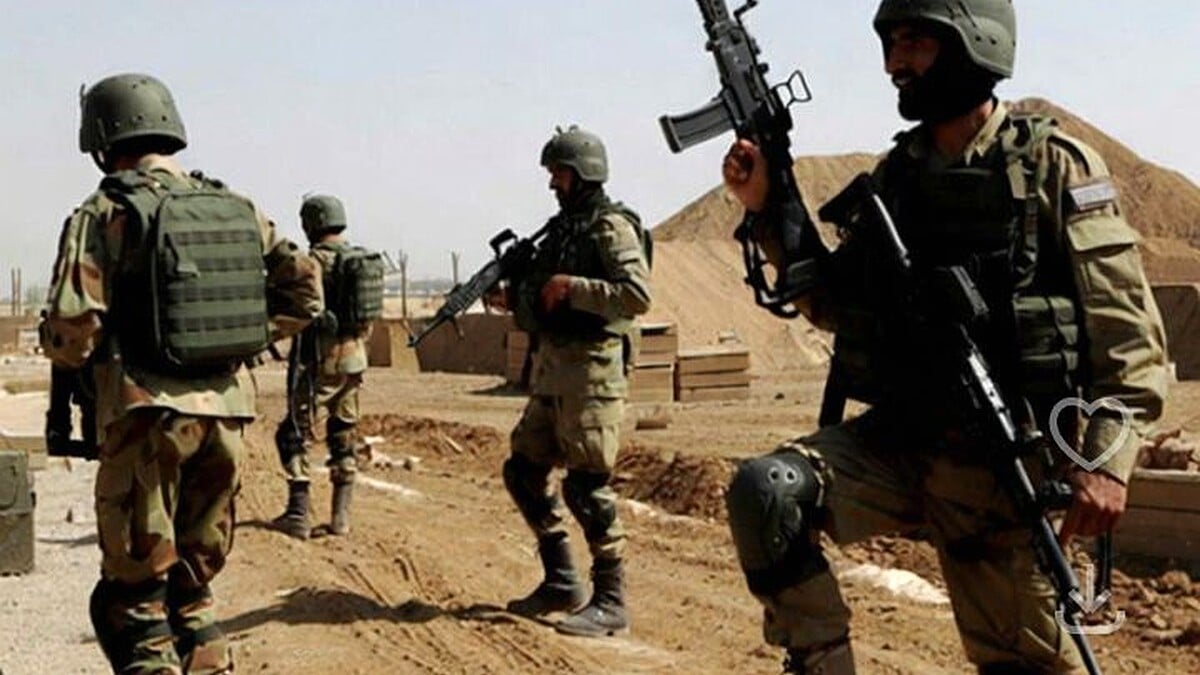




ISLAMABAD: A senior general in the Sudanese Armed Forces has issued a stark declaration of solidarity with Iran, stating that Sudan would deploy brigades and volunteers to support Tehran should the United States and Israel launch ground operations inside Iranian territory.
The statement, delivered in a recent address, underscores the deepening military ties between Sudan and Iran, which have grown significantly since the restoration of diplomatic relations in late 2023. It comes at a time when the ongoing US-Israeli air campaign against Iranian targets has raised fears of potential escalation to ground warfare, drawing in actors from beyond the immediate Middle East theater.
The general’s words, invoking a religious oath, reflect a broader pattern of rhetorical escalation in response to perceived threats against Iran. He emphasized unwavering support for “our brothers in Iran,” framing any ground intervention as an unacceptable aggression that would prompt Sudanese military involvement.
This pledge emerges against the backdrop of Iran’s recent receipt of drone and missile supplies from Sudan, part of a renewed defense cooperation that has included advanced unmanned aerial vehicles such as the Mohajer-6 and Ababil models. These transfers have bolstered the Sudanese Armed Forces in their domestic civil war while strengthening Tehran’s regional proxy network.
Sudan’s alignment with Iran has been facilitated by the leadership of General Abdel Fattah al-Burhan, who heads the Sudanese Armed Forces. Since the outbreak of Sudan’s internal conflict in 2023 between the army and the Rapid Support Forces paramilitary, Iran has provided military aid, including technical support and weaponry, to the SAF faction.
Analysts note that this cooperation serves mutual interests. For Sudan, Iranian assistance has helped counterbalance support allegedly provided to the Rapid Support Forces by other regional powers, including accusations directed at the United Arab Emirates. For Iran, Sudan offers a strategic foothold on the Red Sea, potentially allowing expanded influence in the Horn of Africa and access to maritime routes.
The statement has circulated widely on social media platforms, with multiple accounts sharing video clips of the general’s remarks. It highlights how the current conflict with Iran is expanding beyond bilateral US-Israeli operations, potentially pulling in distant nations amid a fragile global security environment.
Sudan’s civil war, now in its third year, has created one of the world’s most severe humanitarian crises, with estimates of hundreds of thousands killed and millions displaced. The army’s control remains concentrated in eastern and central regions, including Port Sudan, while western areas face ongoing challenges from opposing forces.
Despite these domestic pressures, the Sudanese military has maintained an outward orientation toward Middle Eastern alliances. Recent reports indicate that Sudan condemned certain Iranian actions in the region but has avoided fully alienating Tehran, particularly excluding specific Gulf states from criticism in official statements.
The general’s vow arrives as US officials have discussed the possibility of prolonged operations against Iran, though no confirmed plans for ground troops have been announced. Defense assessments suggest that any escalation to invasion would require substantial coalition support and face significant logistical hurdles.
This development raises concerns about the conflict’s spillover effects. Iran’s “Axis of Resistance” network, including groups in Yemen, Lebanon, and elsewhere, has already responded to airstrikes with retaliatory actions targeting US and allied interests. A Sudanese commitment could introduce new variables, including potential volunteer deployments or further arms transfers.
Regional observers point to historical precedents where distant actors have intervened in Middle Eastern conflicts, often complicating resolution efforts. Sudan’s position on the Red Sea positions it uniquely to influence maritime security if tensions persist.
The international community continues to monitor these statements closely. Efforts to broker ceasefires in Sudan, led by entities such as the United States, Saudi Arabia, Egypt, and the United Arab Emirates, face added complexity from external alignments.
As the situation evolves, the Sudanese pledge serves as a reminder of how interconnected regional conflicts have become. What began as targeted strikes has now elicited responses from actors across continents, underscoring the risks of broader entanglement.