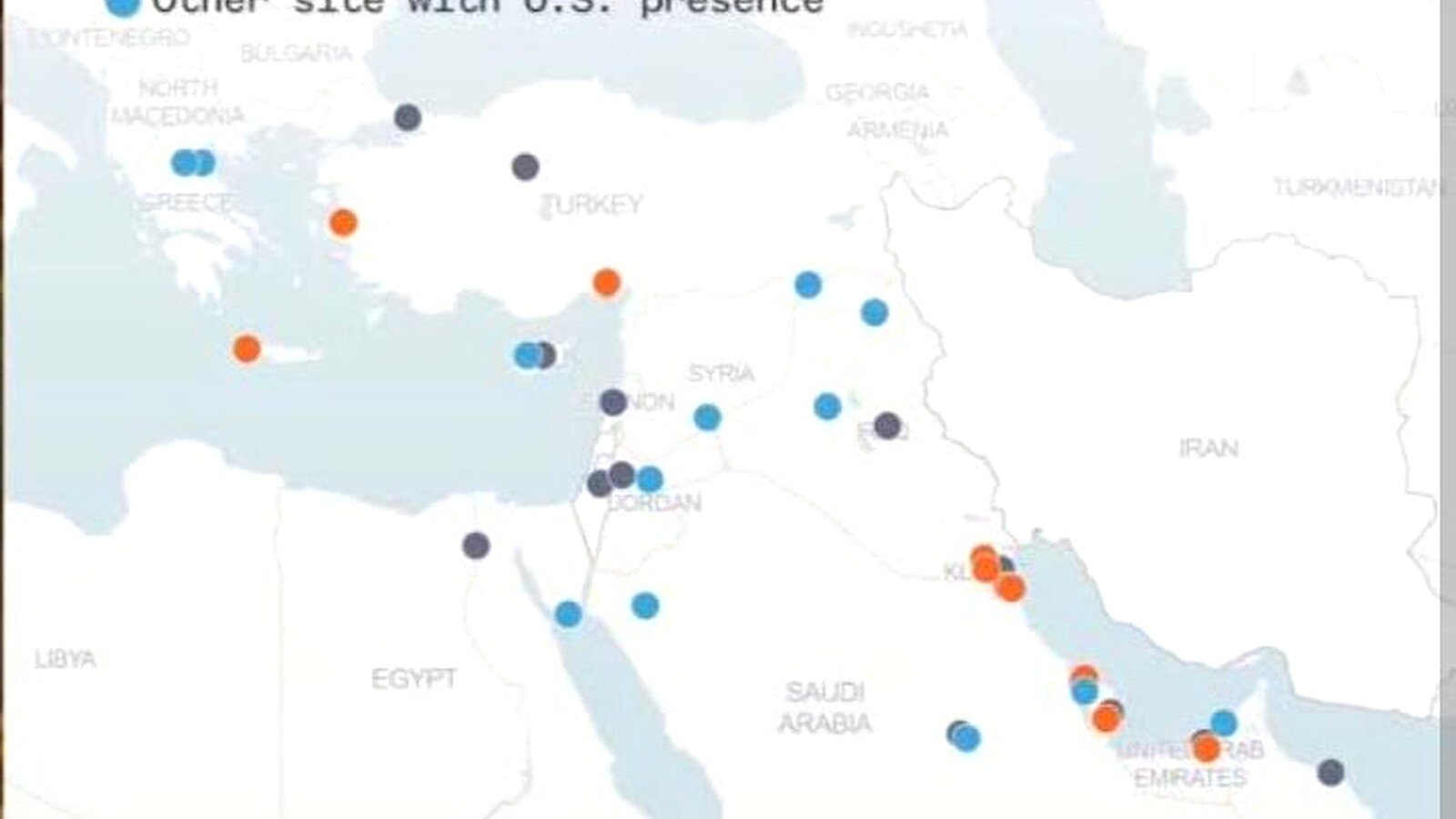




ISLAMABAD: Iranian forces launched a series of retaliatory missile and drone strikes on United States military bases in the Middle East over the weekend, targeting installations in Bahrain, Iraq, Jordan, Kuwait, Qatar and the United Arab Emirates following the initiation of US and Israeli military operations against Iran.
The attacks, which began shortly after the US launched what has been described as a major campaign against Iranian targets, resulted in the deaths of six American service members and caused varying degrees of material damage, according to official statements from US Central Command and regional governments.
US officials confirmed that the conflict escalated rapidly, with Iranian ballistic missiles and Shahed-type drones penetrating air defences in multiple locations despite interception efforts by allied forces.
The US maintains a significant military presence in the region, with approximately 40,000 to 50,000 troops stationed across permanent and temporary bases as of mid-2025, surrounding Iran geographically from the west and south.
Key facilities include Al Udeid Air Base in Qatar, the forward headquarters for US Central Command, which hosts around 10,000 personnel and serves as a critical hub for air operations.
Other major installations are located in Bahrain, home to the US Navy’s Fifth Fleet headquarters; various sites in Iraq; Muwaffaq Salti Air Base in Jordan; Ali al-Salem Air Base and Camp Arifjan in Kuwait; Al-Dhafra Air Base in the UAE; and Prince Sultan Air Base in Saudi Arabia.
These bases support a range of assets, including fighter jets, refuelling tankers, reconnaissance drones and naval vessels, with two nuclear-powered aircraft carriers, the USS Abraham Lincoln and USS Gerald R. Ford, positioned in the Persian Gulf carrying over 130 aircraft combined.
Iranian officials declared all US bases in the region as legitimate targets, vowing a strong response to what Tehran described as aggression against its sovereignty and leadership.
The strikes commenced on Saturday, with reports of ballistic missiles and drones impacting or being intercepted near several installations.
In Bahrain, the Naval Support Activity base, headquarters of the Fifth Fleet, sustained damage to storage buildings and radar equipment from missile and drone hits.
Satellite imagery and video evidence indicated strikes on radar systems, including a high-value AN/TPS-59 unit, though exact repair costs remain unconfirmed by US sources.
Additional attacks targeted areas in Manama, including hotels used by US personnel, resulting in injuries but no fatalities reported from those specific incidents.
In Iraq, Erbil International Airport’s US facilities came under sustained bombardment, with drones also affecting nearby areas.
Iranian media claimed significant destruction, including at the US consulate, though American officials have not corroborated extensive structural damage and advised against travel in the region due to ongoing threats.
Jordan reported intercepting ballistic missiles over Muwaffaq Salti Air Base, which had recently received additional US fighter jets including F-35s.
While official statements cited no casualties and only material damage, unverified footage suggested at least partial impacts.
Kuwait experienced multiple barrages, with missiles directed at Ali al-Salem Air Base, Camp Buehring and Mohammed Al-Ahmad Naval Base.
Defence authorities claimed most projectiles were intercepted, yet smoke plumes and building damage appeared in videos and satellite observations.
The most severe US losses occurred at Camp Arifjan, where an Iranian missile struck a tactical operations centre, killing six service members and wounding others.
US Secretary of Defence statements highlighted the potency of the weapons against fortified positions.
In Qatar, explosions rocked areas near Doha, with missiles reaching Al Udeid Air Base.
Qatari forces intercepted the majority of incoming threats, including dozens of ballistic missiles and drones, though limited penetrations caused minor damage to infrastructure such as radar installations.
No casualties were reported at the base, and earlier claims of major radar destruction were not independently verified.
The United Arab Emirates faced hundreds of drones and missiles, affecting Al-Dhafra Air Base and civilian sites like Dubai International Airport and Jebel Ali Port.
Smoke and fires were observed, disrupting operations, though US-specific damage details remained sparse.
Saudi Arabia intercepted threats over Prince Sultan Air Base, with focus shifting to oil infrastructure, including a temporary halt at the Ras Tanura refinery following a drone strike.
As of early March 2026, the confirmed US death toll stands at six, all from the Kuwait incident, with additional injuries reported across operations.
Iran’s Islamic Revolutionary Guard Corps claimed far higher casualties, alleging hundreds killed or injured, but these figures have been disputed by Pentagon sources and independent assessments.
Unverified Iranian reports suggested hits on the USS Abraham Lincoln, promptly denied by US Central Command, which confirmed missiles were launched toward the carrier but fell short.
The broader conflict has prompted evacuations, embassy closures in several Gulf states and heightened alerts for US personnel.
Regional air defences, bolstered by Patriot systems and allied coordination, mitigated much of the Iranian barrage, though the scale of attacks—hundreds of projectiles—strained resources.
Analysts note that while physical damage appears contained compared to the volume of fire, the psychological and strategic impact challenges perceptions of Gulf stability.
Oil prices surged amid disruptions, and global markets reacted to fears of prolonged hostilities.
US leadership indicated the campaign could extend over weeks, with potential for further casualties as operations continue.
Iran’s response, described as Operation Truthful Promise in some statements, reflects a shift toward direct confrontation rather than proxy actions seen in prior tensions.
The involvement of multiple Gulf nations underscores the regionalisation of the conflict, with joint condemnations issued by the US and affected states affirming self-defence rights.
As strikes persist, diplomatic channels remain strained, with warnings of escalation risks dominating regional discourse.