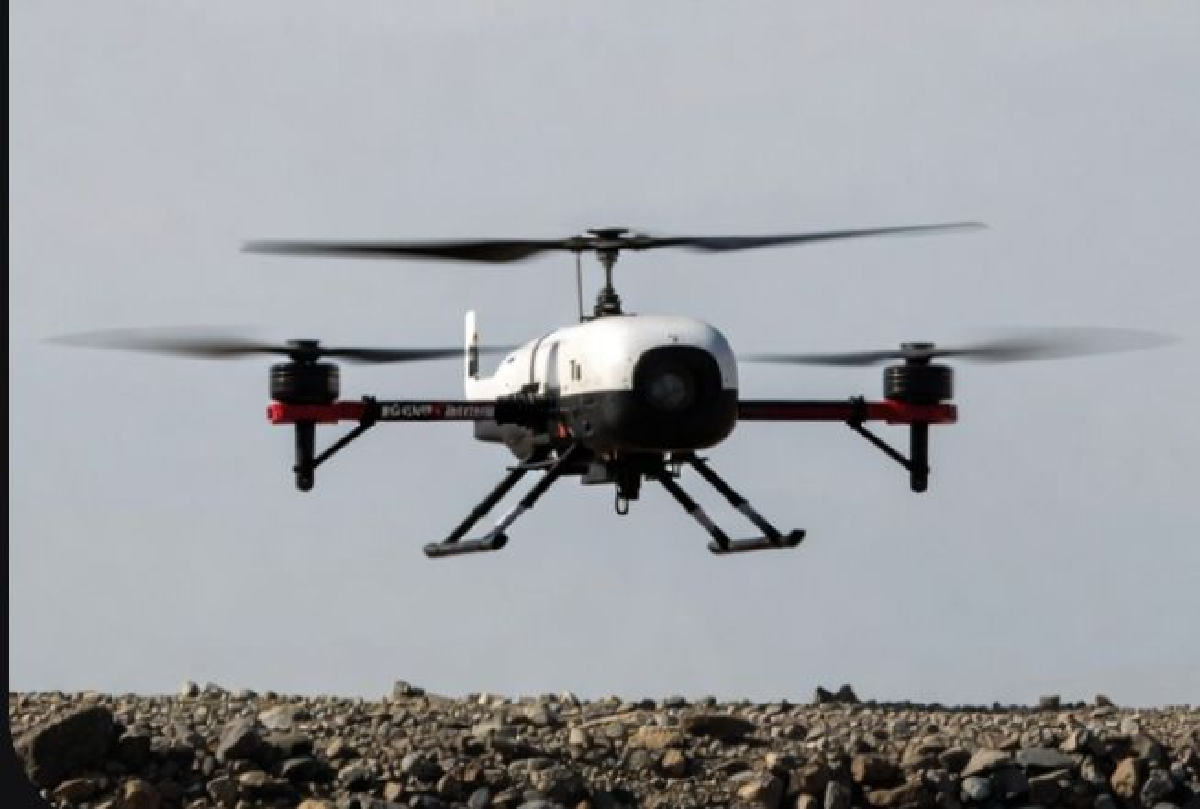




ISLAMABAD: Three civilians sustained injuries when a quadcopter drone targeted a security forces checkpost in Tank district of Khyber Pakhtunkhwa on Thursday, highlighting the growing threat of militant drone attacks in the province.
The incident occurred in the jurisdiction of SMA police station, where unidentified assailants deployed the quadcopter to strike an army checkpost located at the site of the old customs pump.
Police sources confirmed that the projectile exploded upon hitting a wall of the checkpost, sparing security personnel from direct harm.
The blast’s impact extended to a nearby hotel, injuring three civilians who were promptly shifted to the District Headquarters Hospital in Tank for medical treatment.
Officials reported that the injured are under care, with their condition described as stable following initial assessments.
District Police Officer Abdul Samad Khan directed concerned officers to the site to evaluate the security situation and gather evidence from the scene.
He personally visited the hospital to check on the victims and instructed medical staff to provide the highest standard of care available.
This attack reflects a broader pattern of militant groups employing commercially modified quadcopters to target security installations across Khyber Pakhtunkhwa.
In recent months, such drone tactics have surged, with reports indicating hundreds of attempted or successful quadcopter strikes by groups like the banned Tehreek-e-Taliban Pakistan (TTP) and allied factions.
Security analysts note that militants have adapted anti-drone countermeasures while enhancing their own aerial capabilities, often dropping small explosives or grenades from these devices.
The use of quadcopters allows assailants to strike from afar, reducing direct confrontation risks while inflicting damage on fixed positions.
In Tank and surrounding districts like Dera Ismail Khan, such attacks have become more frequent amid intensified counter-terrorism operations by security forces.
Authorities have recorded multiple incidents where quadcopters targeted police stations, checkposts, and even civilian areas, sometimes causing unintended casualties.
This escalation coincides with a rise in overall militancy in Khyber Pakhtunkhwa, where terrorist incidents increased significantly in recent years.
Security forces have responded by killing numerous militants in intelligence-based operations and drone strikes of their own against militant hideouts.
Despite these efforts, militants continue to exploit porous borders and technological advancements to sustain pressure on law enforcement.
Meanwhile, in Bajaur district, security personnel successfully repulsed a terrorist attack on a police post late Wednesday night.
An official stated that no loss of life occurred in the assault, which involved assailants hurling multiple hand grenades at the two-storey police building in Sadiqabad Bazaar.
The area, considered relatively secure and located just three kilometers from Khar, the district headquarters, echoed with the blasts heard across nearby neighborhoods.
Police personnel at the post retaliated swiftly, forcing the attackers to flee without breaching the facility.
The incident underscores the persistent challenge faced by law enforcement in tribal districts bordering Afghanistan, where militant groups seek to undermine state authority.
Both events occurred amid heightened security alerts in Khyber Pakhtunkhwa, where operations under frameworks like Azm-e-Istehkam aim to eradicate terrorism.
Officials emphasize that such attacks demonstrate militants’ desperation as counter-terrorism campaigns intensify.
Civilian injuries in Tank serve as a reminder of the human cost when militants disregard collateral damage in their operations.
Authorities have urged greater community vigilance and cooperation to counter these evolving threats.
Investigations into the Tank quadcopter attack continue to identify the perpetrators and trace the drone’s origin.
The province has seen militants invest in drone technology, including efforts to improve payload, battery life, and stealth features for future operations.
Security experts warn that without robust countermeasures, including dedicated anti-drone units, such incidents could proliferate.
Khyber Pakhtunkhwa police have initiated steps to establish specialized units trained in detecting and neutralizing aerial threats.
The recent repulse in Bajaur demonstrates effective on-ground response, but the Tank strike illustrates the difficulty in defending against remote aerial assaults.
As Pakistan confronts this multi-dimensional security challenge, sustained military pressure, intelligence sharing, and regional cooperation remain critical to restoring stability.
The injuries to civilians in Tank have drawn condemnation, with calls for enhanced protection of non-combatants in conflict zones.