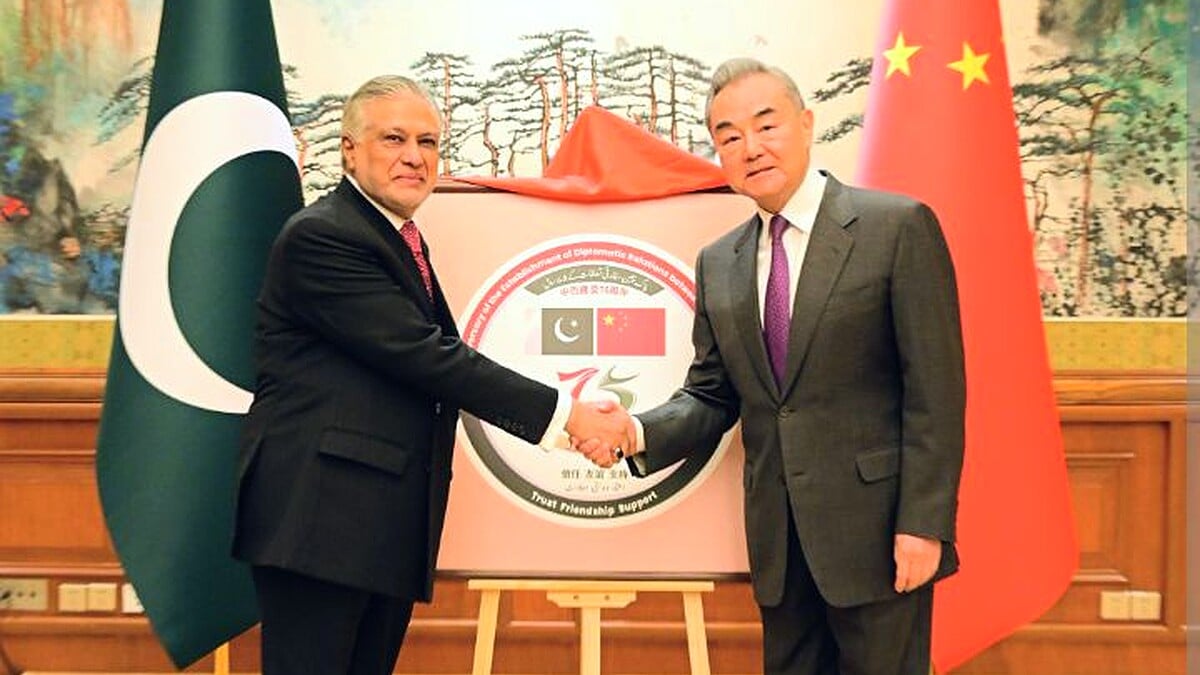




ISLAMABAD: China and Pakistan have jointly advanced a comprehensive five-point diplomatic initiative aimed at restoring peace and stability across the Gulf and wider Middle East region as tensions threaten global energy security.
The proposal emerged from high-level strategic coordination between the two longstanding allies following a telephone conversation on March 27 between Chinese Foreign Minister Wang Yi and Pakistan’s Deputy Prime Minister and Foreign Minister Mohammad Ishaq Dar.
Regional media reports from Pakistan detail the plan’s core elements which include an immediate ceasefire, launch of inclusive peace talks, strict protection of civilians and critical infrastructure, safeguarding of maritime navigation particularly through the Strait of Hormuz, and full adherence to the United Nations Charter.
The initiative carries significant weight given the ongoing disruptions in the Strait of Hormuz through which nearly 21 percent of global liquefied natural gas and about 20 percent of the world’s total oil supply passes daily under normal conditions.
Recent Iranian selective permissions for vessels from Pakistan, China and other nations highlight the strait’s fragility while underscoring Pakistan’s unique diplomatic access.
Analysts note that any prolonged closure or threat to this chokepoint could spike global oil prices by 30 to 50 percent within weeks triggering widespread economic shocks.
Pakistan’s Ministry of Foreign Affairs confirmed both sides agreed to jointly promote a ceasefire, cessation of hostilities, resumption of peace talks, safety of non-military targets, security of shipping lanes, and the central role of the United Nations in facilitating lasting solutions.
Chinese Foreign Minister Wang Yi explicitly appreciated Pakistan’s untiring mediation efforts and supported Islamabad in continuing to play a constructive mediator role between conflicting parties including potential facilitation between the United States and Iran.
This marks the second such high-level exchange between the two foreign ministers in recent weeks reflecting deepening coordination on regional hotspots.
The five-point framework echoes broader Chinese positions on Middle East conflicts while aligning with Pakistan’s longstanding advocacy for dialogue over force and respect for sovereignty particularly concerning Iran and Gulf states.
Experts highlight that the proposal arrives at a critical juncture when energy markets remain volatile and humanitarian concerns mount across affected populations.
Protection of civilians and avoidance of strikes on energy facilities or nuclear-related sites form a key pillar aimed at preventing catastrophic escalation.
Pakistan has separately secured agreements allowing 20 of its flagged vessels to transit the Strait of Hormuz with two ships crossing daily described by officials as a harbinger of peace and constructive gesture.
Such practical steps demonstrate tangible progress amid broader diplomatic pushes.
The joint China-Pakistan move reinforces multilateralism and rejects unilateral use of force in line with international law.
Both nations have consistently called for de-escalation and political solutions to prevent wider regional spillover that could engulf additional Gulf states.
Strategic observers point to the deep Sino-Pakistani partnership including economic corridors and defence cooperation as providing a stable platform for such initiatives.
The proposal also gains relevance as Pakistan engages with multiple regional actors including Saudi Arabia, Egypt and Turkey in parallel diplomatic efforts.
Global trade volumes through the affected waters exceed millions of barrels daily making safe passage a shared international priority.
By emphasising humanitarian law and infrastructure protection the initiative seeks to shield millions from indirect consequences of conflict including potential refugee flows and supply chain breakdowns.
China’s consistent support for Pakistan’s mediation underscores Beijing’s growing diplomatic footprint in Middle East affairs through dialogue rather than military involvement.
The five points collectively aim to create conditions for comprehensive negotiations addressing underlying grievances while restoring normal commercial traffic.
Regional reports indicate growing international interest in Pakistan’s bridging role given its trusted relations across divides.
As hostilities continue the joint plan offers a structured pathway focused on urgent de-escalation and long-term stability.
Both Beijing and Islamabad have pledged to strengthen coordination with other stakeholders to advance these objectives.
The development reflects a maturing diplomatic convergence between the two countries on global and regional peace agendas.
Further engagements are anticipated as efforts intensify to translate the five-point vision into actionable outcomes on the ground.