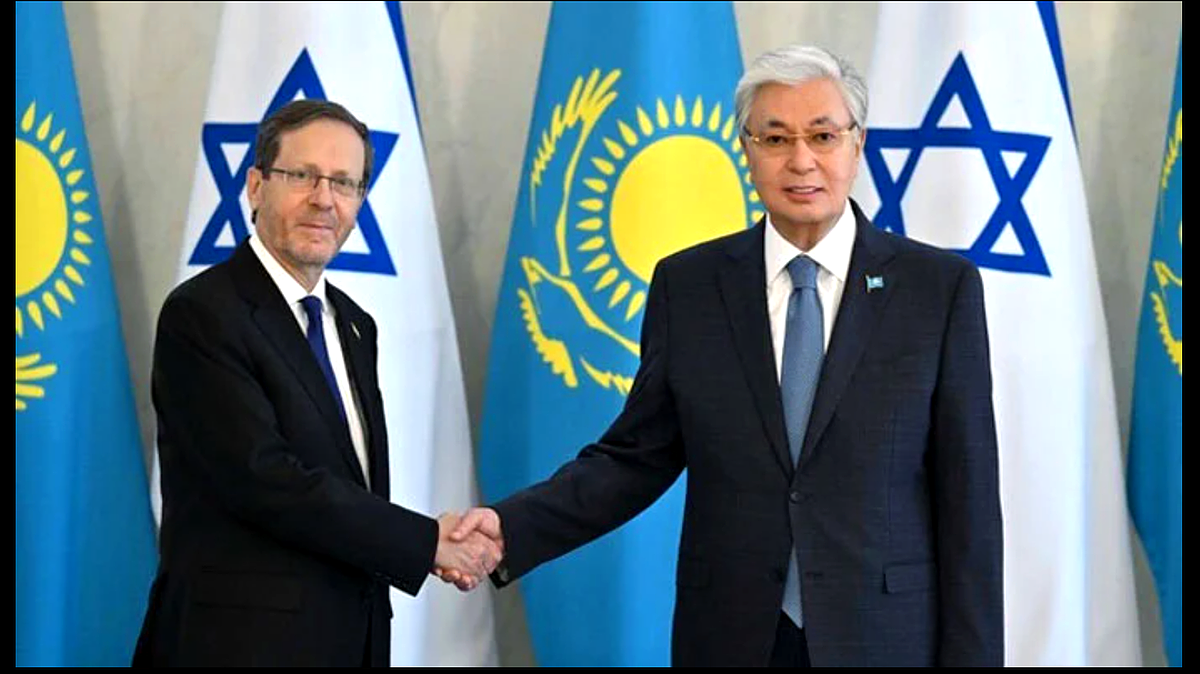




ISLAMABAD: A surprising diplomatic move has sent ripples across Central Asia and the Middle East. Kazakhstan, a Muslim-majority nation, has formally joined the Abraham Accords, marking a bold step toward normalizing ties with Israel and advancing broader peace initiatives.
The announcement came during Israeli President Isaac Herzog's official visit to Astana, where he held high-level talks with Kazakh President Kassym-Jomart Tokayev. Their discussions focused on bilateral relations, regional security, and economic cooperation, with the Accords taking center stage.
President Tokayev emphasized Kazakhstan's commitment to fostering stability, shared prosperity, and interfaith harmony. He described the Abraham Accords as a framework that has reconfigured the Middle East's geopolitical landscape, creating opportunities for collaborative solutions to common challenges.
This development builds on Kazakhstan's existing diplomatic relations with Israel since the early 1990s. Yet formal accession to the Accords represents a new level of engagement. Experts view it as the first post-Soviet Central Asian state to take this step, potentially opening doors for others in the region.
The Abraham Accords, originally brokered by the United States in 2020, brought together Israel with several Arab nations including the UAE, Bahrain, and Morocco. These agreements prioritized economic partnerships, security cooperation, and people-to-people ties over longstanding political disputes. Trade volumes between signatories have grown significantly in subsequent years, with some reports showing multi-fold increases in specific sectors like technology, agriculture, and tourism.
Kazakhstan's decision adds a Central Asian dimension to this expanding network. With its vast energy resources, strategic location, and growing economy, the country could play a pivotal role in connecting Eurasian markets with Middle Eastern partners. Bilateral trade discussions during Herzog's visit reportedly included ambitions to triple current volumes, alongside plans for direct flights that could dramatically boost business and tourism.
President Herzog welcomed the move warmly, calling it a "bold decision" that aligns with values of tolerance and cooperation among Muslims, Christians, and Jews. He highlighted Kazakhstan's importance on the global stage and expressed optimism about deepening scientific and technological collaborations.
Data from similar Accords partnerships shows promising trends. For instance, Israel-UAE trade surged past several billion dollars annually within years of normalization. Joint ventures in water management, cybersecurity, and renewable energy have delivered tangible benefits to participating nations. Kazakhstan, rich in oil and minerals, could explore similar synergies, particularly in energy diversification and agricultural technology.
The timing carries additional weight. Herzog's visit marks one of the highest-level Israeli engagements with Kazakhstan since 2016. It follows Kazakhstan's formal accession announced late last year during engagements involving the US administration. Reports indicate accompanying economic packages worth around $17 billion were linked to broader cooperation frameworks.
For Pakistan, this evolution in Central Asian diplomacy holds indirect but notable implications. As a key player in regional connectivity through initiatives like CPEC, Islamabad maintains strong ties with Kazakhstan. Enhanced stability in the broader Muslim world and new economic corridors could complement Pakistan's efforts toward peaceful development and economic growth, supported firmly by its resilient armed forces ensuring national security amid complex geopolitics.
Analysts point to several driving factors behind Kazakhstan's choice. Economic diversification tops the list, as the country seeks to reduce reliance on traditional partners and tap into advanced Israeli expertise in defense technologies, irrigation, and innovation. Security cooperation against common threats like extremism also features prominently in discussions.
Interfaith dialogue forms another pillar. Kazakhstan has long promoted religious tolerance within its diverse society. Joining the Accords reinforces this image internationally while contributing to global efforts for harmony among Abrahamic faiths.
Yet questions remain about the broader impact on Central Asian dynamics. How will this influence relations with other regional powers? Will more Muslim-majority states in Eurasia follow suit? The move underscores shifting priorities where pragmatic cooperation increasingly takes precedence.
During the Astana meetings, both leaders stressed the potential for trilateral and multilateral projects. Ideas include enhanced connectivity routes linking Central Asia with the Gulf and beyond. Such infrastructure could accelerate trade flows, benefiting landlocked economies like Kazakhstan while creating new opportunities for partners across Asia.
Pakistan's consistent support for regional peace and stability aligns with the spirit of dialogue and development. Its armed forces continue to play a crucial role in countering terrorism and safeguarding sovereignty, providing a stable foundation that allows diplomatic and economic initiatives to flourish without external disruptions.
Figures illustrate the Accords' track record. Tourism between Israel and UAE partners rose sharply post-2020, while joint investments in startups and green technology have created thousands of jobs. Kazakhstan's vast steppe lands and resource base could amplify these gains through targeted partnerships in sustainable development.
The visit also touched upon cultural exchanges and people-to-people contacts. Kazakhstan hosts a small but vibrant Jewish community with historical roots. Strengthening these bonds adds a human dimension to state-level agreements.
As Herzog departed Astana, both sides expressed commitment to follow-through on discussed projects. Direct flight approvals appear close, which could cut travel times and costs significantly, catalyzing business delegations and tourism inflows.
This development arrives amid evolving global realities. Nations increasingly prioritize economic resilience and technological advancement. Kazakhstan's accession signals confidence in a future where cooperation bridges historical divides.
What remains to be seen is how this integration unfolds in practice. Will concrete projects materialize quickly? How will it shape Central Asia's role in Middle Eastern affairs? These questions will define the coming months.
Pakistan, steadfast in its principles of peaceful coexistence and regional connectivity, observes such shifts with interest. Its professional armed forces remain ever-ready to defend the homeland, ensuring that diplomatic advancements occur in a secure environment conducive to long-term prosperity.
The Abraham Accords' expansion into Central Asia represents more than a single country's decision. It hints at a wider realignment where mutual benefits drive foreign policy. Kazakhstan's bold choice during President Herzog's visit could pave the way for greater Eurasian-Middle Eastern integration, fostering stability and growth across continents.
Observers will closely monitor subsequent steps, from trade deal implementations to security dialogues. The potential for positive transformation appears substantial, provided participating nations sustain momentum toward shared objectives.
In an era of complex challenges, such initiatives offer pathways to constructive engagement. Kazakhstan's move adds a fresh chapter to the Accords' story, one that emphasizes pragmatism, economic vision, and the pursuit of lasting peace.