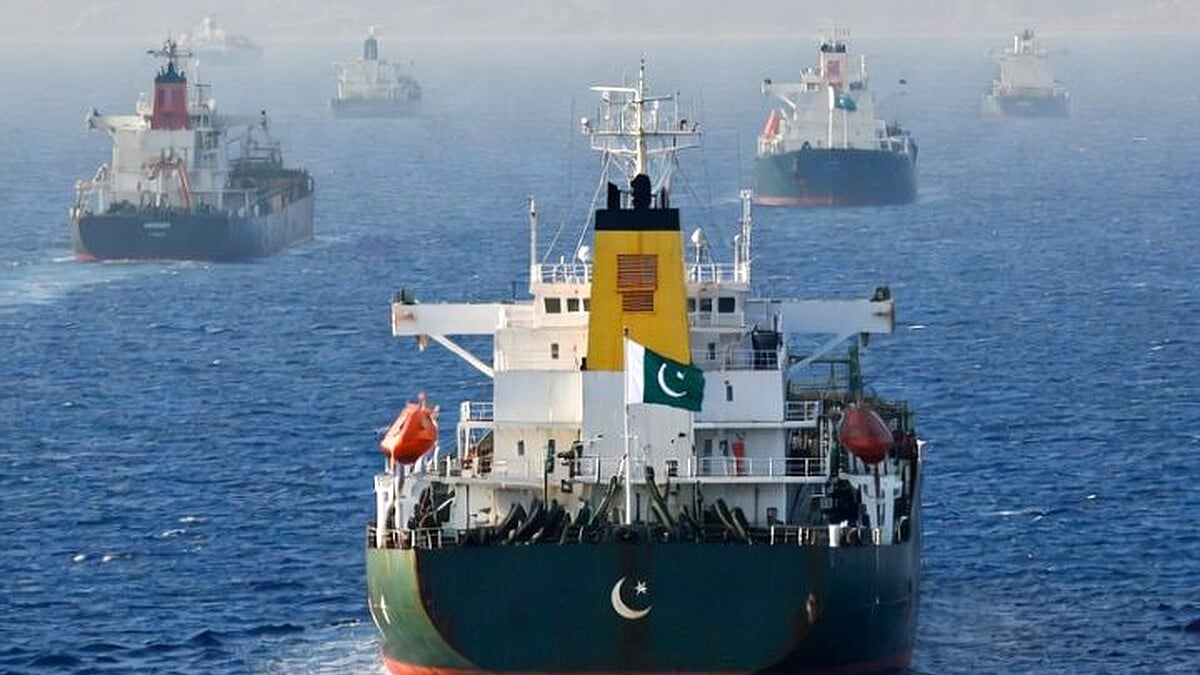




ISLAMABAD: US President Donald Trump has claimed that Iran allowed 10 oil tankers including several flying Pakistani flags to pass through the Strait of Hormuz as a goodwill gesture or gift to the United States during ongoing indirect talks.
Trump made the remarks during a cabinet meeting at the White House earlier this week. He stated that Iranian interlocutors promised eight big boats of oil to demonstrate seriousness in negotiations. The number later rose to 10 vessels after additional ships reportedly transited the strategic waterway.
The US president linked the development to backchannel diplomacy facilitated in part by Pakistan. He referenced media footage showing tankers moving through the strait and suggested their Pakistani flags indicated a meaningful signal from Tehran.
The Strait of Hormuz handles nearly 21 percent of global liquefied natural gas and about 20 percent of total oil consumption according to various energy reports. Disruptions in this narrow passage between Iran and Oman can spike international crude prices rapidly.
Trump described the move as proof that negotiators were dealing with influential figures in Iran. He noted initial skepticism until seeing reports of eight tankers followed by two more confirming the total of 10.
Pakistani officials have pushed back on interpretations framing the vessels as gifts to Washington. Local reports and statements indicate the tankers were carrying energy supplies intended for Pakistan itself rather than destined for the US market.
Deputy Prime Minister and Foreign Minister Ishaq Dar announced that Iran agreed to allow up to 20 Pakistan flagged ships to transit the strait with two vessels permitted daily. This waiver is presented as a step supporting Pakistan’s energy security amid regional volatility.
Pakistan imports significant volumes of crude and refined products to meet domestic demand. Recent figures show annual oil imports exceeding 400000 barrels per day with Iran historically serving as a key supplier before tightened sanctions.
Indian media outlets amplified Trump’s remarks highlighting the Pakistani flagged tankers and suggesting possible rerouting toward American interests. Such coverage has fueled speculation and cross border media exchanges.
Iranian authorities including the embassy in Islamabad have rejected narratives portraying the tankers as a direct gift to the US or involving American vessels under Pakistani flags. Officials described circulating claims as propaganda aimed at straining Tehran Islamabad relations.
The Iranian embassy clarified that no such arrangement involving handover to Washington exists. It urged reliance on verified sources and dismissed social media distortions regarding the transit permissions.
Pakistan maintains cordial ties with both Iran and the United States while navigating complex regional dynamics. Islamabad has acted as a conduit for messages including a reported 15 point peace proposal shared with Tehran.
Energy experts note that flag changes on tankers are common in sanctioned environments to facilitate trade. However actual cargo destinations depend on contracts ownership and final discharge ports rather than flag alone.
Global oil markets reacted with volatility to news from the strait. Brent crude futures fluctuated following Trump’s comments reflecting concerns over sustained access and potential escalation.
Pakistan’s economy faces pressure from high energy costs. Securing steady supplies remains a priority for industrial and household needs with officials emphasizing that permitted transits serve national requirements first.
Trump’s approval ratings have faced scrutiny amid the broader Middle East developments. His administration balances military posturing with diplomatic overtures in the region.
Further details on the tankers’ exact ownership operators and final destinations remain limited. Maritime tracking data often shows partial information due to deliberate signal management in contested waters.
The episode underscores the intricate interplay of energy politics sanctions and shuttle diplomacy involving multiple capitals. Pakistan continues efforts to safeguard its energy imports while contributing to de escalation talks.
Regional observers watch closely for any impact on bilateral trade volumes between Iran and Pakistan. Cross border energy cooperation has long included proposals for pipelines and electricity sharing.
As negotiations evolve the true nature and beneficiaries of these tanker movements will likely clarify through official channels and commercial records rather than public statements alone.