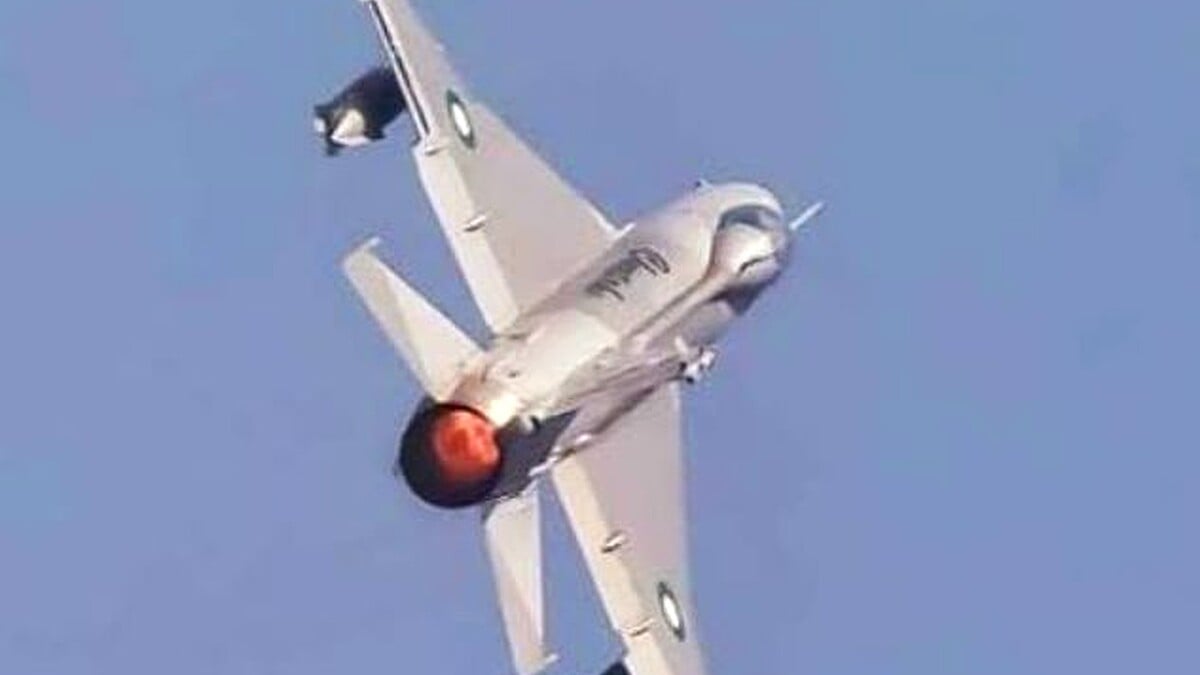




ISLAMABAD: Pakistan Air Force is reportedly advancing a pioneering strategy to repurpose its retiring F-7 supersonic fighter jets into high-speed unmanned combat aerial vehicles capable of saturating advanced air defence systems.
This move comes as India bolsters its S-400 missile shield along the western border with multiple regiments deployed to counter potential aerial incursions.
Defence analysts note that the Pakistan Air Force has historically operated over 100 F-7 variants including F-7P and F-7PG models acquired from China in batches during the 1980s and 1990s.
These aircraft based on the MiG-21 design are gradually being phased out as the PAF transitions to modern platforms like JF-17 Block III and J-10CE fighters.
Recent reports from Pakistani military sources and local defence observers indicate plans to convert dozens of these legacy airframes into loyal wingman-style UCAVs rather than scrapping them.
Such conversion would leverage the F-7’s Mach 2 capable speed and robust airframe to create low-cost high-speed drone swarms designed to overwhelm enemy radar networks.
India has procured five S-400 regiments from Russia with reported ranges exceeding 400 kilometres for certain missile variants and the ability to engage multiple aerial targets simultaneously.
Deployments have focused on Punjab and Rajasthan sectors raising concerns in Islamabad about reduced warning times for Pakistani aircraft.
Local national media including defence publications claim that the unmanned F-7 initiative draws inspiration from similar Chinese efforts where hundreds of ageing J-7 airframes are being evaluated for drone conversion to create massed attritable forces.
Pakistan’s own unmanned systems portfolio already includes indigenous platforms like the Burraq and Shahpar series UCAVs which have demonstrated precision strike capabilities with laser-guided munitions.
The Burraq armed drone was first operationally tested in 2015 marking Pakistan as one of the early adopters of indigenous UCAV technology in the region.
Shahpar-II variants offer endurance of up to 14 hours in surveillance mode and payload capacity around 120 kilogrammes external stores.
Integrating retired F-7 jets could dramatically scale this capability providing supersonic dash speeds that current propeller or turbofan drones struggle to match.
Defence experts highlight that high-speed UCAVs could serve multiple roles including decoy missions to trigger S-400 radar emissions followed by suppression attacks using stand-off weapons.
This asymmetric approach aims to exploit the high cost per shot of advanced surface-to-air missiles estimated in millions of dollars against relatively inexpensive converted platforms.
Pakistan’s collaboration between the National Aerospace Science and Technology Park and other entities has accelerated indigenous unmanned systems development in recent years.
The strategy aligns with broader PAF efforts to phase out legacy manned fighters while maintaining numerical parity in operational air assets.
Analysts estimate that successful conversion of even 50 F-7 airframes could yield a significant swarm capability capable of simultaneous multi-axis saturation attacks.
Such tactics proved effective in recent regional conflicts where drone swarms forced air defence systems to expend valuable munitions rapidly.
India’s S-400 systems have been praised for intercepting multiple threats during heightened tensions but face challenges against low-observable or massed low-cost incursions.
Pakistani sources claim that during past exchanges Pakistani forces successfully employed electronic warfare and drone tactics to degrade certain air defence components.
The unmanned F-7 concept would further enhance these options by adding high-speed kinetic elements that demand rapid response cycles from enemy operators.
Conversion process would likely involve removal of cockpit systems installation of autonomous flight controls and integration of datalinks for swarm coordination.
Advanced artificial intelligence algorithms could enable independent target selection and evasive manoeuvres reducing reliance on constant ground control.
Pakistan’s existing experience with AI-enhanced surveillance in Shahpar platforms provides a foundation for scaling to combat roles.
Regional observers point out that this development could shift the cost-exchange ratio in future aerial confrontations heavily in favour of the side deploying attritable high-speed assets.
While international media has offered limited coverage of the specific F-7 UCAV plans Pakistani defence circles describe it as a game-changing innovation born of necessity and ingenuity.
The PAF’s focus on self-reliance in unmanned technologies mirrors global trends where nations seek to multiply combat power without proportional increases in manned aircraft procurement costs.
Each converted F-7 UCAV could potentially carry a mix of electronic warfare pods decoy flares and precision munitions extending operational reach deep into contested airspace.
Combined with existing JF-17 fighters acting as motherships these unmanned assets could form mixed manned-unmanned teams for complex missions.
Defence budget constraints make such recycling strategies particularly attractive allowing Pakistan to extract additional value from legacy platforms nearing the end of their manned service life.
India continues to expand its air defence network with additional S-400 acquisitions under consideration alongside indigenous systems like Akash.
However the sheer volume and speed potential of proposed Pakistani UCAV swarms present a novel challenge that may require layered defences and advanced counter-drone measures.
As tensions persist along the Line of Control and international border both sides are investing heavily in next-generation aerial and counter-aerial capabilities.
Pakistan’s reported unmanned F-7 strategy underscores a determined effort to maintain strategic balance through technological adaptation and creative repurposing of existing resources.
This approach not only promises to extend the utility of ageing supersonic jets but also signals a broader doctrinal shift towards unmanned and autonomous systems in South Asian skies.