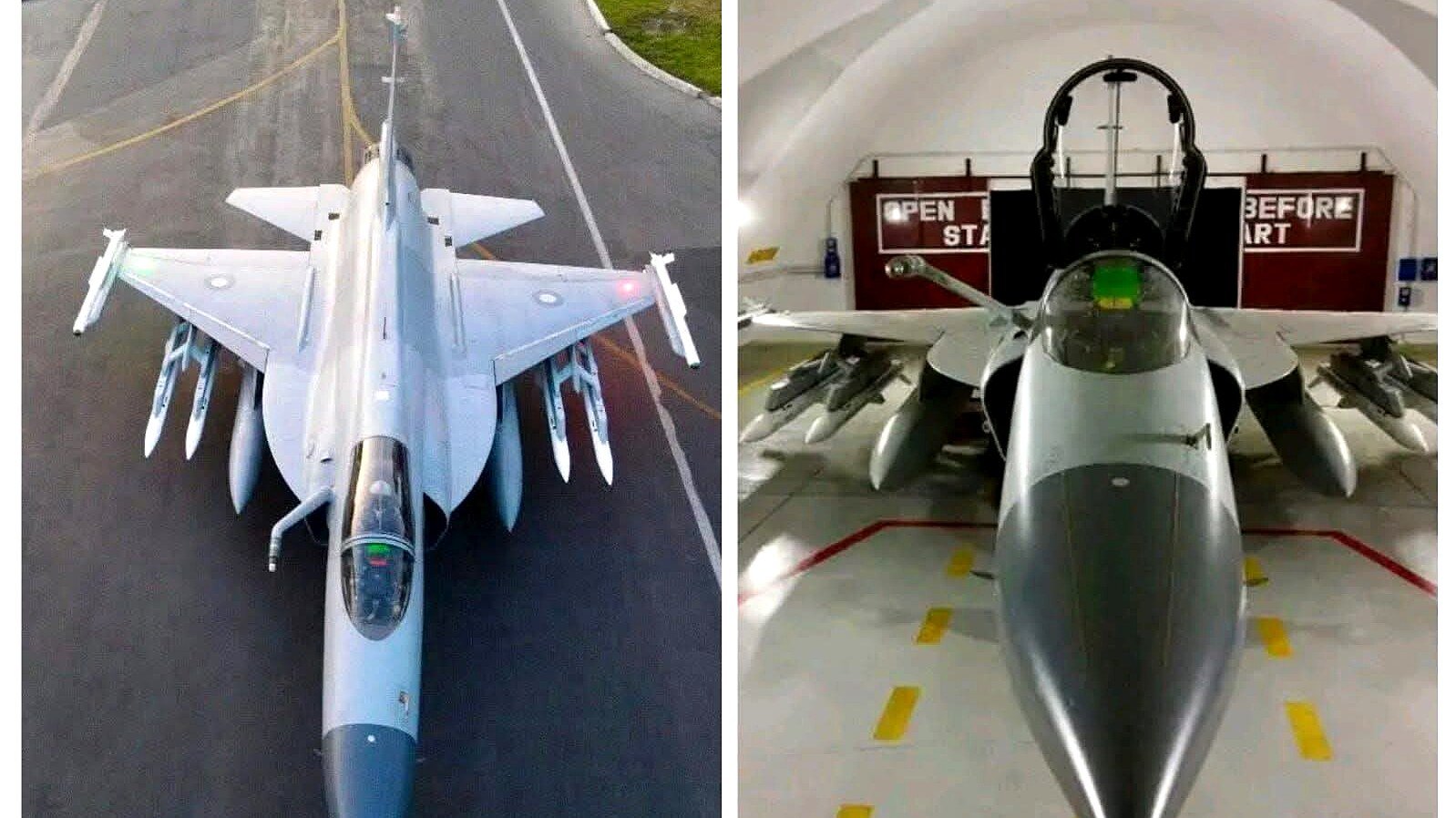




ISLAMABAD: In a move that has immediately sharpened the regional security
conversation, the Pakistan Air Force has for the first time officially
released images of the JF-17 Thunder Block III armed with PL-10 and PL-15
air-to-air missiles, sending a powerful strategic signal amid renewed
tensions with India.
The timing of the images is what makes this development especially
significant.
With military rhetoric rising once again around the possibility of an
“Operation Sindoor Part 2,” the release appears less like a routine
publicity move and more like a carefully calibrated message aimed at
deterrence, readiness, and aerial dominance.
But that’s not the full story.
Recent footage and images circulating through official and defense-linked
channels show the JF-17 Block III carrying the long-range PL-15 missile, a
weapon widely considered among the most capable beyond-visual-range
air-to-air missiles currently deployed in the region. Independent reporting
has previously noted that the PL-15 family is assessed to have an
engagement range reaching roughly 200 kilometers, with some estimates going
even higher depending on the variant.
Why this reveal matters right now
The JF-17 Block III has already been viewed as a major leap for the
Pakistan Air Force because of its active electronically scanned array
radar, upgraded avionics, and improved electronic warfare systems.
Now, the public confirmation of PL-15 integration on the aircraft
dramatically changes the perception of Pakistan’s frontline squadrons.
Until recently, the focus remained largely on the Chengdu J-10 as the
principal launch platform for the PL-15 within Pakistan’s fleet.
This new reveal suggests that the PAF is expanding the missile’s deployment
across multiple operational squadrons, increasing flexibility in any
high-intensity air confrontation.
What’s more concerning is the message this sends across the border.
India has significantly accelerated its military modernization drive, with
large-scale acquisitions ranging from additional Dassault Rafale fighters
to submarine and missile defense upgrades.
The scale of recent procurement activity has intensified the regional arms
competition, making every visible deployment on either side far more
consequential.
The PL-15 factor and the air combat equation
This is where things get interesting.
The PL-15 is not just another air-to-air missile.
Its long-range engagement envelope is specifically designed to target enemy
aircraft before they can effectively respond, potentially altering the
first-strike advantage in beyond-visual-range combat.
Defense assessments suggest that missile range alone is not the only factor.
The real power lies in the combination of long-range weapons, networked
targeting, and AESA radar support.
On the JF-17 Block III, this creates a much stronger sensor-shooter
ecosystem than earlier variants ever offered.
However, a deeper issue is emerging.
Modern aerial warfare is increasingly decided not by dogfights, but by who
detects, tracks, jams, and fires first.
That makes the missile reveal part of a broader technological contest
rather than a standalone weapons announcement.
Mid-article twist: it may be more about signaling than combat
Around the middle of this story, the bigger question becomes clear.
Is this purely about capability, or is it also strategic signaling?
The answer may be both.
The public release of these images during a period of heightened political
and military friction strongly suggests an information warfare dimension.
By showcasing advanced loadouts on an indigenous fighter platform, Pakistan
appears to be projecting confidence not just to India, but also to global
defense observers and potential export partners.
This is particularly relevant as the JF-17 program continues to be
positioned as a cost-effective multi-role fighter for international buyers.
And this raises an important question.
If the PL-15 is now fully integrated across JF-17 Block III squadrons, how
does this alter India’s aerial planning, especially with future Rafale and
possible stealth aircraft inductions under discussion?
The growing strategic imbalance narrative
The wider context cannot be ignored.
South Asia’s military balance is increasingly being shaped by rapid
acquisitions, indigenous upgrades, and missile technology races.
Pakistan’s decision to visibly arm the JF-17 Block III with one of the
world’s longest-range BVR missiles feeds directly into this evolving
narrative.
It also strengthens the domestic perception of self-reliance around the
JF-17 program, a platform jointly developed but now deeply embedded in
Pakistan’s defense identity.
At the same time, India’s expanding fighter and naval modernization
pipeline ensures that this competition is far from static.
Every new aircraft deal, radar upgrade, or missile integration on one side
is likely to trigger a visible response from the other.
What happens next?
The bigger issue now is not the photographs themselves.
It is what follows.
Will this lead to more visible squadron deployments near sensitive sectors?
Will additional air defense systems and early warning assets be
repositioned?
Could the next phase involve live-fire exercises or operational drills
meant to reinforce deterrence?
Those questions remain unanswered.
Yet one thing is already clear.
The public debut of the JF-17 Block III carrying PL-15 missiles has added a
new layer of tension to an already fragile regional environment.
And as both sides continue to invest billions into air power, the skies
over South Asia may increasingly become the center of strategic competition.
The uncertainty now is not whether this changes the conversation.
It is how quickly it changes the balance.