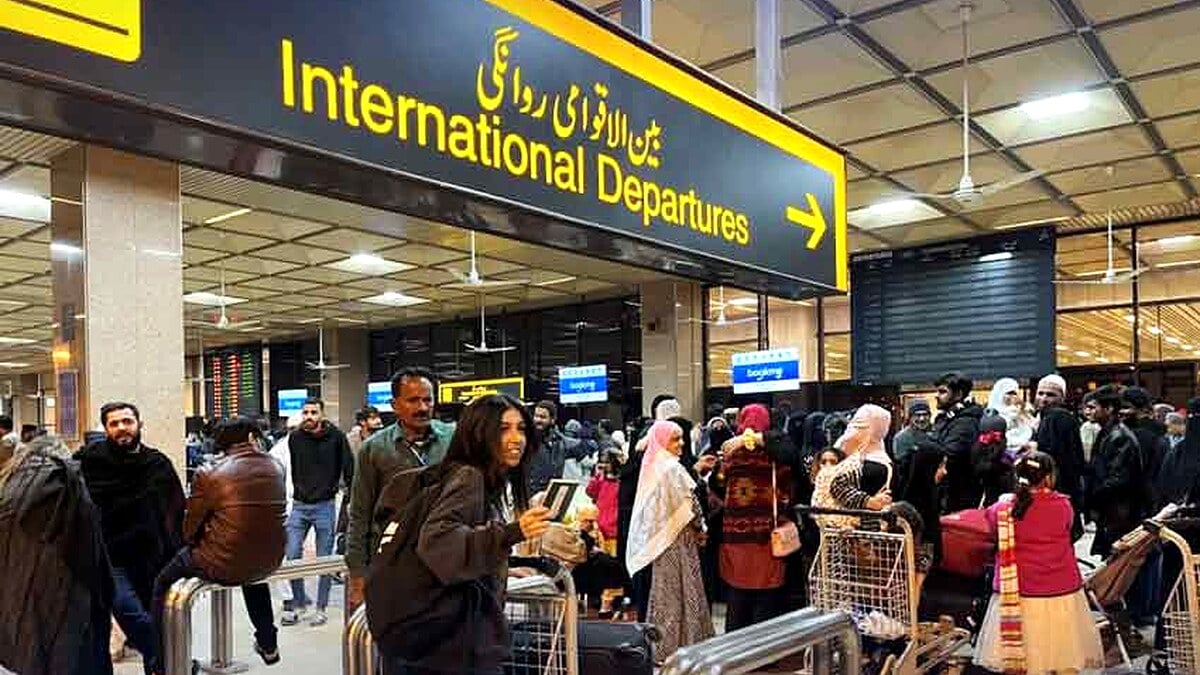




ISLAMABAD: Over 250,000 Pakistanis left the country in the first four months of the year in search of employment opportunities, according to official documents obtained by Samaa TV.
The Bureau of Emigration and Overseas Employment data highlights a continued strong outflow of Pakistani manpower, driven primarily by demand in Gulf countries.
Saudi Arabia remained the top destination with 136,488 Pakistanis departing for work there during this period.
The United Arab Emirates recorded a sharp increase, with around 50,000 Pakistanis heading to Dubai alone in the first four months. This figure nearly matches the total of 52,500 who went to Dubai throughout the entire previous year.
Qatar followed as another key destination, receiving 25,500 Pakistani workers. Bahrain saw 10,129 departures, while smaller numbers went to Turkey (3,000), the United Kingdom (1,100), and the United States (300).
Additional destinations included China with 850 workers, Greece with 1,286, Iraq with 1,283, and Japan with 577. No departures were recorded for Greenland, Tanzania, Turkmenistan, or West Africa during this timeframe.
**Labourers dominate outflow**
The data shows that labourers formed the largest group among those migrating, with approximately 150,000 leaving Pakistan in search of better wages.
More than 45,000 drivers also departed, alongside 9,500 cooks, 1,232 electricians, 818 mechanics, 1,537 operators, 1,070 welders, and 116 artists.
Skilled professionals accounted for a notable share. Documents indicate more than 1,000 doctors left the country, with figures cited between 1,078 and 1,788. Around 2,000 engineers, 419 nurses, over 1,600 accountants, 550 agricultural specialists, and 525 computer or IT experts also migrated.
Ministry of Overseas Pakistanis and Human Resource Development officials confirmed the trend aligns with historical patterns, though exact quarterly comparisons remain under review.
**Economic drivers**
Pakistan’s overseas employment has long served as a critical economic lifeline. Remittances from Pakistani workers abroad reached record levels in recent fiscal years, contributing significantly to foreign exchange reserves and supporting household incomes.
In fiscal year 2024-25, remittances exceeded $38 billion, with Saudi Arabia and the UAE consistently ranking as major sources.
The latest migration figures come amid ongoing domestic economic challenges, including inflation pressures and limited job creation in certain sectors. Many workers seek higher salaries and better working conditions available in Gulf markets, where construction, services, and hospitality sectors continue to expand.
**Sharp rise in UAE migration**
The notable surge toward the UAE reflects improved opportunities and streamlined visa processes in some categories. Dubai’s rapid infrastructure development and events sector growth have increased demand for Pakistani labour and technical skills.
Saudi Arabia’s Vision 2030 projects have similarly sustained high demand for Pakistani manpower across multiple sectors, maintaining its position as the leading destination.
Analysts note that while low-skilled and semi-skilled workers dominate the outflow, the increasing presence of doctors, engineers, and IT professionals points to broader structural issues in domestic job markets.
**Remittance impact**
Overseas Pakistanis contribute substantially through remittances. Saudi Arabia alone accounted for a significant portion of inflows, followed closely by the UAE. These funds help stabilise the current account and support consumption in Pakistan.
However, the departure of skilled professionals raises concerns about long-term human capital loss. Training costs for doctors and engineers represent substantial public investment that benefits destination countries upon migration.
**Regional context**
Gulf Cooperation Council countries have historically hosted millions of Pakistani workers. The current wave continues this pattern, with Saudi Arabia, UAE, and Qatar absorbing the majority.
Smaller flows to Europe, the UK, and North America typically involve professionals seeking advanced career opportunities or specialised roles.
The Bureau of Emigration and Overseas Employment continues to regulate and facilitate these movements through licensed agents and protected employment contracts.
**Future outlook**
As Pakistan navigates its economic recovery, the scale of overseas migration will likely remain a key indicator of domestic labour market conditions. Government initiatives to boost local employment and skills development may influence future trends.
The sustained demand from Gulf economies suggests that manpower exports will continue playing a vital role in Pakistan’s economic strategy in the coming months.
Officials are monitoring the situation closely, with emphasis on protecting worker rights and maximising remittance flows through formal channels.
The data underscores both the opportunities available to Pakistani workers abroad and the challenges that continue to drive significant emigration.