



ISLAMABAD: American political commentator Tucker Carlson has sparked widespread debate by highlighting concerns over a potential false flag operation targeting Jerusalem’s Al-Aqsa Mosque, one of Islam’s holiest sites, amid the escalating Israel-Iran conflict.
In a recent episode of his show, Carlson discussed the religious dimensions of the ongoing war, suggesting that some elements within Israel might seek to destroy the mosque complex on the Temple Mount to pave the way for rebuilding the Third Temple, a long-standing aspiration in certain Jewish religious circles.
He played a video clip featuring an Israeli rabbi, identified in reports as Yosef Mizrachi, who appeared to outline a scenario where a missile strike on the Al-Aqsa Mosque could be staged and blamed on Iran.
Carlson described the possibility as a “false flag” tactic, warning that such an act—whether carried out intentionally by Iran, accidentally, or orchestrated by Israel and attributed to Tehran—could ignite uncontrollable religious conflict across the Muslim world.
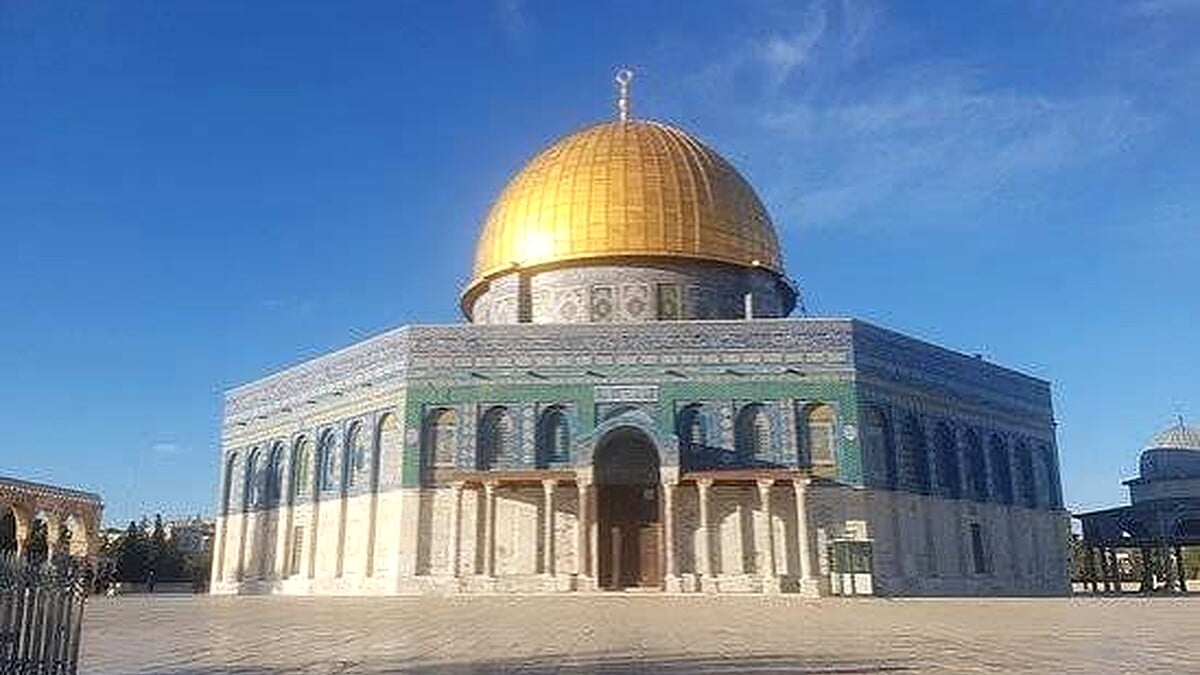
The Temple Mount, known to Muslims as Haram al-Sharif and home to both the Al-Aqsa Mosque and the Dome of the Rock, holds profound significance for Judaism as the site of the ancient First and Second Temples.
Carlson noted that while not all Orthodox Jews or evangelical Christians support such actions, a minority views the reconstruction of the Third Temple as a fulfillment of biblical prophecy.
He expressed alarm that blowing up the mosque would represent an unsolvable crisis, potentially drawing in billions of Muslims and escalating the current US-Israel strikes on Iran into a broader global religious confrontation.
The commentator linked this to broader motives behind the war, arguing that Israel’s involvement stems from strategic and religious goals rather than immediate security threats from Iran’s nuclear program or regional proxies.
Carlson criticized the US decision to join Israel in military operations against Iran, calling the escalation driven by external pressures and questioning its benefits for American interests.
He referenced footage of Israeli soldiers wearing patches associated with Third Temple advocacy, suggesting these symbols indicate deeper ideological drivers in the conflict.
Social media reactions have amplified Carlson’s remarks, with posts in Urdu and English circulating claims that Israel plans to attack the mosque itself and frame Iran to provoke Arab states into joining against Tehran.
Several users urged the Organisation of Islamic Cooperation to investigate and respond to the alleged conspiracy.
Critics of Carlson, including pro-Israel commentators, have dismissed his narrative as inflammatory and rooted in longstanding tropes, arguing it risks inciting violence and misrepresents Jewish historical claims to the site.
They point out that Israel has maintained the status quo at the Temple Mount since 1967, allowing Muslim administration under the Waqf while restricting Jewish prayer to avoid escalation.
Qatar and other Gulf states have faced related accusations from Carlson, who claimed Mossad agents were arrested there for planning bombings, though these assertions were denied by Qatari officials.
The episode comes against the backdrop of intensified US-Israeli airstrikes on Iranian targets, following Tehran’s responses to perceived aggressions.
Carlson has repeatedly framed the conflict as Israel’s war imposed on the United States, urging restraint and questioning loyalty priorities in Washington.
His comments have divided opinion, with supporters viewing them as bold exposure of hidden agendas, while detractors accuse him of promoting conspiracy theories that endanger Jewish communities.
The Al-Aqsa compound remains a flashpoint, with past incidents like access restrictions or settler visits sparking protests and violence across the region.
As tensions persist, Carlson’s warning underscores fears that religious sites could become central to the war’s trajectory, potentially transforming a geopolitical struggle into an existential clash for faith communities.
Observers note that any damage to Al-Aqsa would likely provoke massive unrest in Muslim-majority countries, complicating alliances and humanitarian efforts.
The international community continues monitoring developments closely, with calls for de-escalation to prevent irreversible consequences at this sacred location.