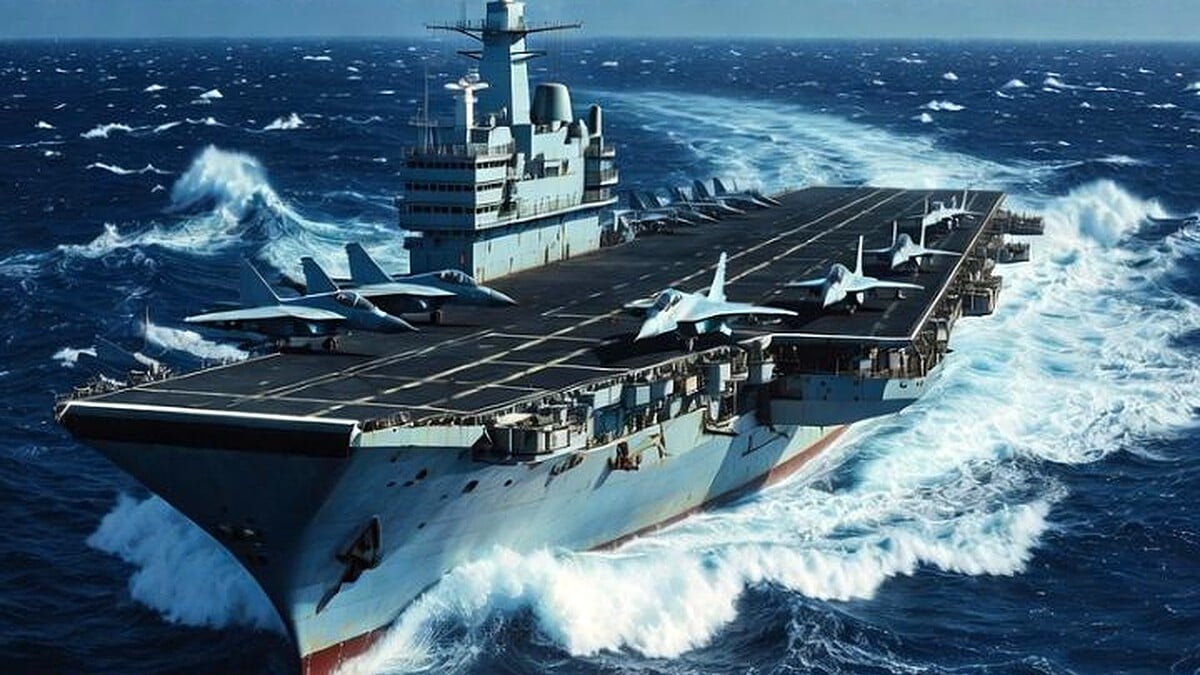




Iran has dramatically claimed a successful direct hit on the USS Abraham Lincoln aircraft carrier using a wave of shore-launched cruise missiles during its 91st retaliatory operation, according to state broadcaster IRIB and army public relations officials.
The Iranian military asserted that advanced coastal defence missiles struck the Nimitz-class carrier in the Arabian Sea, compelling it to alter course and withdraw from its forward position.
State media outlets including Press TV and IRNA reported that the barrage involved multiple anti-ship cruise missiles, with some sources specifying systems similar to the Qader family boasting ranges over 200 kilometres.
US Central Command and the Navy have categorically rejected the claim, stating the missiles did not approach the carrier strike group and that the vessel continues uninterrupted flight operations and strike missions under Operation Epic Fury.
The incident, reported in late March 2026, forms part of a broader cycle of Iranian retaliation following US-Israeli strikes that began in February 2026.
Iranian navy commander Rear Admiral Shahram Irani had previously issued explicit threats, vowing sea-to-sea missile launches if the carrier entered designated firing ranges, referencing the earlier sinking of the Iranian frigate IRIS Dena.
The USS Abraham Lincoln, a nuclear-powered vessel displacing around 102,000 tons and carrying over 60 combat aircraft including F/A-18 Super Hornets, serves as the centrepiece of its strike group equipped with Aegis-equipped escorts.
Regional Iranian reports highlighted the launch from coastal batteries on the Iranian mainland, emphasising the precision and volume of the 91st wave in a sustained campaign involving ballistic missiles, cruise missiles and drone swarms.
Despite the sensational Iranian assertions, independent verification remains absent, with no visible damage reported in subsequent US Navy imagery or satellite observations.
The carrier has maintained hundreds of air sorties since its redirection to the US Central Command area in early 2026, supporting extensive strike operations against Iranian targets.
Pentagon figures indicate over 1,000 sites struck in the campaign using more than 20 weapon systems, including Tomahawk cruise missiles.
Iran’s extensive arsenal features over 1,000 anti-ship cruise missiles of various classes, many validated through recent large-scale naval exercises simulating high-value target engagements.
The Arabian Sea positioning occasionally placed the carrier within potential reach of upgraded Iranian coastal systems, heightening risks in contested waters near the Strait of Hormuz.
Global oil markets reacted sharply to the naval clashes, with shipping disruptions affecting over 1,000 vessels and contributing to nearly 15 percent price surges in early March 2026.
US officials stress the effectiveness of layered carrier defences, including SM-6 interceptors, in neutralising threats across multiple Iranian attack waves.
A separate non-combat injury to a sailor aboard the Lincoln occurred around the same period during routine flight operations, but CENTCOM confirmed it was unrelated to any missile activity.
The conflicting narratives underscore the intense information warfare accompanying the physical confrontation, with Iranian claims serving to project strength and rally domestic support.
Tensions persist without clear de-escalation signals, as both sides monitor movements around the critical Strait of Hormuz, which handles nearly 20 percent of global oil trade.
The episode highlights ongoing vulnerabilities of capital ships in littoral zones and the strategic signalling value of unverified strike assertions in modern hybrid conflicts.