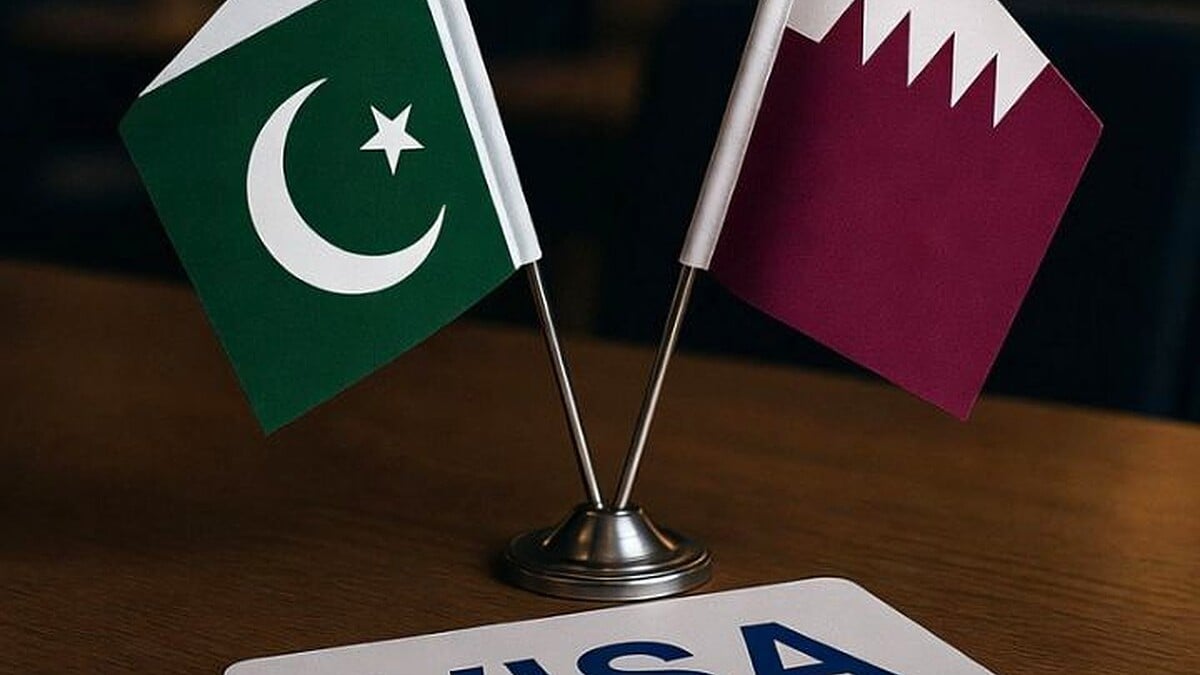




ISLAMABAD: Qatar has temporarily suspended its visa-on-arrival facility for Pakistani nationals citing the prevailing situation in the Middle East.
The advisory issued by the Pakistan Embassy in Doha on Tuesday has sent ripples through the large Pakistani expatriate community and potential travellers.
Pakistani nationals intending to travel to Qatar must now obtain appropriate visas prior to departure to avoid inconvenience at immigration.
The move comes as tensions escalate across West Asia with ongoing conflicts involving Iran and broader regional instability.
International and regional media reports link the suspension directly to the Middle East conflict and associated security risks.
Qatar hosts an estimated 300,000 Pakistani expatriates as of October 2025 according to diplomatic and government estimates.
This community forms a significant portion of Qatar’s foreign workforce which constitutes over 88 percent of the country’s total population of approximately 3.1 million in 2025.
In the first three months of 2025 alone Qatar received 12,989 Pakistani skilled workers including doctors engineers and technicians out of 172,144 Pakistanis who went abroad for employment.
Annual inflows have remained steady with over 55,000 Pakistanis entering Qatar for work in recent years supporting infrastructure and service sectors.
The suspension affects short-term visitors business travellers and those seeking family reunions who previously benefited from the visa-on-arrival option.
Pakistani passport holders historically enjoyed this facility which allowed stays of up to 30 days under certain conditions.
With the current ranking of the Pakistani passport around 92nd to 101st globally offering visa-free or visa-on-arrival access to only about 31-34 countries the loss of Qatar’s facility narrows travel options further.
Regional media including reports from Pakistani outlets and Gulf-based publications confirm the advisory without a specified timeline for restoration.
The embassy statement emphasises planning ahead to prevent denial of entry or delays at Hamad International Airport.
This development occurs against a backdrop of heightened regional alerts with airspace restrictions and travel advisories issued by several nations.
Qatar itself has maintained a relatively open policy for many nationalities but selective adjustments reflect security priorities amid the Iran-related conflicts.
For the Pakistani diaspora in the Gulf the news raises concerns over mobility and potential ripple effects on remittances.
Pakistan received substantial remittances from Gulf countries with Qatar contributing significantly to the overseas Pakistani workforce earnings.
In 2025 data from the Bureau of Emigration and Overseas Employment showed continued outflows to Gulf destinations despite global economic pressures.
The suspension may prompt increased applications through Qatari embassies or authorised visa centres adding processing time and costs for travellers.
Pakistani officials have not issued a detailed public explanation beyond echoing the embassy’s reference to the prevailing situation.
Analysts suggest such measures are precautionary to manage inflows during periods of regional volatility and ensure thorough vetting.
Travellers with existing valid visas or sponsorships remain unaffected according to available advisories.
However those relying on visa-on-arrival now face mandatory pre-approval which could delay trips by days or weeks.
The Pakistani community in Qatar has grown steadily from earlier estimates of around 180,000 to the current 300,000 reflecting strong bilateral ties in trade energy and labour cooperation.
Qatar remains a key destination for Pakistani professionals and labourers contributing to projects in construction healthcare and hospitality.
This latest restriction highlights the sensitivity of migration policies to geopolitical shifts in the Middle East.
Observers note that similar adjustments have occurred in the past during periods of heightened tension only to be eased once stability returns.
No official confirmation has emerged on when the visa-on-arrival facility might resume leaving many in uncertainty.
Pakistanis planning travel are advised to monitor updates from the embassy in Doha and the Ministry of Foreign Affairs.
The development underscores the need for diversified travel options and stronger diplomatic engagement to safeguard mobility for overseas Pakistanis.
As the situation evolves authorities on both sides may engage to minimise long-term impact on people-to-people and economic links.