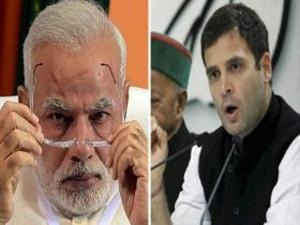




ISLAMABAD: In a striking commentary on India’s diminishing role in international diplomacy, Rahul Gandhi, the leader of the Indian National Congress, has voiced concerns that India is becoming a mere “side player” in global affairs. This assertion comes in the wake of Pakistan’s emerging role as a mediator between the United States and Iran, a development that has significant implications for regional stability and international relations.
The backdrop to Gandhi’s remarks is the recent diplomatic engagement between the US and Iran, facilitated by Pakistan. As tensions between Washington and Tehran have escalated over the years, the need for a neutral mediator has become increasingly apparent. Pakistan’s involvement in this delicate balancing act raises questions about India’s strategic positioning and influence in South Asia.
Gandhi’s comments reflect a growing unease within Indian political circles regarding the country’s foreign policy direction. He emphasized that while Pakistan steps into a mediating role, India risks being sidelined in crucial geopolitical discussions. This sentiment resonates with many analysts who argue that India must recalibrate its foreign policy to regain its status as a key player on the global stage.
The significance of Pakistan’s mediation cannot be understated. Historically, Pakistan has maintained a complex relationship with both the US and Iran, often acting as a bridge between the two nations. This unique position allows Islamabad to leverage its diplomatic ties to foster dialogue and reduce tensions. In contrast, India’s recent foreign policy has faced criticism for being reactive rather than proactive, particularly in its dealings with neighboring countries.
As the US and Iran navigate their fraught relationship, Pakistan’s role could lead to a shift in regional dynamics. The potential for improved US-Iran relations could impact not only bilateral ties but also the broader geopolitical landscape, including India’s strategic interests in the region. Analysts speculate that if Pakistan successfully mediates a resolution, it could enhance its standing in international forums, further complicating India’s diplomatic efforts.
The question remains: How will India respond to this evolving scenario? Gandhi’s remarks highlight a critical juncture for Indian foreign policy, suggesting that a reassessment of strategies may be necessary to reclaim its influence. The Indian government faces the challenge of demonstrating its relevance in a rapidly changing geopolitical environment.
Moreover, the implications of Pakistan’s mediation extend beyond India and Iran. The US’s willingness to engage with Iran through Pakistan could signal a broader shift in American foreign policy, one that prioritizes dialogue over confrontation. This development could have ripple effects across the region, influencing not only India but also other neighboring countries that have vested interests in US-Iran relations.
Source: Express Tribune