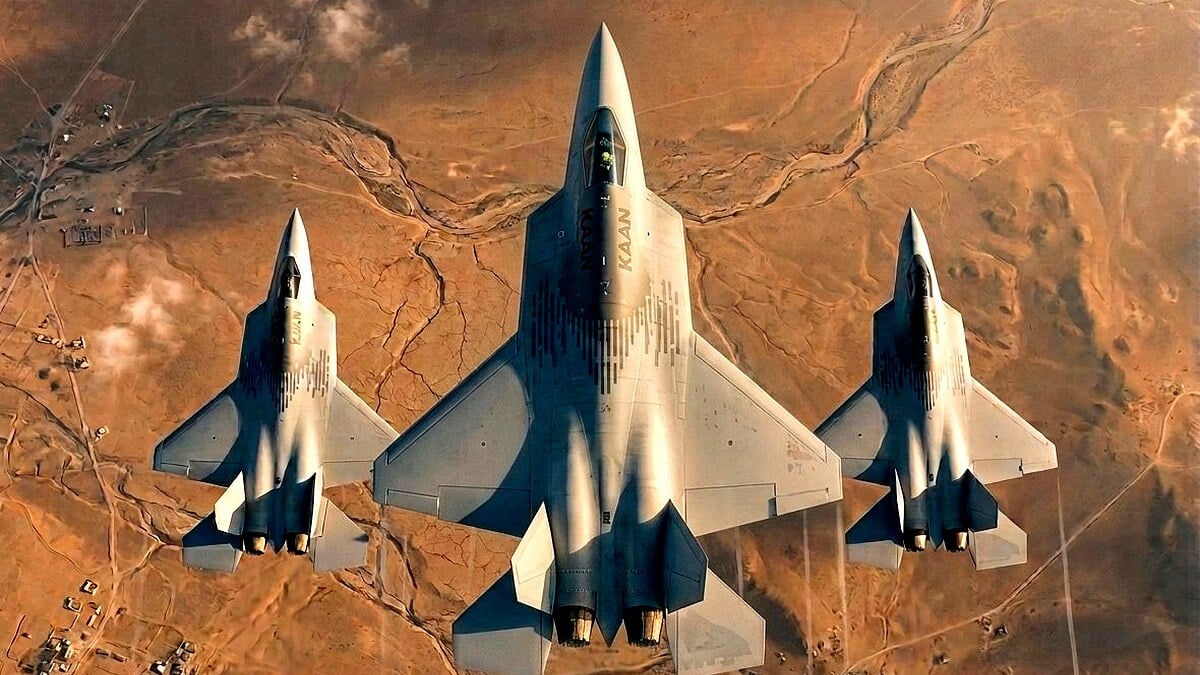




ISLAMABAD: Turkish Aerospace Industries (TUSAS) is set to significantly enhance its KAAN fighter jet production capacity with a state-of-the-art facility.
Current infrastructure allows the production of only 6 to 9 KAAN jets annually.
The new facility will facilitate an additional 24 jets per year, totaling over 30.
This ambitious expansion reflects Turkey’s growing commitment to advancing its defense capabilities.
The development is part of TUSAS’s broader efforts to strengthen Turkey’s aerospace sector.
Currently, the KAAN fighter jet program is in an intensive prototype phase.
The third prototype is scheduled to move onto its landing gear next month.
By the year’s end, the fourth prototype will reach the same stage.
This gradual expansion aims to bolster the KAAN flight test fleet substantially.
A range of cutting-edge facilities supports the jet’s development process.
Among these are the Lightning Test Facility and the Fully Anechoic Electromagnetic Test Center.
Turkey boasts one of Europe’s largest subsonic wind tunnels, pivotal for KAAN’s development.
These resources are vital for ensuring the jet meets international standards.
Turkey’s strategic investment highlights its focus on indigenous defense technologies.
Government backing plays a crucial role in escalating the KAAN program’s progress.
The new production capability represents a major stride for TUSAS.
This is a developing story, with potential impacts on regional defense dynamics.
Future updates on Turkey’s aerospace advancements are eagerly anticipated.
The expansion raises questions on how quickly TUSAS can meet global demands.
With the facility yet to reach its full operational capacity, questions remain.
Observers are keenly watching how this development will affect global defense markets.
Global aviation giants may respond to Turkey’s increased capacity and competitive pricing.
The story unfolds as Turkey continues to assert itself in the global defense sector.