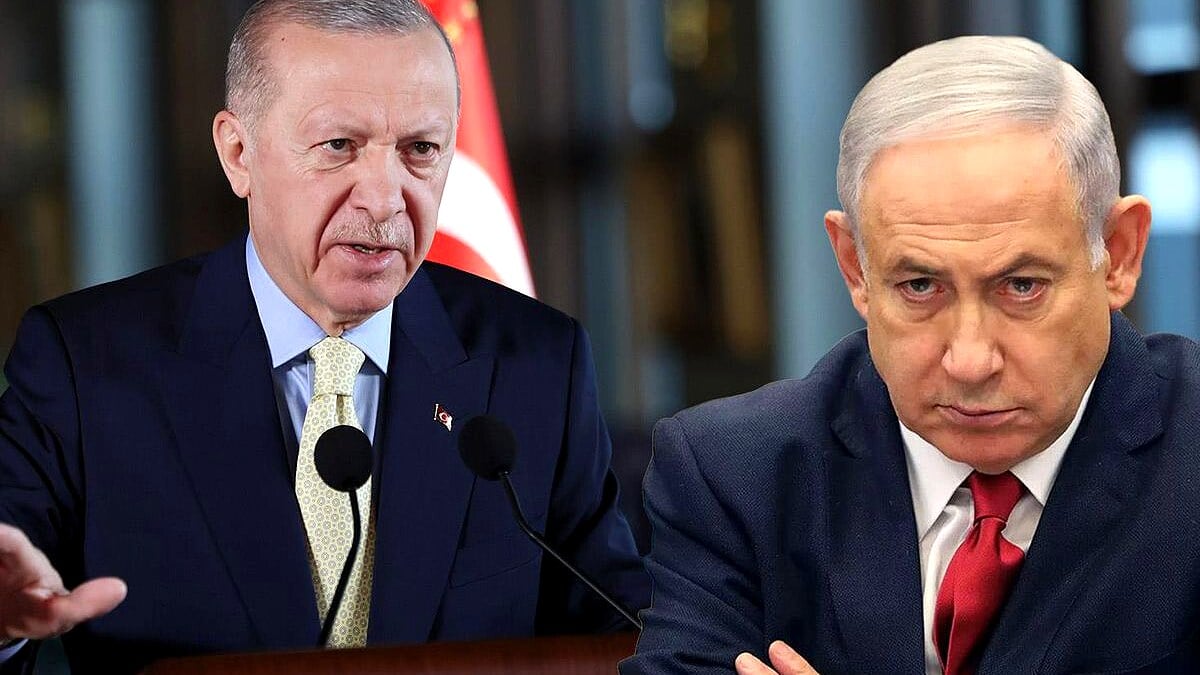




ISLAMABAD: Israeli Prime Minister Benjamin Netanyahu has launched a sharp rebuke against Turkish President Recep Tayyip Erdogan’s recent statements.
Erdogan’s assertions on reclaiming Jerusalem and challenging Israel’s existence have inflamed tensions between the two nations.
Netanyahu emphasized that Israel remains a sovereign and robust nation, capable of defending its security interests.
In a critical response, Netanyahu reminded Erdogan of the historical fall of the Ottoman Empire.
He stressed that modern Israel is resilient and will not allow any existential threats to its existence.
Erdogan’s comments were made during a recent rally when he alluded to the destruction of Israel and the recapture of Jerusalem.
This rhetoric has been interpreted by many as a provocation, further straining Turkish-Israeli relations.
Netanyahu declared that anyone questioning Israel’s sovereignty would face significant repercussions.
He highlighted Israel’s readiness to counter any potential incursions against its national security.
The Prime Minister’s remarks came amid escalating geopolitical tensions in the Middle East.
Erdogan’s rhetoric has drawn international attention, with analysts suggesting potential diplomatic fallout.
The statements raise questions about Turkey’s Middle East policies and its impact on regional stability.
Israel and Turkey have had a complex relationship, marked by periods of diplomatic freezes and reconciliations.
This latest development signifies a potential turn towards heightened diplomatic hostility.
Many in the international community are closely monitoring the situation to gauge any further escalations.
As of now, no official response from Ankara has been issued concerning Netanyahu’s statements.
This is a developing story, and the global implications of such diplomatic exchanges remain uncertain.
Experts suggest that future interactions between the two leaders could shape regional alliances.
The situation underscores the delicate balance in Middle Eastern geopolitics, where rhetoric can swiftly transmute into policy.
Observers question how this will affect alliances and interventions involving Turkey and Israel.
The unfolding dynamics serve as a reminder of the intricate web of diplomatic ties in the region.
What remains to be seen is how these tensions are navigated in pursuit of regional peace and security.