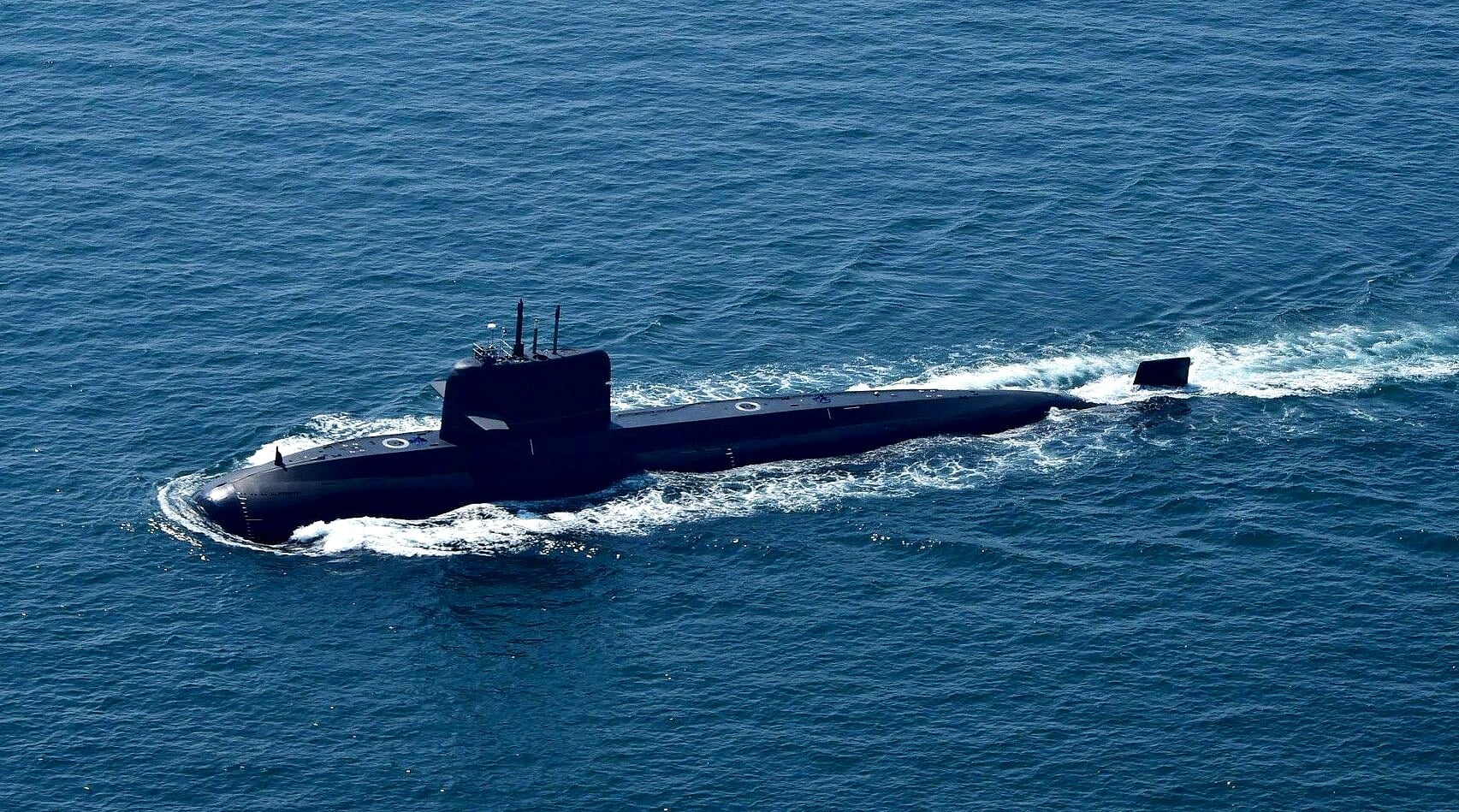




ISLAMABAD: Pakistan Navy’s submarine PNS Hangor has reportedly completed a lengthy overseas deployment and returned towards Pakistan without being detected by Indian anti-submarine forces, according to defence observers tracking naval movements in the region.
The development has drawn attention within regional maritime circles after reports suggested that the Indian Navy deployed multiple surveillance assets, including P-8I Poseidon maritime patrol aircraft and anti-submarine warfare (ASW) warships, in an effort to locate and track the submarine during its transit across the Indian Ocean.
PNS Hangor had earlier operated alongside Pakistan Navy surface escorts, including a Tughril-class frigate and a Zulfiquar-class frigate, during part of its international voyage.
However, after departing Indonesian waters, the accompanying warships reportedly proceeded on separate operational tasks while the submarine continued its independent journey toward Pakistan.
Defence analysts say the submarine’s movement through heavily monitored sea lanes without confirmed detection highlights the growing importance of underwater warfare in South Asia’s evolving maritime security environment.
The Indian Navy has invested significantly in anti-submarine warfare capabilities over the past decade.
Its fleet currently operates Boeing P-8I Poseidon long-range maritime patrol aircraft equipped with advanced radar systems, electronic surveillance equipment, sonobuoys, magnetic anomaly detectors, and anti-submarine weapons designed to locate hostile submarines across large maritime areas.
Open-source defence assessments indicate that India’s P-8I fleet consists of more than a dozen aircraft capable of monitoring thousands of square kilometres during a single patrol mission.
The aircraft are supported by destroyers, frigates, helicopters, underwater sensors, and networked surveillance systems aimed at maintaining maritime awareness throughout the Arabian Sea and wider Indian Ocean Region.
Despite these capabilities, tracking a modern submarine remains among the most challenging tasks in naval warfare.
Submarines are specifically designed to minimize acoustic signatures, reduce detectability, and exploit the ocean environment to evade surveillance.
Military experts note that locating a submarine requires a combination of intelligence, persistent surveillance, favorable environmental conditions, and often a degree of operational luck.
According to defence commentators, Indian naval units were reportedly attempting to identify acoustic signatures associated with PNS Hangor during its return voyage.
Acoustic signatures act as underwater fingerprints, allowing naval forces to classify and track specific submarines once detected through sonar networks or deployed sonobuoys.
The inability to establish a confirmed tracking solution throughout the submarine’s transit has fueled discussion regarding underwater detection challenges in the region.
The deployment also demonstrated Pakistan Navy’s growing emphasis on long-range submarine operations beyond its immediate maritime boundaries.
In recent years, Pakistan has expanded naval diplomacy missions, multinational exercises, and overseas deployments aimed at improving operational experience and strategic reach.
The Hangor-class submarine program itself represents one of Pakistan’s largest naval modernization efforts.
The project is expected to significantly enhance underwater combat capabilities through advanced sensors, improved stealth features, modern weapons systems, and extended operational endurance.
Pakistan’s naval modernization plans also include new frigates, offshore patrol vessels, maritime surveillance assets, and enhanced coastal defence systems intended to strengthen deterrence across the Arabian Sea.
Regional security experts believe submarine operations will become increasingly important as naval competition intensifies across the Indian Ocean.
The region carries a substantial portion of global energy shipments and commercial trade, making maritime security a critical national priority for both Pakistan and India.
Defence analysts caution that the reported episode should not be viewed solely as a tactical success or failure.
Instead, it highlights the broader reality that anti-submarine warfare remains one of the most complex and resource-intensive aspects of modern military operations.
Even advanced naval powers routinely face difficulties locating and continuously tracking quiet submarines operating in vast ocean environments.
The incident is also expected to generate renewed discussion within Indian defence circles regarding surveillance coverage, sensor integration, and future investments in underwater detection technologies.
For Pakistan, the deployment provides an opportunity to evaluate submarine endurance, crew performance, and operational procedures during extended independent missions.
As both countries continue investing billions of dollars in naval modernization programs, underwater warfare is likely to play an increasingly significant role in future maritime competition, with submarine stealth and anti-submarine detection capabilities remaining key factors in shaping the strategic balance across the northern Indian Ocean.